
There are 61 direct flights from Dubai to India every single day. More daily India departures than London. More than New York. More than Singapore. More than any other city on earth. Skyscanner tracks 978 flights per week on this corridor. KAYAK counts 372 direct weekly flights from DXB alone, with the broader UAE–India system running 1,912 weekly direct services. The question any traveller should be asking before booking isn't just what the fare is — it's why this extraordinary frequency exists, and what it means for pricing that no other India corridor can match.
The answer is demography. The UAE has approximately 3.5 million Indian residents, representing roughly 35% of the entire country's population. Indian workers, professionals, and families form the largest single ethnic group in the UAE — in construction, hospitality, finance, healthcare, and retail. Every Eid, every Diwali, every school break, every Gulf summer exodus, millions of them fly home. That concentrated, year-round, predictable demand is why airlines have built the highest-frequency India flight corridor in the world from a single city. And that frequency produces a pricing environment no long-haul India gateway can touch.
FlyFlick's search engine does something Skyscanner, KAYAK and Google Flights don't: it dynamically combines tickets from airlines that don't officially partner — Virtual Interlining — to surface connection routes traditional platforms never show. On Dubai–India legs, this regularly finds prices 20–30% below market rate. One search. Hundreds of combinations. Including the ones your usual booking site ignores.
Check Live Flight Prices
The Numbers: Why No Other Corridor Compares
Before airlines, prices, or months — the scale context.
| Corridor | Daily Flights to India | Weekly Flights | Most Frequent Hub City |
|---|---|---|---|
| Dubai (DXB) | 61 | 372–978 (varies by source) | ✅ World #1 |
| Singapore (SIN) | ~40 | ~880 | World #2 |
| London (LHR/LGW) | ~24 | ~400 | World #3 |
| Kuala Lumpur (KUL) | ~20 | ~300 | World #4 |
| Frankfurt (FRA) | ~14 | ~289 | Top 10 |
| New York (JFK/EWR) | ~10 | ~180 | Top 10 |
| Tokyo (NRT/HND) | ~4 | ~60 | Regional |
Sources: Skyscanner, KAYAK, Momondo, FlyFlick — July 2026. Figures include all direct-only flights from the specific city.
The scale difference between Dubai and the next-highest corridor is significant — but the implication for pricing is even more significant. When 978 flights per week compete for the same passengers, airlines cannot sustain high prices without losing bookings to the next departure 45 minutes later. Competitive pricing on the Dubai–India corridor is structurally enforced by frequency. It's not a sale — it's arithmetic.
The 3.5 million Indian residents in the UAE also create a demand pattern that differs from every Western corridor. This isn't predominantly leisure tourism — it's worker migration, family visits, and cultural obligation travel. It's consistent. It happens year-round. It happens on every airline at every price point. And it means there's always a flight and always a competitive fare, regardless of season.
The Cheapest Airlines — The Counterintuitive Answer
Every traveller who searches Dubai–India defaults to Emirates. Emirates is the UAE's flagship carrier, the world's largest international airline, and operates from Dubai's Terminal 3 with the widest India network of any carrier from DXB. But Emirates is not the cheapest option on this corridor — and the answer to which airline is cheapest may surprise you.
Saudia is the cheapest airline on the Dubai–India corridor per Skyscanner's year-ahead analysis. Not Emirates. Saudi Arabia's national carrier operates Dubai–India routes via Riyadh (RUH), and its fares consistently undercut UAE-based carriers on this specific routing. Saudia's DXB–India fares through a Saudi hub are counter-competitive — the Riyadh connection adds 2–3 hours but delivers some of the corridor's lowest available prices.
flydubai is the cheapest direct option — KAYAK found flydubai at AED 75 return to Mumbai. That's $20.44 USD return. Even accounting for paid baggage and meals, flydubai's direct Dubai–India fares are the lowest on the corridor for specific routes and dates. flydubai is Emirates' wholly-owned low-cost subsidiary operating from Terminal 2 at DXB — the same Dubai International Airport as Emirates, just a different terminal.
| Airline | Type | Routes from DXB | Cheapest Return Found | Delay Rate |
|---|---|---|---|---|
| Saudia | Full-service | DXB → DEL/BOM via RUH | Lowest — per Skyscanner | ~22% |
| flydubai | Budget | DXB → 10+ Indian cities | AED 75 ($20) to Mumbai | ~20% |
| IndiGo | Budget | DXB → DEL/BOM/BLR/COK | AED 200–400 | ~18% |
| Air India Express | LCC | DXB → DEL/BOM/BLR/COK/HYD | AED 200–450 | ~19% |
| Air India | Full-service | DXB → DEL/BOM/HYD/BLR/COK | AED 300–650 | ~16% |
| Emirates | Full-service | DXB → DEL/BOM/BLR/HYD/COK/MAA | AED 350–900 | ✅ 18% (lowest) |
| SpiceJet | Budget | DXB → DEL/BOM | AED 200–420 | ~25% |
| Air Arabia | Budget | SHJ → DEL/BOM/COK/AMD | AED 150–400 (from SHJ) | ~20% |
Sources: KAYAK UAE, Skyscanner, Momondo, FlyFlick — July 2026.
Emirates has the lowest delay rate on the corridor at 18% despite having the highest premium positioning — reflecting DXB's operational infrastructure specifically designed around Emirates' schedule. Air India's 16% overall delay rate is competitive. SpiceJet's 25% delay rate is the corridor's highest — worth factoring for connecting itineraries.

Emirates has the lowest delay rate of any carrier on the Dubai–India corridor at 18%, despite being the most premium option — a reflection of DXB's operational infrastructure being built around Emirates' schedule, which produces knock-on punctuality benefits for the broader terminal operation.
flydubai's Tier-2 India Network — The Feature No Guide Covers
This is the most practically important section of this post for any Dubai-based traveller whose Indian home city isn't Delhi, Mumbai, Bengaluru, or Chennai.
flydubai — Emirates' low-cost subsidiary — operates direct routes from Dubai to Indian cities that no other international hub in the world connects to with meaningful frequency:
- Kozhikode (CCJ) — North Kerala's major city, serving the large Malabar Muslim community in the UAE
- Thiruvananthapuram (TRV) — Kerala's capital, southern Kerala gateway
- Ahmedabad (AMD) — Gujarat's largest city, major Gujarati diaspora connection
- Lucknow (LKO) — Uttar Pradesh capital, large UP community in UAE
- Chandigarh (IXC) — Punjabi and Haryanvi diaspora gateway
- Amritsar (ATQ) — Punjab's golden city, Golden Temple route
- Varanasi (VNS) — India's spiritual capital, direct Dubai–Varanasi service
- Nagpur (NAG) — Central India gateway, Maharashtra interior
The cheapest airport to fly to in India from UAE is Chandigarh Airport at an average flight price of $160 — and flydubai's DXB–IXC route is part of why. For a Chandigarh-based Indian worker in Dubai, the direct flydubai service to IXC removes the Delhi transit entirely — saving ₹3,000–₹6,000 in domestic fares and 4–6 hours of journey time.
No hub airport in Europe, North America, or Australia offers this depth of Tier-2 India city coverage. London serves Delhi, Mumbai, Chennai, Bengaluru, and Hyderabad. New York serves Delhi and Mumbai. Dubai serves all of those plus Kozhikode, Varanasi, Lucknow, Chandigarh, Amritsar, and Nagpur. That coverage breadth — built specifically around the UAE's diverse Indian expatriate population — is a structural advantage of the Dubai corridor that no competitor article documents.
Check Live Flight Prices
FlyFlick's search engine does something Skyscanner, KAYAK and Google Flights don't: it dynamically combines tickets from airlines that don't officially partner — Virtual Interlining — to surface connection routes traditional platforms never show. On Dubai–India legs, including Tier-2 city routes, this regularly finds prices 20–30% below market rate. One search. Hundreds of combinations.
The Sharjah Alternative: AED 100–300 Cheaper, 15km Away
Sharjah International Airport (SHJ) is the most underused cost-saving strategy for Dubai-based India travellers — and it appears in virtually no Dubai–India flight comparison content.
Sharjah is 15 kilometers from Dubai's city center. The drive between DXB and SHJ is approximately 20–30 minutes depending on traffic. Sharjah Airport is the home base of Air Arabia — one of the Middle East's original low-cost carriers — and Air Arabia connects Sharjah to a wide range of Indian cities with fares that consistently undercut Dubai equivalents by AED 100–300.
The cheapest price found on KAYAK in the last 2 weeks was $110 for the route Sharjah (SHJ) to Ahmedabad (AMD). Compare this to KAYAK's own data showing DXB–Ahmedabad at $452 average. The gap on that specific city pair is dramatic. For other routes, the SHJ vs DXB gap is typically AED 100–300 — not always as large as the Ahmedabad example but consistently present.
| Route | Cheapest from DXB | Cheapest from SHJ (Air Arabia) | Saving |
|---|---|---|---|
| → Ahmedabad (AMD) | $452 avg | $110 floor | ~$342 |
| → Kochi (COK) | AED 200–400 | AED 150–300 | AED 50–100 |
| → Mumbai (BOM) | AED 200–500 | AED 180–350 | AED 20–150 |
| → Delhi (DEL) | AED 300–650 | AED 250–500 | AED 50–150 |
| → Chennai (MAA) | AED 250–550 | AED 200–450 | AED 50–100 |
Sources: FlyFlick, KAYAK, Skyscanner — July 2026. Subject to change.
The practical logistics: taxis from Downtown Dubai to Sharjah Airport run approximately AED 60–100. If the SHJ fare is AED 150 cheaper than DXB, the net saving after taxi is still AED 50–90. For families of 3–4 travelling together, AED 100 per person saving on a SHJ fare represents AED 300–400 in total — enough to make the 30-minute Sharjah drive a rational decision.
One caution: Sharjah airport is smaller and has fewer amenities than Dubai T2 or T3. For business travellers, the airport experience gap may outweigh the fare saving. For leisure travellers and workers visiting family, Sharjah is an entirely viable alternative.
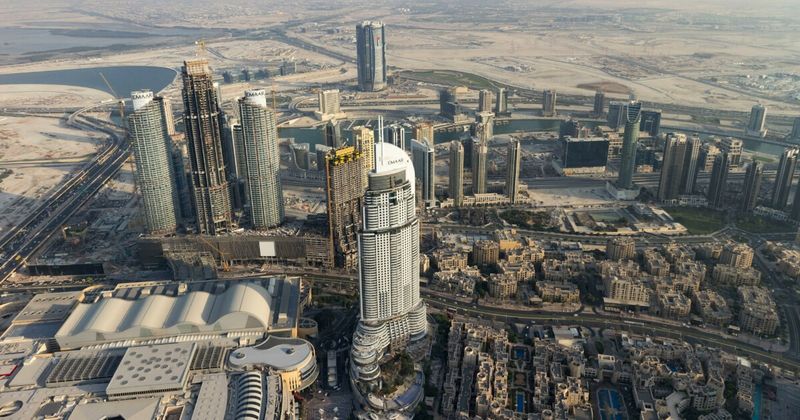
Sharjah Airport (SHJ) sits 15km from Dubai's city centre and offers Air Arabia fares to India that consistently undercut Dubai DXB equivalents by AED 100–300 — a saving that more than covers the taxi fare to Sharjah on any booking involving two or more passengers.
The May/June Price Anomaly: Why This Corridor Is Different
Every other India flight corridor in this series has December as the most expensive month. Dubai–India reverses this pattern — and the reason explains the entire economics of the corridor.
The cheapest month for flights from the United Arab Emirates to India is September, when tickets cost $98 (return) on average. On the other hand, the most expensive months are May and June, when the average cost of round-trip tickets is $222 and $214 respectively.
May and June in Dubai are when the Gulf heat peaks — temperatures regularly hitting 45–50°C, making outdoor life almost impossible. This is when the annual worker exodus begins: millions of Indian labourers and construction workers whose jobs involve outdoor work return to India for the summer. Simultaneously, Indian families in the UAE send children home to India for the school break. The combined demand from these two groups produces a concentrated May–June pricing spike that overwhelms the airline capacity on this corridor for 6–8 weeks.
December, by contrast, is mild weather in Dubai (25–30°C), the peak tourist season, the Dubai Shopping Festival, and the time when Dubai-based Indian workers prefer to stay. December demand for India flights from Dubai is real but not as concentrated as May–June — making December more moderate on this specific corridor than on any European or North American India departure.
The seasonal reversal is the single most important pricing fact for UAE-based Indian travellers to understand. If you're planning your annual India visit and can choose your month — never choose May or June from Dubai. The $98 September average versus $222 May average is a $124 per person difference. For a family of four: $496. That's a week of South India hotel costs.
| Month | Avg Return from DXB | Context | Verdict |
|---|---|---|---|
| January | AED 700–1,000 ($190–$272) | Winter — mild, peak tourist | Moderate |
| February | AED 650–900 ($177–$245) | Shoulder | ✅ Good value |
| March | AED 650–950 ($177–$259) | Pre-summer | Decent |
| April | AED 700–1,000 ($190–$272) | Summer approaches | Mixed |
| May | AED 800–1,200 ($218–$327) | ❌ Gulf summer exodus | Most expensive |
| June | AED 780–1,150 ($213–$313) | ❌ Gulf summer exodus cont. | Second most expensive |
| July | AED 650–900 ($177–$245) | Summer easing | Moderate |
| August | AED 600–850 ($163–$232) | Pre-September dip | ✅ Good |
| September | AED 360–650 ($98–$177) | ✅ Cheapest month | Best value of the year |
| October | AED 400–700 ($109–$191) | Post-monsoon India | ✅ Excellent |
| November | AED 500–800 ($136–$218) | Rising toward December | Good — book early |
| December | AED 600–950 ($163–$259) | Winter festival | Moderate — not peak |
Sources: FlyFlick, KAYAK UAE, Momondo, Skyscanner — July 2026.
September is the sweet spot by a clear margin. The $98 average return is the cheapest monthly average of any India corridor covered in this entire series — cheaper than Singapore's September average (S$158), Australia's July average (AU$935), the UK's May average (£464), and the US's September average ($500). The Dubai–India September fare is structurally different from any other corridor because the specific Gulf worker demand pattern collapses sharply in September when most summer returnees are already back in Dubai, India tourist demand is still in monsoon off-season, and airline inventory sits relatively unsold.
Every Route Dubai to India: The Full City-Pair Picture
The Dubai corridor's India coverage is more comprehensive than any other single international hub.
| Destination | Airport | Cheapest Return (AED) | Airlines | Flight Time |
|---|---|---|---|---|
| Delhi | DEL | AED 765–1,500 | Emirates, Air India, IndiGo, flydubai | 3h 30m |
| Mumbai | BOM | AED 75–1,200 | flydubai, Emirates, Air India Express, IndiGo | 3h 00m |
| Bengaluru | BLR | AED 300–1,200 | Emirates, Air India, IndiGo, Air India Express | 3h 45m |
| Kochi | COK | AED 200–1,000 | Emirates, Air India, IndiGo, flydubai | 3h 15m |
| Hyderabad | HYD | AED 300–1,100 | Emirates, Air India Express, IndiGo | 3h 35m |
| Chennai | MAA | AED 300–1,100 | Emirates, Air India, IndiGo | 3h 45m |
| Ahmedabad | AMD | AED 280–900 | Emirates, flydubai, IndiGo | 2h 40m |
| Kozhikode | CCJ | AED 250–800 | Emirates, Air India Express, flydubai | 3h 00m |
| Thiruvananthapuram | TRV | AED 280–850 | Air India Express, flydubai, IndiGo | 3h 15m |
| Amritsar | ATQ | AED 300–900 | flydubai, IndiGo | 3h 30m |
| Lucknow | LKO | AED 300–900 | flydubai, IndiGo | 3h 30m |
| Varanasi | VNS | AED 320–950 | flydubai | 3h 45m |
| Chandigarh | IXC | AED 280–850 | flydubai, IndiGo | 3h 30m |
| Kolkata | CCU | AED 400–1,100 | Emirates, Air India, IndiGo | 4h 30m |
| Goa | GOI | AED 350–1,000 | Emirates, Air India Express, flydubai | 3h 30m |
Sources: FlyFlick, KAYAK UAE, Momondo — July 2026. Cheapest return found in the last 72 hours.
The shortest route is Dubai (DXB) to Ahmedabad (AMD) with an average flight time of 2h 40m. That is the shortest international route in this series — 2 hours 40 minutes from Dubai to Ahmedabad, making it genuinely comparable to a domestic European flight in duration. For Gujarati expats in Dubai flying to Ahmedabad, the route is effectively a short hop.

The Dubai–Kerala routes (Kochi, Kozhikode, Thiruvananthapuram) are among the most competed city pairs on the corridor, driven by the UAE's large Keralite community — and the competition between Emirates, Air India Express, and flydubai on these specific routes produces some of the lowest fares per kilometre of any India corridor globally.
The Booking Window: Why Dubai Is Different From Every Other Corridor
For UK and US India corridors, optimal booking is 8–12 weeks out. For Dubai–India, the extraordinary frequency produces a dramatically shorter optimal window.
To get a below-average price on a flight from Dubai to India, you should book around 3 weeks before departure, which saves you about 10% compared to booking last-minute. For the absolute cheapest price, our data suggests you should book 11 weeks before departure.
The 3-week window for below-average pricing reflects the corridor's 978 weekly flights. With departures every 45–60 minutes to some Indian cities, airlines manage inventory dynamically right to the departure edge — discount classes stay available close to departure because the next flight is never more than a few hours away. For last-minute Dubai–India travel, a useful fare is almost always findable. For the absolute floor fare, 11 weeks out is the KAYAK recommendation — and the floor on this corridor (AED 75 = $20 return to Mumbai) makes even the 11-week recommendation feel like overkill.
The morning departure advantage: the cheapest time of day to fly to India is generally in the morning, when return flights cost AED 1,210 on average. Morning departures are around 11% cheaper than evening flights, on average. Evening departures — specifically the 21:00 window when most flights depart — carry a consistent premium on this corridor. Book the morning departure, save 11%.
Emirates Versus the Budget Carriers: The Honest Cabin Comparison
For Dubai-based travellers who have the choice between Emirates and the budget alternatives on this corridor, the decision framework differs from international long-haul comparisons.
At 3–4 hours, a Dubai–India flight is not a long-haul journey. The comfort delta between Emirates economy and IndiGo or Air India Express economy is meaningful on a 12-hour flight to Australia or a 14-hour flight to the USA. On a 3.5-hour Dubai–Delhi flight, that delta shrinks considerably. An IndiGo seat that would feel cramped on 12 hours is perfectly manageable for 3.5 hours. A paid meal on flydubai is a minor inconvenience on a 3-hour sector.
The calculus shifts depending on what time you depart. An Emirates 21:00 departure from Dubai arriving Delhi at 01:30 is essentially a sleep flight — Emirates economy's seat width and IFE quality matter more when you're trying to sleep 3 hours in. A morning IndiGo or Air India Express departure when you're alert and the sector is short makes the budget experience entirely appropriate.
Practical recommendation: for morning and afternoon Dubai–India departures, book IndiGo or Air India Express for the AED 100–300 saving over Emirates. For evening departures, consider whether Emirates' wider seat and better IFE justifies the premium for a 3.5-hour sleep sector. The answer is personal.
Check Live Flight Prices
Practical Tips for Dubai–India Flights
Always check SHJ alongside DXB. For travellers based in Dubai, a 30-minute drive to Sharjah Airport for Air Arabia fares that are AED 100–300 below DXB equivalents is worth running the numbers. The FlyFlick search includes both airports — use the "from Dubai metro area" search option to surface both DXB and SHJ simultaneously.
Book September for India travel from Dubai. The $98 return average is not promotional pricing — it's the structural consequence of the post-summer demand collapse that happens every September on this corridor. If your India annual leave is flexible, September from Dubai delivers the cheapest India fare of any departure city in this series.
Avoid May and June. The Gulf summer worker exodus pricing is the most consistently expensive window on this corridor. An AED 850 June fare on a route that costs AED 360 in September is not a special case — it's the pattern every year, and it will repeat in 2026.
Book morning departures. The 11% morning discount on this corridor is reliable per KAYAK data. The most popular departure times for flights from Dubai to Delhi are late at night, from 9pm to midnight. This accounts for around 25% of total traffic. That evening premium is real. Morning Dubai–India departures consistently price below the evening window.
For Tier-2 Indian cities, check flydubai first. Before defaulting to Emirates or Air India for Kozhikode, Varanasi, Lucknow, Chandigarh, Amritsar, or Nagpur — check flydubai. Its Tier-2 India network is the most specific competitive advantage of the Dubai corridor and the fares reflect that the competition is thinner on these specific routes.
Before any Dubai–India booking, add Visitors Coverage travel insurance from $1/day (~AED 3.67). Trip cancellation, medical, and delay cover. On a corridor where 27% of flights experience delays, protection matters. VisitorsCoverage. EKTA from $0.99/day as budget backup. EKTA. Compensair covers delays over 3 hours for up to €600 per passenger — file from your phone on arrival in India. Compensair
Activate your India eSIM before boarding in Dubai. Saily's India 5G eSIM from ~$8.50 (AED 31) for 7 days — connectivity from landing in Delhi or Mumbai. Saily. Yesim unlimited for 2+ week trips. Yesim. Drimsim for remote India areas. Drimsim. Airalo's 200+ country plan from $1.50/day covers UAE and India in one activation — useful if you're combining travel in both countries. Airalo
For airport arrival in India, see FlyFlick's Delhi vs Mumbai vs Kochi vs Chennai arrival guide. And for context on how Dubai's pricing compares against the Doha and Abu Dhabi alternatives for travellers considering which Gulf city to transit through on longer journeys, see our Gulf stopover comparison.
Check Live Flight Prices

Searching both DXB and SHJ simultaneously on FlyFlick's Virtual Interlining search takes 90 seconds and regularly surfaces the AED 100–300 Sharjah price advantage before you've committed to the more expensive Dubai departure that dominates default search results.
Bottom Line
Dubai–India is categorically different from every other India flight corridor — in frequency, in pricing, in seasonal pattern, and in the city coverage that flydubai's Tier-2 India network delivers. Sixty-one daily direct departures don't happen by accident. They happen because 3.5 million Indian residents created consistent, year-round demand that airlines couldn't afford to underserve.
The pricing consequences are direct: September at $98 average return. A 3-week optimal booking window instead of 8–12. Morning departure discounts of 11%. Sharjah at AED 100–300 below Dubai on equivalent routes. Saudia as the cheapest airline on a corridor most people associate with Emirates.
The mistake Dubai-based India travellers make consistently: booking May or June when their annual leave falls in that window and paying $222 average for a route that costs $98 two months later. If your leave is at all flexible — September is the answer. If it isn't — book 11 weeks out, fly morning, and check Sharjah first.
Your Dubai to India Flight Planning Checklist
🛡️ VisitorsCoverage — Trip cancellation, medical and delay cover from $1/day (~AED 3.67). Add before confirming any DXB–India booking — 27% delay rate on this corridor.
🛡️ EKTA — Budget secondary cover from $0.99/day at ektatraveling.com.
✈️ FlyFlick Flight Search — 700+ airlines + Virtual Interlining. Search DXB and SHJ simultaneously — the AED 100–300 Sharjah saving only surfaces when you compare both airports. Skyscanner, KAYAK and Google Flights rarely surface the full SHJ vs DXB comparison automatically.
✈️ Compensair — Claim up to €600 (~AED 2,400) for delays over 3 hours. 27% of Dubai–India flights are delayed — file from your phone on arrival.
🚗 GetTransfer — Pre-book fixed-fare airport pickup at Delhi T3, Mumbai T2, Kochi COK or Chennai MAA. After even a 3-hour flight, have your driver name-card waiting in arrivals.
🚗 KiwiTaxi — Fixed-fare intercity India from your arrival airport: Delhi–Agra, Mumbai–Pune, Mumbai–Goa.
📱 Saily — India 5G eSIM from ~$8.50 (AED 31)/7 days. Activate before boarding at DXB or SHJ — connectivity on India landing.
📱 Yesim — Unlimited data for 2+ week or multi-city India trips.
📱 Drimsim — Off-grid India coverage for remote areas and hill stations.
📱 Airalo — 200+ country plans from $1.50/day. Covers UAE and India in one plan — activate before you leave home.
🛂 India e-Visa — Apply at indianvisaonline.gov.in. $25 (~AED 92). Most nationalities eligible. Allow 4 business days minimum before travel.
🛂 Month check — Avoid May and June from Dubai. September average $98 return. October second cheapest. Never book the Gulf summer window without checking what September costs first.
Book September. Fly morning. Check Sharjah. Pay $98.