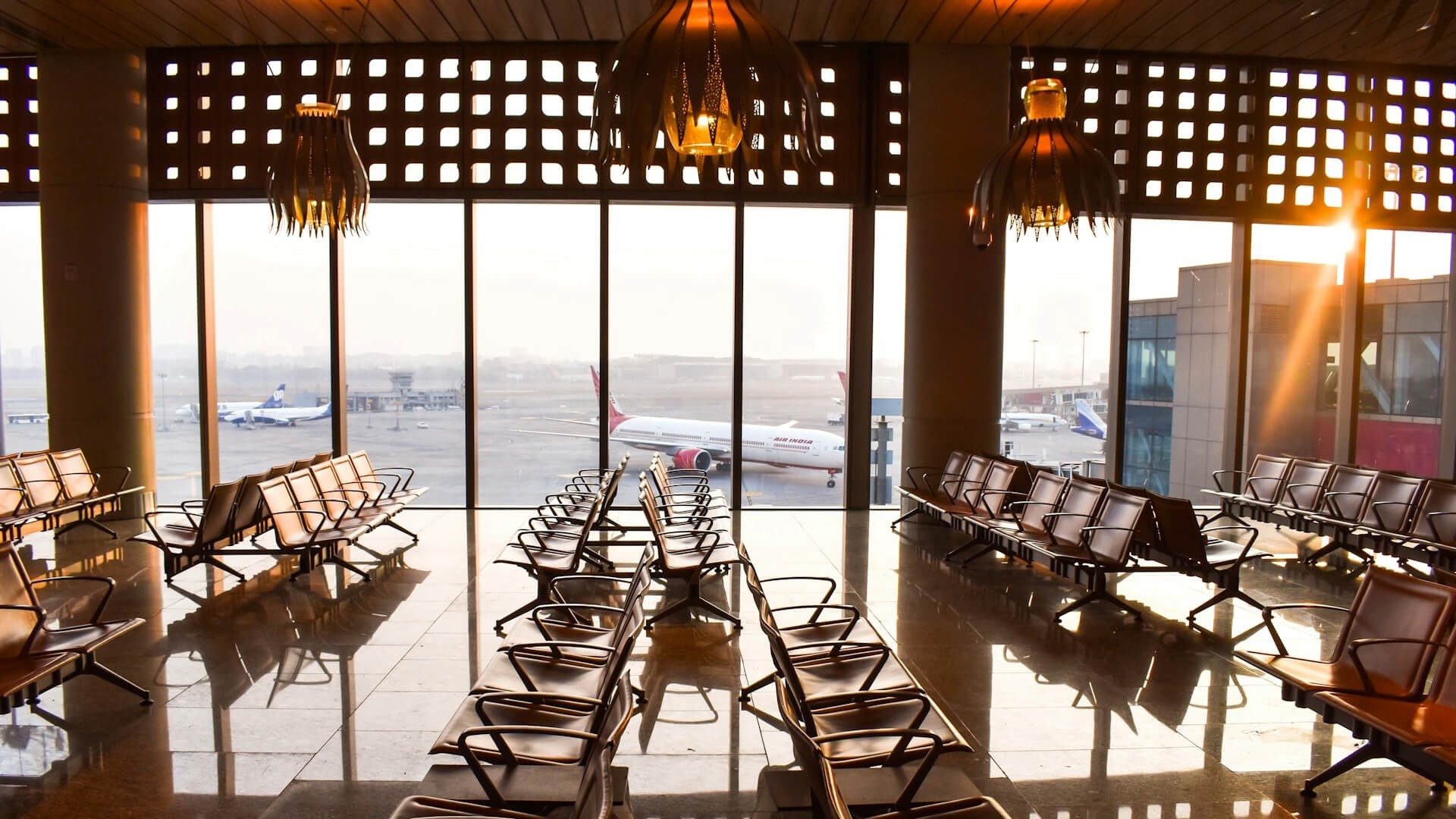

The first decision most first-time India visitors make — which city to fly into — is also the one they think about the least. They default to Delhi because it sounds like the obvious answer, book a connecting domestic flight for 2 hours after landing, and discover at Delhi T3 that Indian immigration at peak hours moves at a pace that makes a 2-hour connection window feel optimistic at best and delusional at worst. Queues for immigration at Delhi T3 can be very long — and arriving passengers during peak hours should budget 1–3 hours from wheels-down to cleared customs.
India has four airports that receive the bulk of international long-haul traffic: Delhi (DEL), Mumbai (BOM), Kochi (COK), and Chennai (MAA). They serve different regions, carry different congestion levels, and deliver very different first arrival experiences. Choosing the wrong one doesn't just inconvenience you — it can derail a connection, cost ₹4,000–₹12,000 ($43–$128) in unnecessary domestic travel or add half a day to your journey.
This is the guide that tells you which one actually suits your India itinerary.
The Quick Answer: Which Airport for Which India Trip
Before the detail, the orientation table.
| Airport | Code | Best For | Avoid If | Immigration Speed |
|---|---|---|---|---|
| Delhi IGI | DEL | North India, Rajasthan, Himalayas, Golden Triangle | Tight onward connections on separate tickets | Slow — 1–3h peak |
| Mumbai CSIA | BOM | Mumbai city, Goa, western coast, open-jaw | You're connecting domestically and flying peak season | Moderate — 45–90 min |
| Kochi COK | COK | Kerala, backwaters, hill stations, South India start | North India-focused itineraries | Fast — 20–40 min |
| Chennai MAA | MAA | Tamil Nadu, Puducherry, Andhra coast, South India overland | West coast or north India trips | Moderate — 30–60 min |
This table assumes a standard international arrival with e-Visa, single checked bag, and no FTI-TTP registration. Times vary significantly by time of day and season.
Check Live Flight Prices
Delhi Indira Gandhi International Airport (DEL): India's Biggest Gateway — and Its Biggest Bottleneck
Indira Gandhi International Airport is India's busiest airport, handling 79 million passengers in 2024–25 and holding the maximum number of runways of any Indian airport at four. Delhi's airport is currently India's primary global gateway, with a large number of nonstop and one-stop connections from North America, Europe, and the Middle East — and its Terminal 3 is modern, with a wide range of lounges, dining, and shopping options.
All international flights at Delhi use Terminal 3 (T3). After the Air India–Vistara merger completed in late 2024, the combined Air India now operates all international and most domestic flights from T3 as well. T3 is the flagship terminal — vast, well-designed, with good signage, duty-free, and food options that actually open at 3 AM when half of Delhi's long-haul traffic lands.
The immigration reality nobody puts in their guide: Queues for immigration at T3 can be very long — and the only shorter queue for non-Indian passport holders requires specific eligibility or FTI-TTP registration. Arrive at least 3 hours before international departure from Delhi T3, and 4 hours during peak season (June–August and December) when immigration queues stack significantly. On arrival at peak hours — particularly overnight flights landing between 10 PM and 2 AM — a 90-minute immigration queue is common. A 3-hour queue during December is documented and has been reported by multiple travellers on TripAdvisor forums in recent months.
If you're a frequent India visitor, this has a solution: India's Fast Track Immigration – Trusted Traveller Programme (FTI-TTP) allows pre-verified passengers to skip traditional counters and use automated e-gates with biometric authentication at Delhi T3, Mumbai, Bengaluru, Chennai, Hyderabad, and Kolkata — with Kochi expansion planned. Registration takes approximately one month (2–4 week initial verification, 2–3 days biometric sync) — not useful for an imminent trip, but genuinely worth registering for if you visit India twice a year or more.
The domestic connection problem: For self-transfer between international and domestic flights at Delhi on separate tickets, the minimum connection time is 4–5 hours — accounting for immigration, baggage claim, shuttle between terminals, check-in, and domestic security. Most first-time visitors book 2–3 hour connections assuming the experience will resemble a European hub. It doesn't. Book anything under 4 hours on separate tickets and you're playing a risky game.
On a single ticket with the same booking reference — Air India or any airline handling the connection — the airline protects you if immigration runs long. On separate tickets, you're on your own.
Delhi's strongest case: If your India trip is north-focused — Delhi city, Agra, Jaipur, the Golden Triangle, Rajasthan, Uttarakhand, Himachal Pradesh, Amritsar, Varanasi — there is no better gateway. For travellers heading to northern India, the Himalayas, or Rajasthan, Delhi is typically the most convenient arrival point with direct access to the destinations most associated with India travel. The domestic network out of Delhi is the deepest of any Indian airport, with direct IndiGo, Air India, and SpiceJet connections to essentially every regional city.
Delhi city transport from T3: The Airport Express Metro Line (Orange Line) connects T3 to New Delhi Railway Station in approximately 20 minutes, running every 10–15 minutes. Pre-paid taxi counters at the arrival hall exit provide fixed-fare rides to anywhere in Delhi — no haggling, no scam risk. A taxi to Connaught Place runs approximately ₹450–₹600 ($4.80–$6.40). A taxi to South Delhi or Greater Kailash runs ₹600–₹800 ($6.40–$8.50).
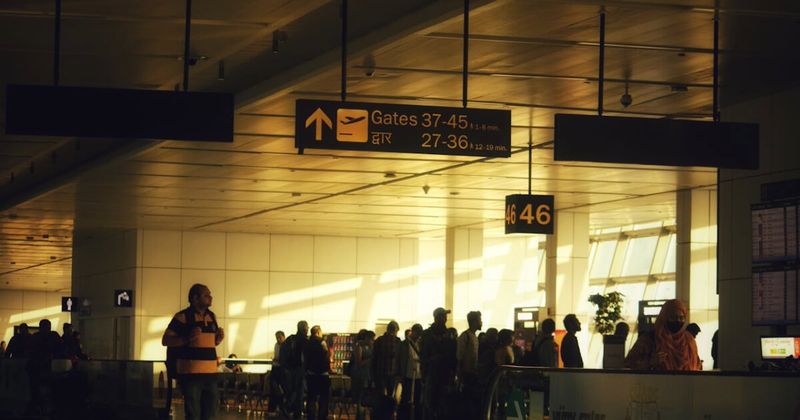
Delhi T3 handles all international arrivals and is genuinely impressive architecturally — but its scale and volume mean immigration queues at peak hours regularly run 90–180 minutes, a practical reality that most first-time India visitors are not warned about before arrival.
Mumbai Chhatrapati Shivaji Maharaj International Airport (BOM): Efficient But Operationally Constrained
Mumbai's airport is the second-busiest in India and one of the most operationally unusual major international airports in the world. Mumbai Airport is the busiest airport in the world operating with only one runway at any given time — a constraint born from its geography between the Arabian Sea, dense residential areas, and military airspace that has limited expansion for decades. The practical effect: any significant weather event, aircraft technical issue, or ATC disruption cascades through Mumbai's schedule in a way that a multi-runway airport absorbs without consequence.
Terminal 2 (T2) handles all international arrivals at Mumbai. It's a genuinely impressive building — a 4.4-kilometre-long structure with a roof clad in traditional Indian art motifs and a large art installation called the Jaya He that lines the departures walkway. The international arrivals process at T2 is more streamlined than Delhi T3 in most scenarios — immigration at Mumbai T2 during non-peak periods typically clears in 45–75 minutes, though peak season (December, June) can extend this to 90+ minutes.
Mumbai's strongest case: As an arrival city, Mumbai works best for travellers whose itinerary begins in the city itself — Maharashtra, Goa (2.5 hours by road or a short domestic flight), or the western coast. For Western India, Mumbai offers excellent connectivity, and for a dedicated Mumbai stay — Colaba, the Gateway of India, Dharavi, Bandra — landing directly is the obvious choice.
Mumbai also anchors one of the most practical India itinerary strategies: the open-jaw flight. Flying into Delhi and out of Mumbai (or the reverse) allows travellers to cover both the North India circuit (Delhi, Agra, Rajasthan) and the West India circuit (Mumbai, Goa, Kerala) without backtracking. An open-jaw ticket — Delhi inbound, Mumbai outbound — typically costs only marginally more than a standard return and eliminates the domestic repositioning flight back to your arrival city at the end of the trip. On FlyFlick's flight search, comparing open-jaw combinations from your home country to Delhi/Mumbai takes the same search time as a standard return.
The one-runway delay risk for domestic connections: If you land at Mumbai T2 and have a domestic connection — to Goa, Kochi, Bengaluru, or Chennai — the single runway increases your delay risk in ways that Delhi's four-runway configuration doesn't. Arrive 4 hours early for international departure from Mumbai T2 during peak season. For domestic connections from T2 after an international arrival, build a minimum 3.5-hour buffer on the same ticket or 5 hours on separate tickets.
Mumbai city transport from T2: The Mumbai Metro Line 1 extension and the upcoming international airport metro station will eventually improve ground transport significantly — for now, Ola and Uber are the most practical options. A ride to South Mumbai (Colaba/Fort area) runs approximately ₹600–₹900 ($6.40–$9.60) and takes 45–75 minutes depending on traffic. The Western Express Highway toward Bandra runs ₹350–₹550 ($3.70–$5.85). Pre-booked airport transfers via Get Transfer provide a fixed fare with meet-and-greet service — useful after a long-haul arrival when negotiating with kerbside drivers is not something you want to do. GetTransfer — fixed fare airport pickup. For intercity transfers like Mumbai to Pune or Mumbai to Nashik, KiwiTaxi offers pre-booked fixed-fare intercity options from T2.
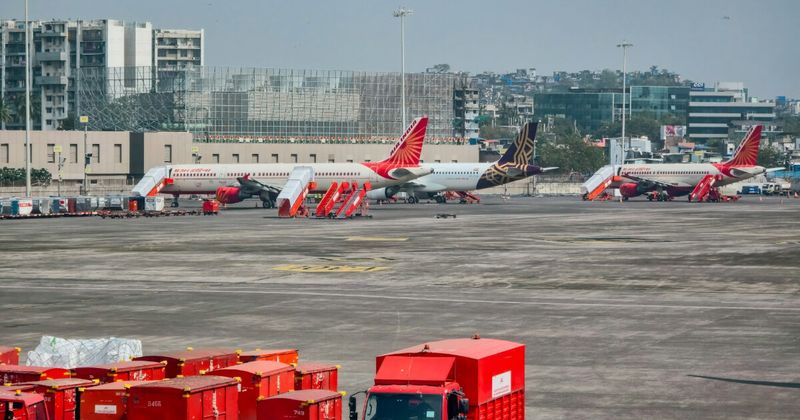
Mumbai's single operational runway makes it one of the world's most congested airport configurations — a weather delay or technical issue cascades through the entire schedule in a way that Delhi's four-runway airport simply absorbs without disruption.
Kochi Cochin International Airport (COK): The Underrated South India Gateway
Cochin International Airport started in 1999 and is known as the world's first solar-powered airport. That fact is genuinely impressive — 46,150 solar panels generating more electricity than the airport consumes, making it fully energy self-sufficient. But for international travellers deciding which Indian airport to land at, Kochi's more practical advantage is what happens after you land: the immigration process is faster, the scale is more manageable, and the gap between wheels-down and getting into a car to start your Kerala trip is typically 35–50 minutes rather than 90–180 minutes at Delhi.
Kochi and Thiruvananthapuram in Kerala handle significant traffic from the Gulf and are excellent choices for travellers targeting Kerala's backwaters, beaches, and hill stations. The Gulf connection is specifically important: a large proportion of Kochi's international flights arrive from Dubai, Abu Dhabi, Doha, and Riyadh — reflecting the large Keralite community working in the Gulf. Emirates, Air Arabia, IndiGo, Air India, and Fly Dubai all serve Kochi from Middle East hubs. For international travellers connecting via the Gulf to reach Kerala, Kochi is the direct gateway — no Mumbai or Delhi transit, no domestic connection, no additional ticket.
What Kochi lacks: Long-haul direct services. If you're flying from the USA, UK, Canada, or Australia, Kochi is unlikely to be a direct connection from your departure country on most airlines. You'll connect through a Gulf hub, Singapore, or a domestic Indian city. The one exception is Air India's occasional charter and special services, but for regular scheduled international arrivals from Western countries, Kochi will typically involve one hub stop. That's not a dealbreaker — it just means the comparison isn't always direct flight vs direct flight.
Kochi's strongest case: Your India itinerary focuses on Kerala — the backwaters, Munnar, Wayanad, Fort Kochi, Varkala, Kovalam. Kochi serves as a convenient entry point for exploring Kerala's backwaters, beaches, and hill stations, and its connections to domestic destinations in South India are strong. Landing directly at Kochi saves you the Delhi or Mumbai transit, the domestic flight cost (₹4,000–₹8,000 / $43–$85 one-way), and 4–8 hours of additional travel time. If your trip is Kerala-first, Kochi is not just convenient — it's the correct choice.
FTI-TTP expansion to Kochi is planned as part of the programme's second tier of airports — meaning the fast-track immigration advantage will eventually apply here too, though it's not yet active for most Kochi arrivals.
Kochi city transport from COK: Kochi airport is located in Nedumbassery, approximately 25 km from the city centre. Pre-booked airport transfers via GetTransfer run approximately ₹1,200–₹1,800 ($12.77–$19.15) to MG Road or Fort Kochi. The Kochi Metro connects to the city but doesn't yet reach the airport directly — the extension is under construction and expected to connect from a nearby station. For most travellers, a pre-booked car is the most practical option from COK. GetTransfer — Kochi airport pickup

Flying into Kochi directly for a Kerala-focused itinerary saves ₹4,000–₹8,000 in domestic airfare and 4–8 hours of transit time compared to landing at Mumbai or Delhi and connecting — an arithmetic decision that most Kerala itinerary guides never make explicit.
Chennai International Airport (MAA): The East Coast Gateway
Chennai International Airport (MAA) is South India's second major international gateway after Kochi, and the primary entry point for travellers whose India itinerary focuses on Tamil Nadu, Andhra Pradesh, Puducherry, and the Coromandel Coast. Chennai International Airport is a key hub for Tamil Nadu and eastern coastal regions, with international flights from Asia, the Middle East, and some European cities.
Chennai's international terminal handles a broad range of Gulf, Southeast Asian, and some European connections — Singapore Airlines, Malaysia Airlines, Emirates, IndiGo (international), Air India, and Sri Lankan Airlines all serve MAA. The airport is currently mid-expansion: a new integrated terminal is under construction that will significantly increase capacity and modernise the arrival experience. For 2026 arrivals, the current terminal is functional and manageable, with immigration times typically running 30–60 minutes for international arrivals on non-peak days.
Chennai's strongest case: Tamil Nadu is a deeply under visited region with extraordinary temple architecture, coastal towns, and a distinct culture that rewards slower travel. Chennai as a first-arrival city allows a south-to-north itinerary — starting in Tamil Nadu, moving up through Karnataka to Bengaluru, across to Goa, up to Mumbai — an overland circuit that no Delhi-first itinerary can replicate without significant backtracking. For travellers interested in Mahabalipuram, Thanjavur, Madurai, Rameswaram, or the temple circuits of Tamil Nadu, Chennai is the correct arrival city by both geography and time efficiency.
For travellers whose itineraries focus on the south, flying directly into southern airports like Chennai instead of backtracking from Delhi or Mumbai can save both time and money. The domestic connection cost from Delhi to Chennai — for a traveller who defaulted to the capital as their arrival city — runs ₹4,500–₹9,000 ($47.87–$95.74) one-way on IndiGo or Air India, plus 2.5–3 hours flight time. For a 10-day South India trip, that's both wasted money and wasted time.
The FTI-TTP advantage at Chennai: FTI-TTP is already active at Chennai as a Tier 1 airport, alongside Delhi, Mumbai, Bengaluru, Hyderabad, and Kolkata. Frequent India travellers arriving at MAA can register in advance and use automated e-gates, significantly reducing immigration time.
Chennai city transport from MAA: Chennai airport is exceptionally well-connected by Chennai Metro (Purple Line), which runs directly from the airport to multiple city stations including Chennai Central railway station. The metro fare from the airport to Chennai Central is approximately ₹50–₹60 ($0.53–$0.64) — arguably the best value airport-to-city connection of any Indian airport covered in this guide. Pre-booked airport transfers via GetTransfer from MAA run ₹800–₹1,400 ($8.51–$14.89) to central Chennai locations. GetTransfer — Chennai airport transfer
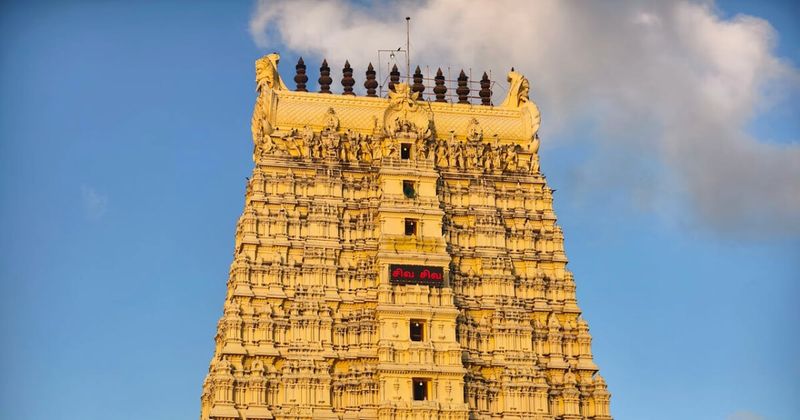
Chennai is the correct arrival city for any itinerary centred on Tamil Nadu's temple circuits — and the Chennai Metro's direct airport line delivers travellers from the runway to the city's central railway station for under ₹60 ($0.64), the best value airport transfer of any major Indian gateway.
The Open-Jaw Strategy: Why You Shouldn't Always Fly Into and Out of the Same City
This is the airport comparison insight that most India itinerary guides mention once and never explain properly.
An open-jaw flight — flying into one Indian city and out of another — is the most efficient way to cover multi-region India without backtracking. Here are the three open-jaw combinations that make the most practical sense for different itinerary types:
Delhi in, Mumbai out (or reverse): The classic combination for the North India + West India circuit. Arrive Delhi, do the Golden Triangle (Delhi–Agra–Jaipur), travel to Rajasthan, take a domestic flight to Mumbai, spend 2–3 days in the city, fly home. Delhi and Mumbai are very contrasting experiences — both worth including. Udaipur in Southern Rajasthan is equidistant from both cities, which makes it a natural pivot point. Open-jaw tickets on this combination typically cost ₹3,000–₹8,000 ($31.91–$85.10) more than a standard return — less than the domestic repositioning flight you'd otherwise need to buy.
Delhi in, Kochi out: The North-South India circuit. Arrive Delhi, travel south by train or domestic flight through Rajasthan, take the train to Bengaluru, continue to Kerala, fly home from Kochi. This is the most geographically efficient way to see India's full range in a single trip. The Kochi-out flight saves ₹6,000–₹12,000 ($63.83–$127.66) versus flying back to Delhi for the return.
Mumbai in, Chennai out: The West and South India circuit. Arrive Mumbai, travel to Goa by road, continue down the Karnataka coast, enter Tamil Nadu, fly home from Chennai. For travellers whose itineraries focus on the south, flying directly into southern airports instead of backtracking from Delhi or Mumbai saves both time and money — and the Mumbai-Chennai open jaw makes this circuit doable in 14–16 days without a single unnecessary backtrack.
Search open-jaw combinations on FlyFlick's flight tool by selecting "Multi-city" rather than "Return" — the pricing comparison often reveals that the open-jaw costs less than you'd pay for the separate domestic repositioning flight. Search open-jaw India flights — FlyFlick.
DigiYatra and FTI-TTP — The Two Programmes International Travellers Never Use
These two programmes shorten your India airport experience significantly. Neither is widely known among first-time international visitors.
DigiYatra: DigiYatra reduces average security wait time to 11 minutes versus 28 minutes for non-users and is currently live at Delhi, Mumbai, Bengaluru, Hyderabad, Pune, Kolkata, Chennai, Kochi, and several other Indian airports. An international OCI/Aadhaar-linked variant is planned for early 2026 launch. For domestic connections after international arrival at any of these airports — clearing domestic security for your onward IndiGo or Air India flight — DigiYatra significantly accelerates the process. For OCI cardholders specifically, this is immediately relevant on arrival.
FTI-TTP: India's Fast Track Immigration Trusted Traveller Programme is currently live at Delhi T3, Mumbai, Bengaluru, Chennai, Hyderabad, and Kolkata, with expansion planned to Kochi, Ahmedabad, and others. Registration takes approximately one month but allows automated e-gate immigration clearance at all enrolled airports. For anyone who visits India more than once a year — NRI families, business travellers, frequent leisure visitors — registering before your next trip eliminates the immigration queue variable entirely.

Registering for FTI-TTP takes approximately one month but allows automated e-gate immigration at six Indian airports — for anyone visiting India twice a year or more, the registration time investment pays back within the first 20 minutes of the next arrival.
A practical note on Indian lounge access: DreamFolks terminated its major Indian airport lounge contracts in late 2025, and most banks have transitioned to direct partnerships with lounge operators. If you carry an HDFC, ICICI, Axis, or SBI credit card and expect airport lounge access at Delhi T3, Mumbai T2, or Chennai MAA, verify your card's current lounge programme with your bank before travel — the DreamFolks-based access many cards previously offered no longer applies at the majority of Indian airport lounges.
Before landing at any Indian airport — whether Delhi, Mumbai, Kochi, or Chennai — travel insurance is non-negotiable. VisitorsCoverage covers medical emergencies, trip interruption, and delay costs from $1/day (~₹94). On a country as complex and diverse as India, where infrastructure quality varies enormously beyond the major cities, comprehensive medical cover from the moment you land is the first essential. VisitorsCoverage — international travel insurance. EKTA offers budget cover from $0.99/day as a secondary option. EKTA — travel insurance
Activate your India eSIM before landing. Saily's India city 5G eSIM from ~$8.50 (₹800) for 7 days activates before you board your home country flight — you have connectivity from the moment you land, without queueing at airport SIM counters. Saily — India eSIM. Yesim's unlimited plan is better for 2+ week or multi-city India trips. Yesim — unlimited eSIM. For remote areas beyond major cities — hill stations, wildlife reserves, rural Kerala — Drimsim's off-grid coverage is more reliable. Drimsim — remote eSIM. For the widest eSIM destination coverage, Airalo offers 200+ country plans from $1.50/day — useful if you're combining India with a Middle East layover stopover. Airalo
Check Live Flight Prices
How to Handle Airport Transfers on Arrival — All Four Cities
Getting from the plane to your accommodation is where first-time India arrivals most commonly get overcharged or overwhelmed. Here's the honest option at each airport:
Delhi T3: Pre-paid taxi counters inside the terminal provide fixed-fare official taxis — the safest and most predictable option on a long-haul arrival when your negotiating bandwidth is zero. Airport Metro Express to New Delhi station: ₹60 ($0.64), runs every 10–15 minutes. For pre-booked airport transfers with driver name-card meet-and-greet: GetTransfer covers Delhi T3 pickups with fixed fare and vehicle selection in advance. GetTransfer — Delhi T3. For intercity transfers Delhi–Agra or Delhi–Jaipur on the day after arrival: KiwiTaxi offers fixed-fare pre-booked options from ₹2,800–₹4,500 ($29.79–$47.87). KiwiTaxi — Delhi intercity
Mumbai T2: Ola and Uber are available from the designated zone outside arrivals — the most consistent pricing for city travel. Pre-booked GetTransfer meets you at arrivals with a name board. For onward intercity travel — Mumbai to Pune, Mumbai to Nashik, or Mumbai to Goa overland — KiwiTaxi provides fixed-fare pre-booked cars from T2. KiwiTaxi — Mumbai intercity
Kochi COK: Pre-booked car from GetTransfer is the most practical option for most international arrivals — the airport's distance from the city (25 km) and limited public transport connectivity makes app-based or pre-booked transfers the default choice. GetTransfer — Kochi COK
Chennai MAA: The Chennai Metro is the best-value airport transfer in this comparison — direct service to Chennai Central for ₹50–₹60 ($0.53–$0.64). For door-to-door or hotel pick-up, GetTransfer covers MAA arrivals. GetTransfer — Chennai MAA
For a complete guide to the first 72 hours after landing in India — including SIM cards, currency exchange, and navigating arrival at major Indian airports — see FlyFlick's first-time India travel guide. And for context on which international flights connect to which Indian airports and at what price, our nonstop USA to India route guide and UK nonstop route guide cover the full picture.
Pre-booking your airport transfer before landing — especially at Delhi T3 where you may clear immigration exhausted after a 14-hour flight and a 90-minute queue — removes the one part of India arrival that most commonly goes wrong for first-time visitors.
Bottom Line
Delhi is India's default international gateway — and for north-focused itineraries, it earns that status. But it also has India's most congested immigration hall and its most logistically complex terminal transfer process. Book a 2-hour domestic connection at Delhi T3 on separate tickets and you will almost certainly miss it.
Mumbai is the second choice that makes sense when your India trip is west- or south-focused, when you want an open-jaw combination, or when the direct flight from your departure country connects more cleanly to BOM than DEL. Its single runway is the practical risk nobody talks about.
Kochi is the best arrival experience of the four — faster immigration, smaller scale, and a direct gateway to one of India's most visited and most rewarding regions. If Kerala is in your itinerary, flying directly into Kochi is not just convenient. It's the obvious choice.
Chennai is correct for South India-focused overland trips, Tamil Nadu temple circuits, and anyone whose India journey begins in the east. The metro connection from the airport to the city is the best-value airport transfer in the country.
Register for FTI-TTP before you come. Activate your eSIM before you board. Pre-book your airport transfer before you land. Those three decisions change your first 3 hours in India from stressful to smooth.
Your India Airport Arrival Checklist
🛡️ VisitorsCoverage — Medical and trip cancellation cover from $1/day (~₹94). Add before your international flight departs — medical emergencies in India are expensive without comprehensive cover. 🛡️ EKTA — Budget secondary insurance from $0.99/day at ektatraveling.com.
✈️ FlyFlick Flight Search — Search open-jaw combinations (Delhi in, Kochi out) alongside standard returns — frequently saves ₹4,000–₹12,000 vs the domestic repositioning flight. ✈️ Compensair — Claim up to €600 for connecting flight delays over 3 hours. Essential if your India itinerary involves a Gulf or Asian hub connection.
🚗 GetTransfer — Pre-book fixed-fare airport pickups at Delhi T3, Mumbai T2, Kochi COK and Chennai MAA. Driver meets you in arrivals — no negotiating after a 14-hour flight. 🚗 KiwiTaxi — Fixed-fare intercity transfers from any Indian airport: Delhi–Agra, Delhi–Jaipur, Mumbai–Pune, Mumbai–Goa. Pre-book before arrival.
📱 Saily — India city 5G eSIM from ~$8.50 (₹800)/7 days. Activate before boarding — connectivity from the moment you land. 📱 Yesim — Unlimited data for 2+ week or multi-city India trips. 📱 Drimsim — Off-grid eSIM for hill stations, wildlife reserves and remote Kerala. 📱 Airalo — 200+ country plans from $1.50/day. Best if combining India with a UAE or Singapore layover stopover.
🛂 India e-Visa — Apply at indianvisaonline.gov.in. $25 (~₹2,350) tourist e-visa. Allow 4 business days minimum before travel. 🛂 FTI-TTP registration — Register at least one month before travel at ftittp.gov.in if you visit India twice a year or more. Eliminates the immigration queue at Delhi, Mumbai, Chennai and 4 other airports.
Land smart. Clear fast. Start exploring.