
The C$524 average gap between Vancouver and Toronto to Delhi isn't an accident of supply and demand. It has a geographic explanation that makes the gap persistent across most months and most airlines.
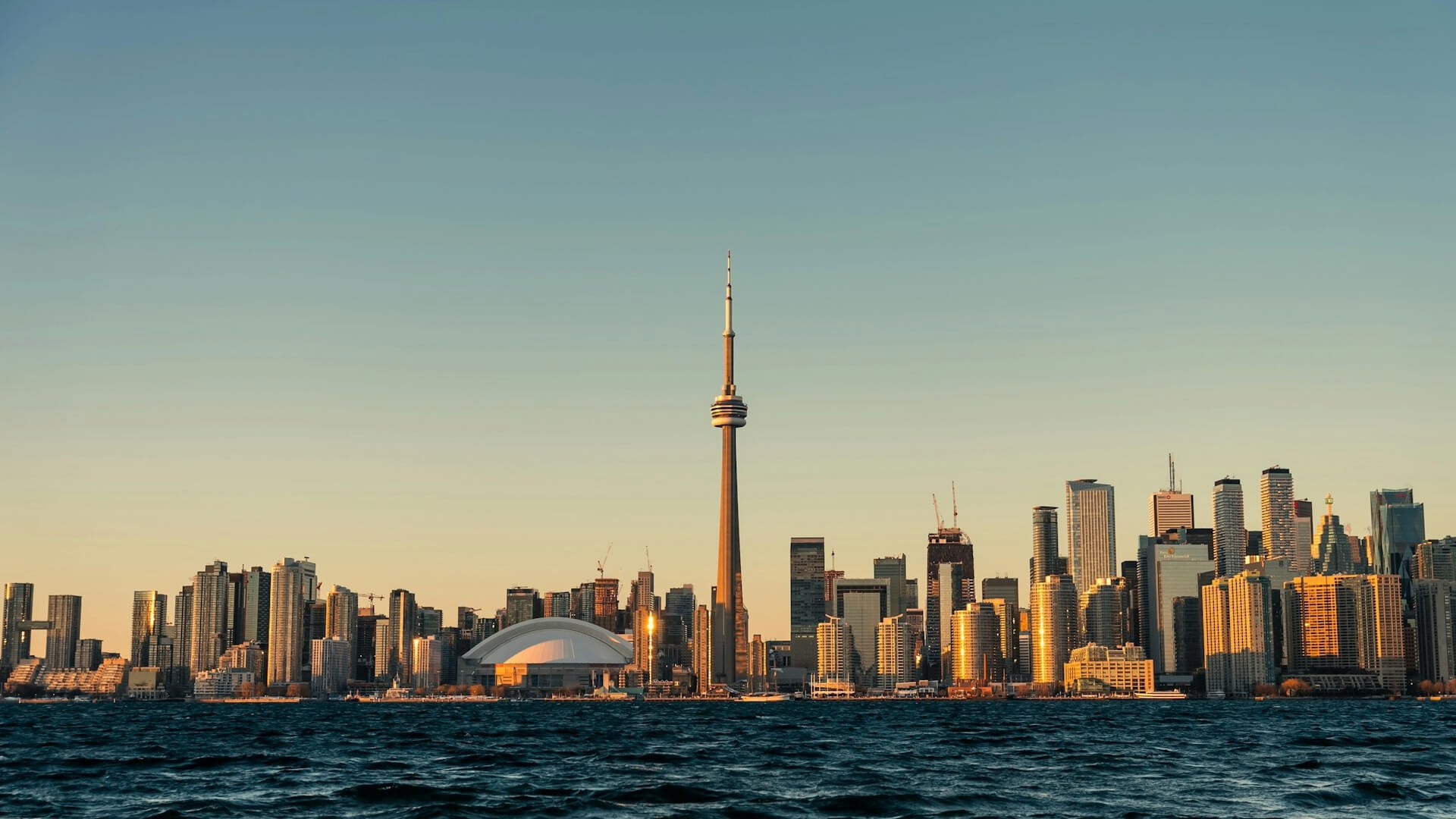
Toronto (YYZ) is Canada's east coast hub. From Toronto, the most geographically efficient routing to India uses Middle East hubs — Dubai, Doha, or Abu Dhabi — because the flight path goes east across the Atlantic, through Europe or directly to the Gulf, and into India. Emirates, Qatar Airways, and Etihad are the dominant connecting carriers on the Toronto corridor, and their fares reflect the premium positioning of Gulf carriers on transatlantic routes.
Vancouver (YVR) is Canada's Pacific coast hub. From Vancouver, the most geographically efficient routing to India goes west — across the Pacific to Hong Kong, Seoul, Singapore, or Tokyo — and then into India from the east. Cathay Pacific, Korean Air, Singapore Airlines, and Air Canada's Pacific routing are Vancouver's natural carriers, and Pacific hub connecting fares on the Canada–India corridor run structurally lower than Gulf hub alternatives because Asian budget and mid-market carriers compete more aggressively on Pacific transoceanic pricing.
The result: Vancouver travellers access a different and cheaper hub ecosystem than Toronto travellers on the same India destination. Cathay Pacific YVR–HKG–DEL regularly surfaces at C$1,200–$1,500. Qatar Airways YYZ–DOH–DEL rarely drops below C$1,600 on comparable dates. The routing geography enforces the fare difference.
| Departure | Best Hub Routing | Avg Return (C$) | Floor Fare | Cheapest Airline |
|---|---|---|---|---|
| Toronto (YYZ) | Gulf hubs — DXB, DOH, AUH | C$1,700–$2,200 | C$1,376 (rare) | Air India direct |
| Vancouver (YVR) | Pacific hubs — HKG, SIN, ICN | C$1,200–$1,700 | C$846 (specific dates) | Air India / Cathay Pacific |
| Montreal (YUL) | Atlantic/Gulf hubs — LHR, DXB | C$1,400–$1,900 | C$1,200+ | Air India |
| Calgary (YYC) | Any hub | C$1,600–$2,200 | C$1,400+ | Air India seasonal |
Sources: FlyFlick flight search, KAYAK Canada, Momondo Canada — April 2026. All prices C$ return economy, include taxes.
The practical implication for Ontario-based travellers: if your India trip flexibility allows flying from Montreal rather than Toronto, Air India operates Montreal–Delhi 3x weekly and Montreal–Mumbai 2x weekly — and KAYAK data shows Montreal returns average C$1,392, approximately C$500 less than Toronto's C$1,900. For travellers in Ottawa, Kingston, or eastern Ontario, the Montreal alternative deserves a specific fare check before defaulting to Toronto Pearson.
Check Live Flight Prices

Toronto's east coast geography means Gulf carrier hubs — Dubai, Doha, Abu Dhabi — are the natural routing for India flights, while Vancouver's Pacific position makes Hong Kong and Singapore connections faster and often significantly cheaper on the same India destination.
Toronto (YYZ) to India: Airlines, Routes and Real Pricing
Toronto Pearson is Canada's largest airport and the primary hub for both Air Canada's India service and the majority of Gulf carrier connections. The upside: the widest selection of departure times and Indian destination cities of any Canadian airport. The downside: consistent pricing 20–30% higher than Vancouver on equivalent routes.
Air India operates Toronto–Delhi and Toronto–Mumbai direct service from YYZ, alongside Toronto–Amritsar seasonal nonstop flights. Air Canada's nonstop Toronto–Delhi service is the flagship direct route on the corridor — it takes approximately 13 hours 55 minutes and departs from Toronto Pearson, landing at Delhi's Indira Gandhi International Airport.
| Airline | Route from YYZ | Return Range (C$) | Stops | Duration |
|---|---|---|---|---|
| Air Canada | YYZ → DEL (nonstop) | C$1,836–$2,800 | 0 | ~13h 55m |
| Air India | YYZ → DEL (nonstop) | C$1,376–$2,200 | 0 | ~14h |
| Air India | YYZ → BOM (nonstop) | C$1,500–$2,300 | 0 | ~15h |
| Air India | YYZ → ATQ (Amritsar) | C$1,400–$2,100 | 0–1 | Seasonal |
| Emirates | YYZ → DEL/BOM via DXB | C$1,600–$2,500 | 1 | 17–22h |
| Qatar Airways | YYZ → DEL/BOM via DOH | C$1,550–$2,400 | 1 | 17–21h |
| Etihad Airways | YYZ → DEL/BOM via AUH | C$1,500–$2,300 | 1 | 17–22h |
| Air Canada | YYZ → DEL via LHR | C$1,800–$2,600 | 1 | 18–22h |
| KLM | YYZ → DEL/BOM via AMS | C$1,550–$2,400 | 1 | 18–23h |
Sources: FlyFlick flight search, Air Canada, Air India, Google Flights Canada — April 2026.
Air India is the first choice among Canadian users, with 32% of people choosing it — and at C$1,376–$2,200 return from Toronto, it undercuts Air Canada's nonstop by C$400–$600 in most months while offering direct service on multiple weekly frequencies. The Air India Toronto–Delhi nonstop is approximately the same flight time as Air Canada's service and now operates on newer 787-9 and A350 aircraft on select rotations — check aircraft type before booking as discussed in our Air India honest review.
The Toronto-specific tip most guides miss: Air Canada operates a Toronto–Delhi routing via London Heathrow on select dates, which appears on aggregators as a "1 stop" itinerary at pricing often C$200 below the Toronto nonstop. If you're specifically seeking Air Canada but not committed to the nonstop, this routing can represent meaningful savings — though total travel time reaches 18–22 hours.
Vancouver (YVR) to India: Why This City Wins the Price Game
Vancouver International Airport has emerged as the most competitive Canada–India departure city in 2026 — not because of airline policy, but because its Pacific geography unlocks a hub ecosystem that Toronto simply can't access as efficiently.
Air India operates Vancouver–Delhi 4x weekly nonstop and Vancouver–Mumbai 3x weekly nonstop — higher frequency than its Toronto operations — reflecting the large South Asian community in Metro Vancouver's Surrey, Burnaby, and Delta neighbourhoods. Air Canada also flies nonstop from Vancouver to Delhi, with the service connecting YVR to Indira Gandhi International Airport directly.
| Airline | Route from YVR | Return Range (C$) | Stops | Duration |
|---|---|---|---|---|
| Air India | YVR → DEL (nonstop) | C$1,200–$1,900 | 0 | ~14h 30m |
| Air Canada | YVR → DEL (nonstop) | C$1,700–$2,600 | 0 | ~14h |
| Cathay Pacific | YVR → DEL/BOM via HKG | C$1,100–$1,800 | 1 | 15–18h |
| Air Canada | YVR → DEL via SIN | C$1,300–$2,000 | 1 | 16–20h |
| Korean Air | YVR → DEL/BOM via ICN | C$1,200–$1,850 | 1 | 16–20h |
| Japan Airlines | YVR → DEL/BOM via NRT | C$1,300–$1,950 | 1 | 16–20h |
| China Eastern | YVR → DEL via PVG | C$900–$1,500 | 1 | 18–22h |
| Singapore Airlines | YVR → DEL/BOM via SIN | C$1,300–$2,000 | 1 | 16–20h |
| Air India | YVR → ATQ (Amritsar) | C$1,200–$1,900 | 0-1 | Seasonal |
Sources: FlyFlick flight search, Google Flights CA, Skyscanner Canada — April 2026.
Cathay Pacific from YVR is the strategic pick that most Canadian India travellers miss entirely. The Vancouver–Hong Kong sector runs approximately 10–11 hours on Cathay's 777 or A350 fleet — solid long-haul cabin product, consistently rated above Emirates in economy for Pacific routing — and the Hong Kong connection to Delhi adds 5–6 hours at one of Asia's best transit airports. Total journey: 16–18 hours, with Cathay Pacific economy returns regularly surfacing at C$1,100–$1,400 in September and October. That's C$400–$600 below the Toronto Gulf carrier equivalent on the same travel dates.
The Vancouver routing advantage compounds for South Indian destinations. Cathay Pacific's Hong Kong hub connects to Chennai, Bengaluru, Hyderabad, and Kochi alongside Delhi — giving Vancouver travellers more nonstop India connection options at the hub level than Toronto's Gulf hubs typically offer for the same secondary cities.
Check Live Flight Prices

Vancouver's Pacific coast geography means Cathay Pacific via Hong Kong and Korean Air via Seoul are the geographically natural — and often significantly cheaper — routings to India from YVR, while Toronto travellers pay the Gulf carrier premium for east coast routing.
Air India's Expanded Canadian Network — The Routes Nobody Covers
Every competitor guide focuses exclusively on Toronto and Vancouver. Air India's full Canadian network in 2026 is significantly broader: Montreal–Delhi 3x weekly, Montreal–Mumbai 2x weekly, Calgary–Delhi weekly, Ottawa–Delhi weekly, Calgary–Mumbai weekly, Ottawa–Mumbai weekly, and Vancouver–Amritsar seasonal service.
This expanded network has direct practical implications:
Montreal (YUL): For travellers in Ottawa, Kingston, Quebec City, and eastern Ontario, Montreal is often closer and cheaper than Toronto Pearson. KAYAK data shows Montreal returns average C$1,392 — C$508 less than Toronto's C$1,900 average on equivalent India routes. The Air India Montreal–Delhi direct service makes this a genuine single-booking nonstop option rather than a connection through Toronto.
Calgary (YYC): Alberta has a rapidly growing Sikh and Gujarati community concentrated in Calgary's northeast. Air India's weekly YYC–Delhi and YYC–Mumbai service makes Calgary a direct-departure option for travellers who previously faced a domestic Toronto or Vancouver connection as the only path to India. Weekly frequency limits schedule flexibility, but for family travel where dates are planned months ahead, the direct Calgary service changes the economics significantly.
Ottawa (YOW): Weekly Air India service from Ottawa to Delhi and Mumbai is the most underreported Canada–India route in 2026. For Canada's capital region — which has a large South Asian government and tech sector worker population — the Ottawa direct option removes the 90-minute Toronto Pearson drive entirely.
Before booking a domestic connection to Toronto or Vancouver, check FlyFlick's 700+ airline search from your nearest Canadian city. The network is broader than most guides acknowledge, and a direct flight from a regional Canadian airport on Air India often competes on price with the domestic feeder plus Toronto connection alternative.
Check Live Flight Prices
Air India's Canadian network extends beyond Toronto and Vancouver to include Montreal, Calgary, and Ottawa — making the airline the only carrier offering direct India service from four Canadian cities, a fact absent from almost every competitor comparison guide.
Cheapest Months: Resolving the April vs September Contradiction
Two data sources give contradictory cheapest month answers on the Canada–India corridor — and neither competitor guide explains why:
Skyscanner Canada reports the cheapest time of year as April, with floor fares around C$846. Cheapflights.ca reports September as the cheapest month, averaging C$1,497.
Both are accurate. They're measuring different things.
The C$846 April fare is a specific floor fare on a specific date — April 30, 2026, on Air India — not the average for April as a whole. It's the result of Air India's promotional inventory on a specific low-demand Tuesday departure. The September C$1,497 is the realistic monthly average across all airlines and dates, making September the cheapest month by average fare. April's average is higher than C$846 — closer to C$1,300–$1,500 — but it produces occasional deep-discount floor fares that September doesn't.
Here's the honest month-by-month table reconciling both sources:
| Month | Avg Return (C$) | Floor Fare Possible | Season | Verdict |
|---|---|---|---|---|
| January | C$1,800–$2,400 | C$1,400+ | Post-Christmas slide | Expensive — avoid |
| February | C$1,600–$2,000 | C$1,200+ | Off-peak | Decent — Holi demand watch |
| March | C$1,500–$1,900 | C$1,100+ | Shoulder | Good value |
| April | C$1,300–$1,700 | C$846 (specific dates) | Low season | ✅ Best for floor fare hunting |
| May | C$1,400–$1,800 | C$1,100+ | Pre-summer | Solid |
| June | C$1,600–$2,100 | C$1,300+ | NRI summer peak | Expensive |
| July | C$1,500–$2,000 | C$1,200+ | NRI summer peak | Elevated |
| August | C$1,500–$2,000 | C$1,200+ | Late summer | Similar to July |
| September | C$1,300–$1,700 | C$1,100+ | Off-peak | ✅ Best for consistent low averages |
| October | C$1,400–$1,800 | C$1,200+ | Post-monsoon | Good — Diwali week exception |
| November | C$1,600–$2,100 | C$1,300+ | Pre-holiday climb | Book early |
| December | C$2,000–$2,800 | C$1,600+ | Holiday peak | Most expensive by far |
Sources: FlyFlick flight search, Skyscanner CA, KAYAK CA, Cheapflights.ca, Momondo CA — April 2026.
December is the most expensive month, averaging C$2,142 — and booking 81 days in advance is the optimal window on this corridor for most months, according to Cheapflights.ca's booking data.
The strategy: if you're hunting the absolute lowest fare and your India dates are flexible, target April's specific date-by-date search in the FlyFlick whole-month view — the floor fare opportunities are real but narrow. If you want a reliably low average with good India weather (post-monsoon, pre-peak-season), September from either Toronto or Vancouver delivers the best combination of fair pricing and travel conditions.
The Indo-Canadian Demand Pattern — Why December Prices Spike Earlier Here
Canada has the third-largest South Asian diaspora in the world — estimated at over 1.8 million Indo-Canadians, concentrated in Brampton and Mississauga (Ontario), Surrey and Delta (British Columbia), and Calgary (Alberta). This concentration creates a demand pattern on the Canada–India corridor that's more intense and earlier-booking than any other English-speaking country's India corridor.
The Diwali effect: Canadian Indo-Canadians book India travel around Diwali — which falls October 20, 2026 — as early as April and May, absorbing the cheapest October economy inventory before the standard booking window even opens for most non-community travellers. By the time the 8–10 week booking window opens in August for October departures, the Diwali-adjacent flights have already been substantially filled by community bookings.
The December effect: Christmas India travel from Canada is booked by Indo-Canadian families in June and July without exception. The best return flight deal found on Momondo in the last 72 hours is C$1,739 — in April. December fares from the same sources run C$2,000–$2,800, and the gap between April and December pricing reflects 6 months of community-driven demand accumulation that fills inventory progressively from summer onward.
The summer effect: June–July NRI family travel to India for weddings and summer visits is the Canadian corridor's equivalent of the UK's NRI summer peak. Both Toronto and Vancouver see concentrated demand from May through mid-August, pushing fares C$200–$400 above September equivalents. Book June or July India travel from Canada in January or February — not in April when you think you're planning "in advance."
The 47% Delay Problem — Why This Matters More on Canada's Routing
Historically, 47% of Canada–India flights experience a delay, with the average delay running 223 minutes — just under 4 hours. Flights departing in the evening experience fewer delays, while early afternoon departures have historically seen the most delays. Saturday sees the fewest delays; Wednesday sees the most.
A 47% delay rate on a corridor where almost every itinerary involves a connection is a concrete itinerary risk, not a background statistic. Here's what it means practically:
A 223-minute average delay on the Toronto–Dubai leg means a missed connection to Delhi — Etihad, Emirates, and Qatar routinely schedule 2–3 hour minimum connections at Gulf hubs. When the Toronto departure runs 3+ hours late, the connection is gone and you're rebooked on the next available Delhi service, which may depart 8–12 hours later. On a corridor with a 47% delay rate, building a connection buffer of at least 3 hours at your hub airport isn't paranoia — it's statistically correct risk management.
Air Canada has the best delay performance of any carrier on this corridor, with approximately 27% of their flights experiencing a delay — significantly below the 47% corridor average. For travellers who specifically value reliability over price, Air Canada's nonstop YYZ–DEL or YVR–DEL service removes the connection cascade risk entirely and carries the lowest delay rate of any Canada–India option.
For connecting itineraries, Compensair covers up to €600 (approximately C$900) per passenger for delays over 3 hours on eligible Canada-departure international flights. On a corridor with a 47% delay rate and C$2,000+ average return fares, delay protection isn't optional. Compensair
VisitorsCoverage covers trip cancellations, medical emergencies, and delay costs from $1/day (~C$1.35) — add before confirming any Canada–India booking. VisitorsCoverage. EKTA offers budget coverage from $0.99/day as a secondary option. EKTA
For India arrival, Saily's India 5G eSIM activates before you board in Toronto or Vancouver — 5G coverage from the moment you land in Delhi or Mumbai, no SIM counter queue after a 14–22 hour journey. From ~C$11.50 (US$8.50) for 7 days. Saily. For 2+ week trips or multi-city India travel, Yesim's unlimited plan covers you across networks. Yesim. For the widest eSIM destination coverage across India and any connecting country, Airalo offers 200+ country plans from $1.50/day — browse, compare and activate from one app before you board in Toronto or Vancouver.
For more detail on how to time your Canada–India booking optimally by month and season — the same booking window logic from our complete timing guide applies to Canadian departures. And for the full step-by-step flight search system that finds sub-C$1,000 fares when they exist, see our how to find cheap flights guide.
Check Live Flight Prices

With 47% of Canada–India flights delayed an average of 223 minutes, building 3-hour connection buffers at Gulf or Pacific hub airports and having Compensair delay protection active before departure changes an itinerary risk from statistical probability into a manageable, protected event.
Which Airline to Book by Departure City and Priority
The verdict, stated clearly by departure city and what you're optimising for:
From Toronto, price-sensitive: Book Air India's Toronto–Delhi nonstop in September or October — C$1,376–$1,700 range, direct service, best Delhi arrival times. Check aircraft registration before booking per the A350/787 guidance in our airline comparison series.
From Toronto, reliability-first: Book Air Canada's nonstop Toronto–Delhi — lowest delay rate on this corridor at 27%, premium cabin option for Air Canada Signature Class, Aeroplan miles earnings. Pay C$200–$400 more than Air India but remove the connection risk entirely.
From Toronto, willing to connect: Etihad via Abu Dhabi and Qatar via Doha both offer C$1,500–$1,700 returns in September–October from YYZ — a modest saving over Air India nonstop with added connection time and risk. Justified if you specifically want those airline loyalty programmes or their cabin products.
From Vancouver, price-sensitive: Cathay Pacific via Hong Kong — C$1,100–$1,400 in September and October, superior cabin product to Air India's older 787-8 fleet, excellent Changi/HKG connection airports, Cathay Pacific Asia Miles earning. The best overall value proposition on the Canada–India corridor by city-airline combination.
From Vancouver, nonstop-preferred: Air India YVR–DEL nonstop at C$1,200–$1,900 — highest frequency of any direct Canada–India service at 4x weekly, newer aircraft on select rotations, competitive with Air Canada nonstop at C$400–$600 less.
From Montreal or Ottawa: Air India nonstop direct — eliminates the domestic Toronto connection cost and the Pearson connection risk. Check FlyFlick for YUL–DEL and YOW–DEL specific dates before assuming Toronto is necessary for your east Canada itinerary.
From Calgary: Air India weekly YYC–DEL or YYC–BOM direct — limited frequency but eliminates the Vancouver or Toronto domestic connection entirely for Alberta travellers. Book 3–4 months ahead given the weekly limitation on seat availability.

Running separate searches from Toronto, Vancouver, and Montreal simultaneously on FlyFlick's 700+ airline search takes under 3 minutes and regularly surfaces the C$500 departure city gap — plus the Air India expanded network cities that most Canadians don't know are available as direct options.
Bottom Line
The Canada–India corridor in 2026 has a C$524 gap between its two major departure cities — a gap that reflects geography, hub routing, and the specific airline competition structure on each coast. Vancouver wins on price, consistently and structurally. Cathay Pacific via Hong Kong from YVR is the best value combination on the entire corridor when September and October are your target months.
Toronto is not without its advantages — Air Canada's nonstop carries the lowest delay rate, the Air India YYZ–Delhi direct runs competitive pricing in off-peak months, and Gulf carrier options give broad Indian city coverage. But if you're Toronto-based and your India dates are flexible, checking Montreal's pricing adds one search and occasionally saves C$500.
The 47% delay rate is the number every Canadian India traveller should have front of mind when building their itinerary. Three-hour connection buffers, travel insurance, and Compensair delay protection aren't optional extras on this corridor — they're the rational response to a statistical reality that none of Canada's booking sites thinks to mention.
Check Live Flight Prices
Your Canada to India Flight Planning Checklist
🛡️ VisitorsCoverage — Trip cancellation, medical and delay cover from $1/day (~C$1.35). Essential given 47% delay rate on this corridor — add before confirming any booking. 🛡️ EKTA — Budget secondary insurance from $0.99/day at ektatraveling.com.
✈️ FlyFlick Flight Search — Search 700+ airlines from Toronto, Vancouver, Montreal and Calgary simultaneously. Compare Pacific hub vs Gulf hub routing before committing to a departure city. ✈️ Compensair— Claim up to €600 (~C$900) for delays over 3 hours. 47% of Canada–India flights are delayed — file from your phone on arrival.
📱 Saily — India 5G eSIM from ~C$11.50 ($8.50) for 7 days. Activate before boarding at Pearson or YVR — 5G coverage from the moment you land in Delhi. 📱 Yesim — Unlimited data for 2+ week or multi-city India trips.
📱 Airalo — 200+ country eSIM plans from $1.50/day. Best if you're adding a UAE or Singapore layover stopover to your itinerary.
🛂 India e-Visa — Apply at indianvisaonline.gov.in. ~C$34 ($25 USD) tourist e-visa. Canadian passport holders eligible. Allow 4 business days minimum before travel. 🛂 Departure city check — Always search YYZ, YVR and YUL before booking. The C$524 Toronto–Vancouver gap and Air India's Montreal service make the 3-minute comparison worth making every time.
Pick your coast. Book your hub. Fly C$500 smarter.