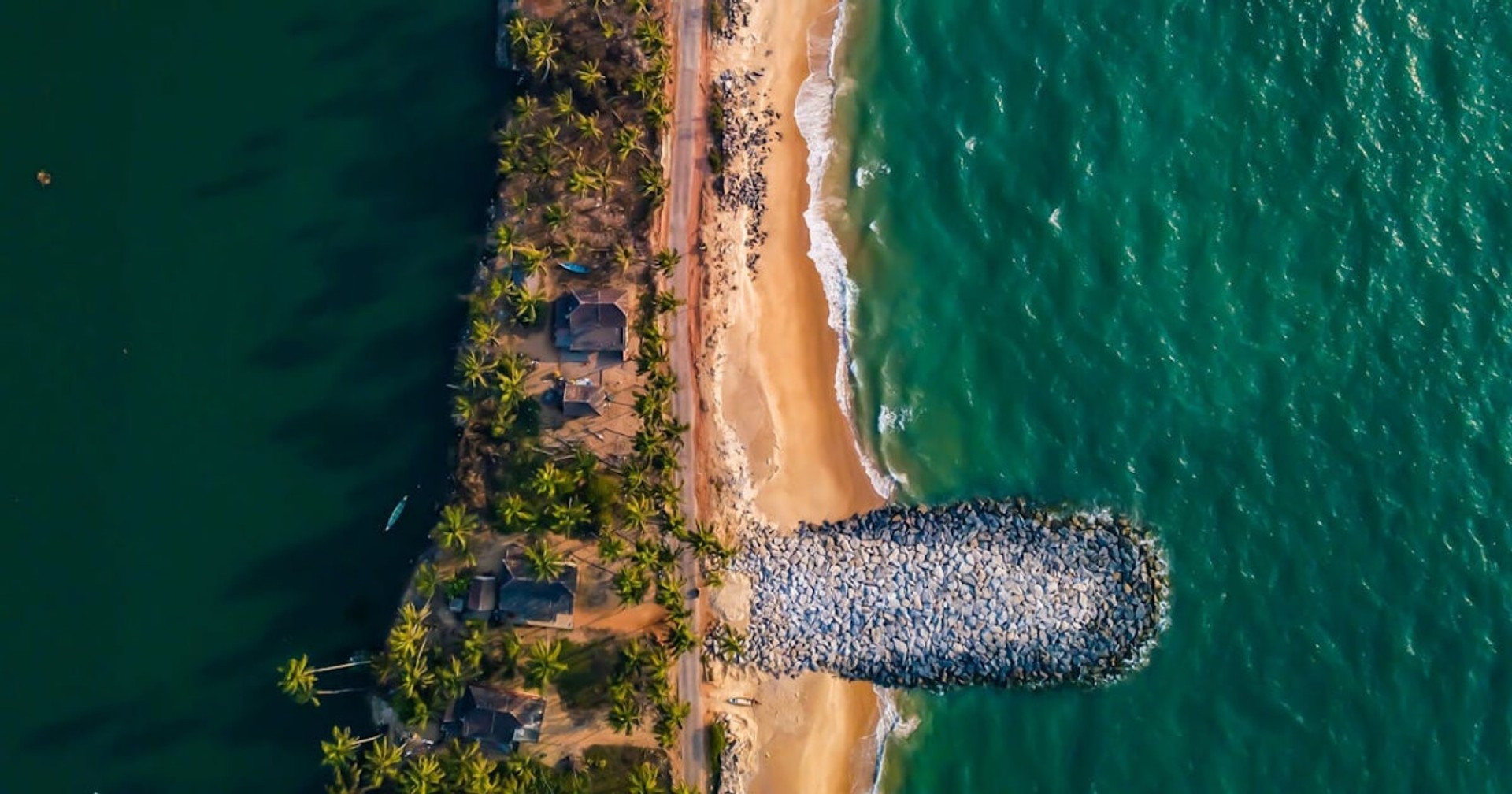

At Byndoor in Karnataka, there is a 4-kilometre stretch of NH66 where you are driving between the Arabian Sea and a river at the same time.
The Arabian Sea on the left, the Souparnika River estuary on the right, the highway between them. At the narrowest point, the beach separating the road from the ocean is less than 100 metres wide. At sunrise, when the sky is turning gold and the water on both sides catches the light differently — the sea moving, the river still — you are in the most geometrically improbable road-trip moment in India. Most people drive through this in the rain on the way to Mangalore from Goa and don't register what they're looking at. Nobody who plans "a Goa trip" or "a Kerala trip" separately includes this stretch in either itinerary.
This is the character of the Goa-to-Kerala coastal route. The 900-kilometre drive south along NH66 — from Panaji through Gokarna through Mangalore through Kozhikode to Kochi — is not a gap between two destinations. It is an unbroken sequence of specific things that exist nowhere else in India.
Portuguese forts appear every 80 kilometres as you move south — the same colonial contest for the Arabian Sea spice trade routes left fortifications along the entire coast from Karwar to Kasaragod. The food transforms completely every 150 kilometres: Goa's pork vindaloo and fish recheado give way to Udupi's rice-based vegetarian tradition give way to Mangalore's Tulu-Nadu fish curries give way to Kozhikode's Malabar biryani and Mappila Muslim coastal cooking give way to Kochi's Syrian Christian appam and beef fry. Five completely distinct food traditions in 900 kilometres, each one arriving gradually rather than switching at a border. The architecture does the same thing. The language does the same thing.
Most travellers plan Goa and Kerala as separate trips because the itinerary forums list them as separate destinations. Combining them is not a compromise. It is the only way to understand that the Arabian Sea coast of India is a single thing.
Sort VisitorsCoverage travel insurance before this trip — the route involves sea activities, monsoon-season driving risk, and long road transits. Policies from approximately $18–35 USD. EKTA offers a second option from $0.99/day at ektatraveling.com. Compare both.
Why Goa to Kerala Works Better as One Trip
The practical argument first: Goa and Kochi are both served by international airports. Flying in to Goa (GOI) and out of Kochi (COK) — or vice versa — produces a natural open-jaw circuit. The total driving or train distance between them is 900 kilometres. You are not backtracking. You are following a straight line south along one coast.
The deeper argument: the coastal strip between Goa and Kerala is not scenic filler between two destinations. It is three distinct cultural geographies that share a coastline. The Konkan coast of Goa is Portuguese, Catholic, and tropical. The Tulu Nadu coast of coastal Karnataka (from Karwar to Mangalore) is the homeland of the Tulu-speaking community — distinct from both the Marathi north and the Tamil-influenced Kannada south, with its own cuisine, its own festival tradition (Yakshagana theatre), and its own architectural identity. The Malabar coast of Kerala is an Islamic-influenced trading port civilization — the Arab dhow trade, the Mappilas (Kerala Muslims), the spice economy of Kozhikode that drew first Vasco da Gama (1498) and subsequently every European power.
Moving through all three in a single drive means you watch the transition rather than flying over it. That experience is unavailable as two separate trips.
Fly into Goa (GOI) and out of Kochi (COK) for the open-jaw option. Search all routes on FlyFlick. Set a Compensair alert on both legs. Book your GOI arrival transfer through GetTransfer or KiwiTaxi — confirmed for Goa Dabolim and Mopa airports with fixed-fare vehicles.
Activate Saily 5G eSIM before landing — works across Goa, Karnataka cities, and Kerala. Drimsim covers the NH66 rural stretches between Gokarna and Mangalore where single-carrier SIMs drop in the Western Ghats shadow zones.
How to Decide: Road Trip, Train, or Both?
When to Drive NH66 the Entire Way
NH66 is one of the finest coastal drives in India — the road is mostly 4-lane, well-maintained, and hugs the coast closely enough that the Arabian Sea is visible for stretches. The drive is best in October–March when the monsoon is gone and the road is dry. A private vehicle — self-drive rental from Goa or a hired driver — gives maximum flexibility for Maravanthe Beach, Gokarna's remote beaches, and Yana Caves. Book your intercity vehicle through Intui.travel for the fixed-fare Goa → Kochi route with agreed stops.
When to Take the Konkan Railway Instead
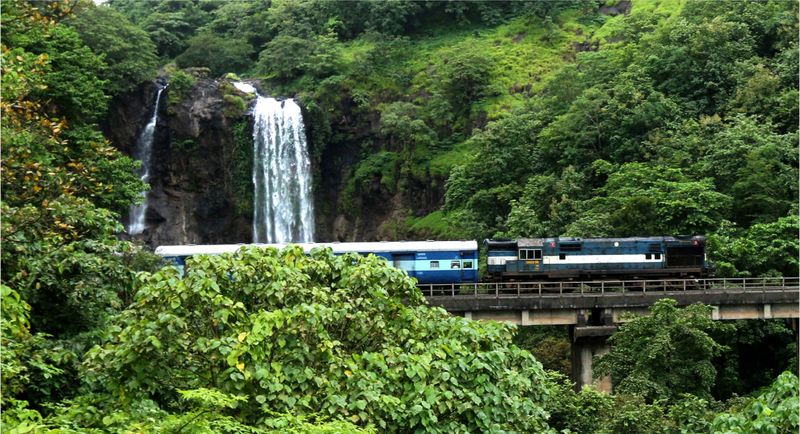
The Konkan Railway from Madgaon (Goa) to Mangalore covers the Karnataka coast section in approximately 5.5–6 hours through 91 tunnels and over 2,000 bridges — the engineering route described in our India by Train guide. Sleeper ₹345 ($3.67 USD), 3AC ₹1,005 ($10.69 USD). Book on 12Go Asia. The right-side window from Madgaon toward Mangalore faces the Arabian Sea. The train is the better choice if you want the coastal view without managing a vehicle.
The Hybrid Solution (Recommended)
Drive from Goa to Mangalore — gives you access to Gokarna, Yana Caves, Maravanthe Beach, and Udupi, none of which are well-served by the train. Take the Kerala Express from Mangalore (MAQ) to Kozhikode (CLT) — 3.5 hours, CC from ₹180 ($1.91 USD). Then drive or train within Kerala. This combines the coastal drive's flexibility with the Kerala railway network's reliability.
The Route at a Glance: Goa to Kerala 12-Day Plan
| Days | Location | State | Key Experiences |
|---|---|---|---|
| 1–3 | Goa | Goa | Beaches, Old Goa churches, Palolem, chapora |
| 4–5 | Gokarna + Yana | Karnataka | Om Beach, Yana Caves, pilgrimage ghats |
| 6 | Maravanthe → Udupi | Karnataka | Sea-and-river drive, Udupi Krishna Temple |
| 7 | Mangalore | Karnataka | Fish thali, St Aloysius Chapel, Kadri Temple |
| 8-9 | Kozhikode + Thalassery | Kerala | Biryani, Kappad Beach, Bekal Fort |
| 10-12 | Kochi | Kerala | Fort Kochi, Chinese fishing nets, backwaters |
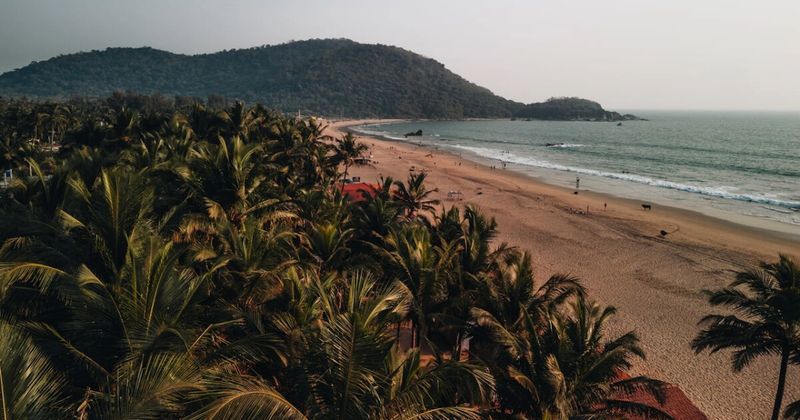
Palolem Beach's crescent bay is one of South Goa's most photographed; South Goa's beaches are less developed than North Goa's due to stricter construction regulations along the coastal zone.
Days 1–3: Goa — Where the Route Begins
Goa needs no introduction from this guide — the beaches, the Portuguese colonial heritage, and the seafood are covered in our Goa in 5 Days guide. For the coastal circuit, the practical Goa question is: which part of Goa before heading south?
The answer: South Goa. South Goa shares the road south to Karnataka and has the quieter, more heritage-weighted character that transitions better into Gokarna than North Goa's beach-party infrastructure. Palolem Beach (Canacona) is the correct southern base — a crescent bay 5km from the Karnataka border, quieter than Calangute or Baga, with budget beach huts (₹800–2,000/$8.51–21.28 USD/night) and midrange guesthouses (₹3,000–6,000/$31.91–63.83 USD/night).
Old Goa (Velha Goa): 35km north of Palolem. The 16th-century Portuguese colonial capital — the Basilica of Bom Jesus (UNESCO, houses the preserved remains of St. Francis Xavier), the Se Cathedral (the largest church in Asia when it was built in 1619), and the Convent of St. Francis of Assisi. All free to enter. Goa's Portuguese colonial legacy is the opening chapter of a story that continues in the fortifications along the entire Karnataka coast — this is the context for the route that follows.
Day 3 logistics: South Goa to Gokarna is 115 kilometres, approximately 2.5 hours on NH66. Drive in the morning after an early breakfast to arrive in Gokarna for the day. Book the full vehicle for the Goa–Kochi circuit through Intui.travel from Day 1.
Budget in Goa: ₹800–2,000 ($8.51–21.28 USD)/night budget; ₹3,000–8,000 ($31.91–85.11 USD)/night midrange.
"Flying into Goa (GOI or Mopa) to start the coastal circuit? Search all routes and open-jaw Kochi exits below."
Check Live Flight Prices
Days 4–5: Gokarna — The Spiritual Beach Town Karnataka Has Been Hiding
Gokarna is what Goa was in approximately 1992 — a beach town before the beach economy fully arrived. In the mornings, pilgrims bathe in the sea at Gokarna's main beach adjacent to the Mahabaleshwar Temple. By afternoon, backpackers are at Om Beach. By evening, both communities are at the same dhaba eating the same fish curry. The coexistence is unremarkable from the inside and extraordinary from the outside.
The Mahabaleshwar Temple: One of Hinduism's most significant Shiva shrines, housing the Atmalinga — the physical manifestation of Shiva's soul, according to the Puranic tradition. The legend: Ravana was transporting the Atmalinga to Lanka when he was tricked into setting it on the ground at Gokarna. The Shiva linga immediately became fixed to the earth. The temple built around it dates to the 4th century CE. Free. Non-Hindus are welcome in the outer areas; the inner sanctum is restricted. Remove shoes before entering the temple street.
Om Beach vs Kudle Beach: Where to Actually Swim
Om Beach: Famous because it is naturally shaped like the Aum (Om) symbol when viewed from the hillside above — two adjacent crescent bays forming the symbol. Best for: photography from the hilltop (10-minute walk), the beach shacks (Namaste Café at the southern end), and the sunset. The swimming is affected by the rocks at the tide-line. Walk there from the main town in 20 minutes or take an auto (₹100–150/$1.06–1.60 USD).

Gokarna's Mahabaleshwar Temple is considered as sacred as Varanasi in the Shaivite tradition — the pilgrimage town and the backpacker beach economy coexist on the same 1km stretch of coastline.
Kudle Beach: 15 minutes north of Om Beach on the beach trail. Wider, sandier, and consistently less crowded than Om Beach. Better for actual swimming. The café row along the beach is smaller and the prices are lower. For accommodation nearest the beaches: Kudle is the correct base for swimmers and extended stays.
Half Moon and Paradise Beaches: Accessible only by boat (₹200–300/$2.13–3.19 USD from Om Beach jetty) or a 30–45 minute cliff trail from Om Beach. No roads. No infrastructure. The trade-off for the relative difficulty is beaches completely absent from the Goa-weekend-tripper crowd.
Yana Caves: The Black Monoliths Nobody Puts on This Route
50 kilometres east of Gokarna into the Western Ghats, the Yana Caves at Kumta contain black limestone (karst) formations rising 390 feet through the jungle canopy. The two primary formations — Bhairaveshwara Shikhara and Mohini Shikhara — are not stalactites or stalagmites. They are above-ground monolithic karst towers, black against the green forest, millions of years old, with no equivalent anywhere else in Karnataka.
Entry: free. The forest approach takes 30 minutes on foot from the parking area. The formations are visible from 500 metres before you reach them. Best visited November–February when the forest is dry and the black rock has the maximum contrast against the blue sky. Book the vehicle through Intui.travel for a Gokarna–Yana Caves–Kumta circuit — 3–4 hours roundtrip.
Budget in Gokarna: ₹500–1,500 ($5.32–15.96 USD)/night beach huts; ₹2,000–4,000 ($21.28–42.55 USD)/night midrange guesthouses.
Day 6: The Drive from Gokarna to Udupi (and Why Maravanthe Beach Stops Traffic)
The most distinctive driving day on the entire coastal route. 175 kilometres, approximately 3.5–4 hours on NH66.
Why Maravanthe Beach Is Geometrically Unlike Any Other Beach in India
At Byndoor (approximately 90km north of Mangalore, midway between Gokarna and Udupi), the NH66 runs for 4 kilometres between the Arabian Sea on the west and the Souparnika River estuary on the east. The road is literally between two bodies of water. At the narrowest point, the strip of land is less than 100 metres wide. At sunrise or golden hour — when the light hits both water surfaces simultaneously at different angles — you are on a road where the horizon is water in both directions and the perspective collapses.
The beach is called Maravanthe. There are no hotels directly on the road strip — a regulation prevents construction on this narrow spit. The best viewing angle is from the small elevated pullout approximately 1km past the northern entry to the strip. Stop here. Get out of the vehicle. It takes 30 seconds to understand why this stretch of road is unlike anything else on the 900km coastal route.

Maravanthe Beach is one of the few places in India where both coasts of a narrow land strip are simultaneously visible — a geological isthmus formed by the river estuary's proximity to the sea.
Why Udupi Invented Half the Vegetarian Dishes You've Eaten in India
Udupi: 60km south of Maravanthe. The temple town of Udupi is the origin of "Udupi cuisine" — the vegetarian South Indian cooking tradition that spread across India through the Udupi restaurant chains, making Masala Dosa and Idli Sambar internationally recognisable. The original is in the town.
Sri Krishna Temple Udupi: One of the most unusual darshan traditions in India — the deity is viewed through a hole in a fence made of nine holes (Kanakana Kindi). The tradition originated when the devotee-poet Kanakadasa was refused entry to the temple for being of lower caste; the wall reportedly broke open spontaneously so he could see the deity. The hole is maintained as the primary viewing point to this day. Free. Open 6am–1pm and 3pm–8pm.
Udupi lunch: The original Woodlands or Dwarka Restaurant in Udupi town serves the complete Udupi thali — not the imitation available at Udupi restaurant chains across India, but the source. Curd rice, rasam, sambar, multiple sabzis, papad, pickle — ₹150–250 ($1.60–2.66 USD).
Day 7: Mangalore — Where Five Food Traditions Collide at a Single Table
Udupi to Mangalore: 60km, 1.5 hours south on NH66. Mangalore (Mangaluru) is the largest city on the Karnataka coast and the undisputed capital of Tulu Nadu — the coastal Karnataka region with its own language (Tulu), its own cuisine (distinct from both north Karnataka and Kerala), and its own cultural logic.
The Mangalore fish curry: The definitive Mangalorean preparation is a coconut milk-based curry using a specific Tulu paste of roasted coriander, dried red Byadgi chillies, and kudampuli (Garcinia cambogia — the specific souring agent grown only in coastal Karnataka and northern Kerala that gives the dish its unique tartness). The curry is served at any neighbourhood restaurant for ₹150–250 ($1.60–2.66 USD) per plate with rice. The Byadgi chilli — a geographical indication product grown in the Dharwad district — produces a deep red colour without the extreme heat of other Indian chilli varieties. It is what makes the Mangalorean fish curry look like no other Indian curry.

Mangalore's Byadgi chilli has a Geographical Indication tag — the low-heat, high-colour variety grown in Karnataka's Dharwad district produces the deep red that makes Mangalorean fish curry visually distinct from any other Indian coastal preparation.
Lunch recommendation: Coastal Kitchen near Bunder Fish Market, or any of the neighbourhood restaurants in Bejai or Urwa areas — not the tourist-facing seafood restaurants near the hotel zone. The signal for authenticity: no English menu, no photographs on the wall, the tables occupied by Mangalorean families.
St. Aloysius Chapel: Free. The 1885 Jesuit chapel in the heart of Mangalore, its interior walls and ceiling covered entirely in trompe l'oeil (illusionistic) frescoes painted by Italian Jesuit artist Antonio Moscheni between 1899 and 1900. The frescoes cover every inch of the vaulted ceiling and depict biblical scenes in an Italianate style transplanted wholesale into a coastal Indian town. It is the most significant example of European religious fresco in India. Most Mangalore guides omit it entirely.
Kadri Manjunath Temple: 9th-century temple with the most significant collection of Lokeshvara (Avalokitesvara) bronze sculptures in India — a Buddhist temple tradition absorbed into Hindu worship, the bronzes dating from the 8th–10th centuries. Free.
Budget accommodation Mangalore: ₹800–1,500 ($8.51–15.96 USD)/night; midrange ₹2,500–5,000 ($26.60–53.19 USD)/night.
Days 8–9: Kozhikode (Calicut) — The City That Received Vasco Da Gama and Gave Him Spices
Mangalore to Kozhikode: 185km south, 3.5 hours on NH66 or 3 hours on the Kerala Express train from Mangalore Central (MAQ) — CC from ₹180 ($1.91 USD). Book on 12Go Asia.
Kozhikode (Calicut) was the most important port city on the Malabar Coast — the city that controlled the global pepper and cardamom trade for centuries before European arrival. When Vasco da Gama arrived at Kappad Beach north of Kozhikode in 1498, he was not discovering something. He was finding the source of the commodity that had driven the entire European age of exploration. The spices that medieval Europe had been paying fortunes for — pepper, cardamom, ginger, cinnamon — came from this specific coast, and Kozhikode's Zamorin (the Hindu ruler) had been trading them with Arab merchants for 500 years before the Portuguese arrived.
Kappad Beach: 16km north of Kozhikode. The plaque marks where da Gama landed. The beach is free, unremarkable as a beach, and historically extraordinary as a location. Worth 45 minutes.
Thalassery: Where Kerala Biryani Was Invented
Thalassery (Tellicherry): 90km north of Kozhikode, best visited en route from Mangalore. The Thalassery biryani is categorically different from every other Indian biryani — it uses Jeerakasala (Khaima) rice, a small-grained, intensely aromatic variety grown only in Kerala, rather than Basmati. The rice cooks in 7 minutes (half the time of Basmati) and produces a distinctly nutty, herbal-flavoured dish. The biryani tradition arrived in Thalassery through the Mappila (Malabar Muslim) community, which combined the Mughal cooking traditions brought by Arab traders with Kerala's specific spice and coconut vocabulary.
The best Thalassery biryani: Hotel Ariya near the Thalassery bus stand, ₹150–200 ($1.60–2.13 USD) per plate. Order the chicken and prawn versions to compare the rice preparation — the Jeerakasala is the point, not the protein.
Bekal Fort: 60km north of Kozhikode (slightly past Thalassery, near Kasaragod). Entry: ₹25 foreigners ($0.27 USD) — one of the cheapest entry fees for a UNESCO-listed monument in India; Bekal is on the Tentative List. The fort is the largest in Kerala, built by Shivappa Nayaka of the Keladi Kingdom in 1650, on a promontory above the Arabian Sea. The sea is visible on three sides from the ramparts. Below: a protected lagoon and beach used by local families. Almost no international tourists. Pre-book through Klook for the guided historical context.
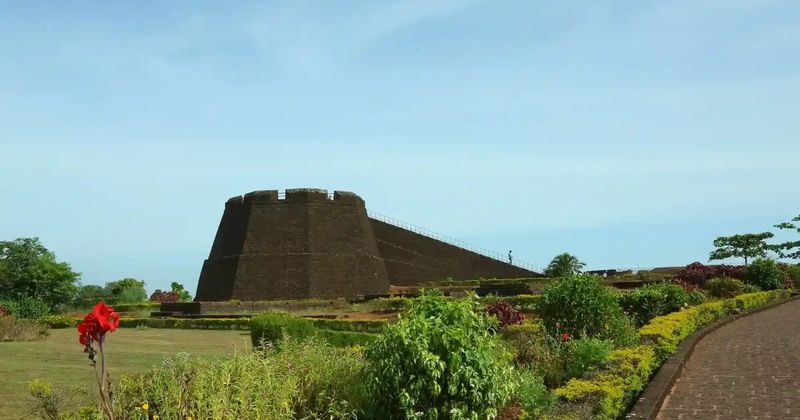
Bekal Fort was strategically positioned to control both the sea approach from the west and the river approach from the backwaters to the east — a dual defensive function that made it the most valuable fortification on the northern Malabar Coast.
Days 10–12: Kochi — The Port That Was Never Only Indian
Kozhikode to Kochi: 215km south on NH66 or 3 hours by train from Kozhikode (CLT) to Ernakulam (ERS) — CC from ₹250 ($2.66 USD). Book on 12Go Asia. Book your Kochi arrival transfer through GetTransfer or KiwiTaxi — Ernakulam station and Kochi airport are different locations; confirm with your driver.
Kochi (Cochin) is the endpoint of the coastal route and the one city on the circuit that requires no introduction. Fort Kochi — the peninsular heritage neighbourhood — contains the visible residue of five consecutive foreign presences: Chinese fishing nets, a 16th-century synagogue, a Portuguese church, a Dutch palace, and British colonial administrative buildings, in walking distance of each other.
What to see in Fort Kochi:
Chinese fishing nets (Cheena vala): Free. The massive, cantilevered fishing nets at the tip of Fort Kochi's waterfront were brought to Kochi by traders from the court of Kublai Khan in the 14th century. They operate at dawn and dusk — the counterweight mechanism that lowers the net into the sea and lifts it with the catch is a 700-year-old technology still in daily commercial use. The best time to watch: 6am when the fishermen are working the morning nets. The Chinese nets at sunset are the most photographed image in Kerala; the Chinese nets at 6am when the nets are actually catching fish are the more interesting experience.
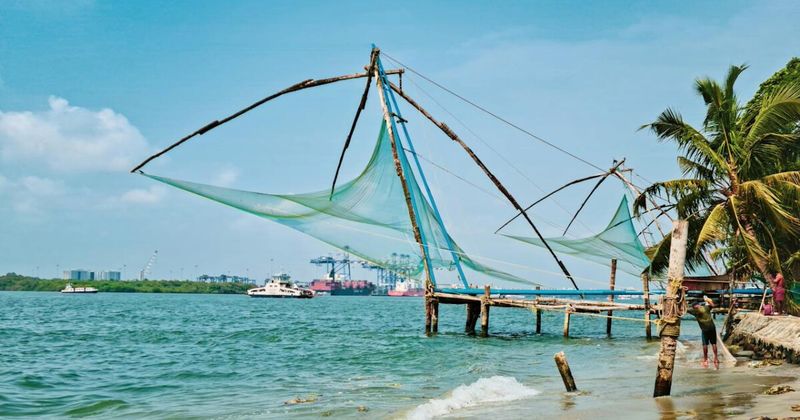
The Kochi Chinese fishing nets are a working commercial operation, not a heritage display — the fishermen sell their catch to buyers on the waterfront at dawn; the nets support several families whose fishing rights are inherited.
Paradesi Synagogue (Mattancherry): Entry ₹10 ($0.11 USD). Built in 1568 — the oldest active synagogue in India and one of the oldest in the Commonwealth. The Portuguese destroyed the original structure in 1662; the Dutch helped rebuild it in 1664. The floor is covered in hand-painted Chinese tiles, no two identical, brought from Canton in the 18th century. The clock tower outside the synagogue shows the time in Hebrew, Roman, and Malayalam numerals simultaneously.
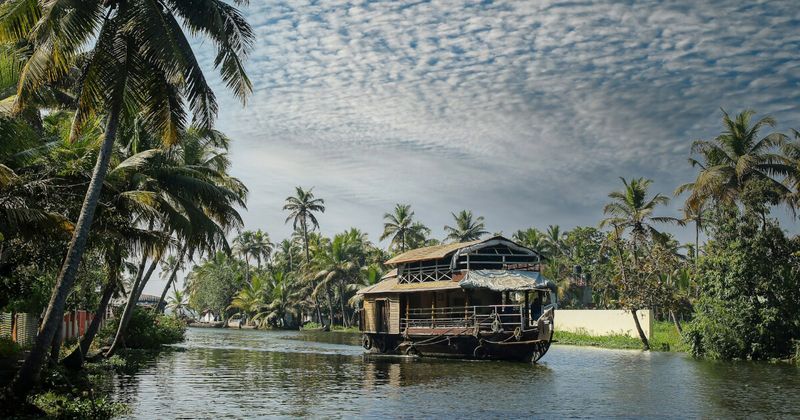
Kerala backwaters day trip: From Kochi's Ernakulam Jetty, a day trip to Alleppey (Alappuzha) — the backwater capital of Kerala. Houseboat rentals from ₹6,000–15,000 ($63.83–159.57 USD) per night for the full overnight experience; day trip SCTC (government) boat from Alleppey bus stand ₹300–500 ($3.19–5.32 USD) per person. Book through Klook. Full backwaters coverage in our Kerala 7-Day guide.
Syrian Christian food in Kochi: The Saint Thomas Christian community of Kerala — the Nasrani, who trace their tradition to the apostle Thomas arriving in Kerala in 52 CE — has one of the most distinctive food traditions in India. Fish molee (fish in coconut milk and turmeric, mild, white) and appam (fermented rice flour crêpes with a lacy edge) are the specific preparation. Appam with beef stew — the beef stew being a Syrian Christian preparation using coconut milk, potatoes, and spices — is available at any Christian-community restaurant in Fort Kochi for ₹150–250 ($1.60–2.66 USD) per serving and has no equivalent outside Kerala's Syrian Christian community.
Budget accommodation Fort Kochi: ₹1,500–3,000 ($15.96–31.91 USD)/night; heritage midrange ₹4,000–10,000 ($42.55–106.38 USD)/night.
What to Skip on the Goa–Kerala Coastal Route
Murudeshwara as a full day. The Murudeshwara Temple complex with its 20-storey entrance tower and the world's second-tallest Shiva statue is visually impressive from the NH66 as a roadside sight or a 30-minute stop. Most guides suggest half a day. The temple and statue are seen in 45 minutes; adding time doesn't add experience. Stop, see it, continue. It is genuinely not a full-day destination for this circuit.
North Goa entirely. The Anjuna/Vagator/Calangute cluster is 90km north of Palolem and 90km further from the Karnataka border. Including North Goa in this circuit adds a full day of backtracking before you've started. If you want North Goa specifically, do it as a separate pre-circuit Goa trip. The coastal route starts in South Goa.
Thrissur and Munnar on this circuit. Both are inland and both deserve their own time — Thrissur for the Pooram elephant festival and Vadakkunnathan Temple, Munnar for the tea estates. Neither is on the coast and neither fits into 12 days alongside Kochi, the backwaters, and the full coastal drive north of it. Our Kerala 7-Day guide covers the full Kerala inland circuit.
The Karwar stop (between Goa and Gokarna). Most guides insert Karwar as a stop between Goa and Gokarna. Karwar has a beach, a naval port, and a Rabindranath Tagore connection (he spent time there and wrote about it). None of this is sufficiently compelling to delay the drive to Gokarna's beaches unless you have a specific Tagore interest. Drive through.
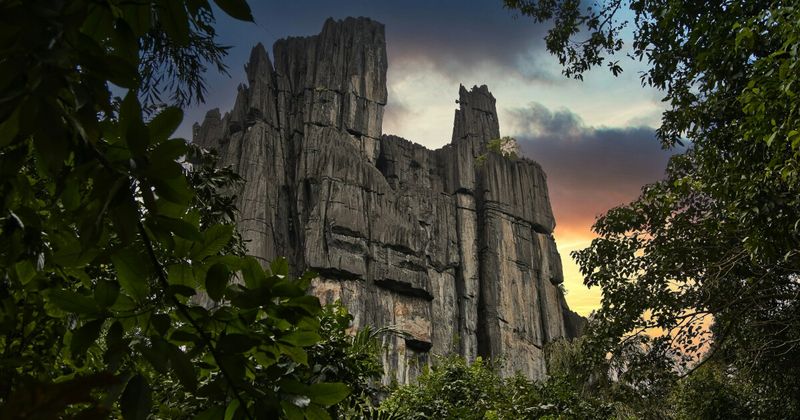
The Yana Caves formations are Precambrian crystalline limestone outcrops — among the oldest exposed rock in Karnataka — rising 120 metres above the forest floor in the Western Ghats foothills.
Best Time for the Goa to Kerala Coastal Route
October to February: The optimal window. Post-monsoon clarity, all beaches accessible, NH66 in best condition. November and December are the sweet spot — not yet peak season congestion in Goa, excellent sea conditions throughout, the Konkan Railway running at full schedule, and Kerala's northeast monsoon (October–November) has usually ended by the time you reach Kochi.
March–April: Warm and increasingly humid. Still perfectly manageable for the coastal drive. Goa becomes less crowded after March 15; Gokarna remains good. The sea temperature is excellent for swimming throughout this period.
June–September (Monsoon): The route is technically driveable but practically difficult. NH66 in sections becomes prone to landslides in the Western Ghats shadow zones. Several Gokarna beaches are closed during monsoon due to dangerous surf. The Konkan Railway runs but occasionally cancels due to weather. Strongly not recommended for a first Goa–Kerala circuit. The route in monsoon is for travellers who specifically want the waterfall-and-mist version of the Western Ghats backdrop and accept beach compromises.
How Long Should the Goa to Kerala Coastal Route Take?
12 days is the minimum for experiencing the route rather than surviving it — 3 nights in Goa (South), 2 nights in Gokarna, 1 night Mangalore, 2 nights Kozhikode/Thalassery area, 3 nights Kochi. Every reduction below 12 days sacrifices either Yana Caves, Bekal Fort, Thalassery biryani, or the Kochi backwaters day trip — each of which is a non-repeatable experience.
14–16 days gives you a third night in Gokarna (for the Half Moon Beach boat and the Yana Caves without rushing), a night at Bekal Fort's surrounding area, and a proper Alleppey overnight houseboat. This is the correct allocation for travellers combining the coastal route with their first or second India trip.

The Paradesi Synagogue's Chinese floor tiles were individually hand-painted in Canton in the 18th century — the Kerala Jewish community commissioned them specifically, making this the only Indian synagogue with Chinese ceramic floors.
Goa to Kerala Coastal Route Budget Breakdown
| Expense | Budget | Mid-Range |
|---|---|---|
| International flights (open-jaw GOI/COK) | Search FlyFlick | varies |
| GOI/COK airport transfers | ₹400–600 ($4.26–6.38) | ₹1,500–2,500 GetTransfer/KiwiTaxi |
| Accommodation (12 nights avg) | ₹800–2,000 ($8.51–21.28)/night | ₹3,000–7,000 ($31.91–74.47)/night |
| Full circuit vehicle Intui.travel | — | ₹15,000–25,000 ($159.57–266.00) total |
| Self-drive vehicle rental | ₹2,000–3,500 ($21.28–37.23)/day | ₹4,000–6,000 ($42.55–63.83)/day |
| Konkan Railway (Madgaon → Mangalore) | ₹345 ($3.67) Sleeper | ₹1,005 ($10.69) 3AC |
| Mangalore → Kozhikode train | ₹180 ($1.91) CC | ₹350 ($3.72) |
| Kozhikode → Kochi train | ₹250 ($2.66) CC | ₹500 ($5.32) |
| Old Goa churches | Free | Free |
| Gokarna Mahabaleshwar Temple | Free | Free |
| Yana Caves | Free | Free |
| Udupi Krishna Temple | Free | Free |
| Bekal Fort | ₹25 ($0.27) foreigners | ₹25 + guide |
| Paradesi Synagogue Kochi | ₹10 ($0.11) | ₹10 |
| Alleppey backwaters day trip | ₹300–500 ($3.19–5.32) govt boat | ₹6,000–15,000 ($63.83–159.57) houseboat |
| Food (12 days) | ₹300–600 ($3.19–6.38)/day | ₹800–1,500 ($8.51–15.96)/day |
| Travel insurance | VisitorsCoverage/EKTA from ~$18 | from ~$18 |
| 12-day total per person (excl. int'l flights) | ₹20,000–35,000 ($213–$372) | ₹65,000–1,00,000 ($691–$1,064) |
All prices INR. USD at ₹94 = $1. INR prices reliable; USD approximate.
"Flying into Goa or out of Kochi for the coastal route? Search all open-jaw options below."
Check Live Flight Prices
The Bottom Line
Goa and Kerala as separate trips are two excellent holidays. Goa and Kerala connected by 900 kilometres of coastline are something more than that — the specific experience of watching three coastal civilisations blend into each other in real time, the food transforming every 150km, the Portuguese fort tradition continuing south of the Goa border that nobody told you to look for, and the single stretch of highway at Maravanthe where the Arabian Sea is on both sides of your windscreen.
The route was always one thing. It just got separated into two trips by airline booking logic.
Start in Palolem. End in Fort Kochi. Find the Yana Caves and the Jeerakasala rice and the Chinese floor tiles that no two are the same. The 900 kilometres between is the point.
Your Goa to Kerala Coastal Route Checklist
🛡️ Insurance: VisitorsCoverage — Get minimum $100K USD cover with sea activity and road travel coverage before booking; 12-day coastal circuit from ~$18–35 USD. | EKTA — Compare at ektatraveling.com from $0.99/day as a second option.
✈️ Flights: FlyFlick — Book an open-jaw ticket: fly into Goa (GOI/Mopa) and out of Kochi (COK) to avoid backtracking the full 900km. | Compensair — Set delay alerts on both legs before travel.
🚌 Trains: 12Go Asia — Book the Konkan Railway Madgaon → Mangalore (Sleeper ₹345) for the tunnels-and-bridges experience; sit right side facing south for the Arabian Sea view.
🚖 Road Circuit: Intui.travel — Book the full Goa→Kochi circuit vehicle with agreed stops including Maravanthe Beach, Yana Caves, and Bekal Fort en route. | GetTransfer — Pre-book GOI/COK airport arrivals. | KiwiTaxi — Confirmed for both Goa and Kochi airport routes.
🎟️ Experiences: Klook — Alleppey backwaters houseboat or day trip; Bekal Fort guided tour; Gokarna Half Moon Beach boat transfer.
📱 Connectivity: Saily — 5G eSIM for Goa, Mangalore, Kozhikode and Kochi city areas. | Drimsim — Off-grid backup for NH66 Western Ghats shadow zones between Gokarna and Mangalore.
900km. Three states. Five cuisines. One unbroken coastline.