

There were 350 Irani cafés in Mumbai in the 1950s. Fewer than 40 survive today.
Each one that remains is a specific kind of place: marble-topped tables, ceiling fans turning at a speed that suggests air movement without committing to it, large glass jars of biscuits stacked from counter to ceiling, waiters who have been working the same section for 30 years and are not interested in your questions about the menu, and an atmosphere of total temporal dislocation. The city outside has 23 million people in it, the fastest local train network in the world, glass towers, and Bollywood. Inside Kyani & Co in Marine Lines — open since 1904, bun maska ₹30, Irani chai ₹50 ($0.32/$0.53 USD) — it appears to be approximately 1962 and no one is in a hurry.
Mumbai doesn't ease you in. It is India's most intense city and also its most layered. And the layer that most three-day itineraries reach — Gateway of India photograph, Colaba Causeway shopping, one hotel breakfast — is the thinnest layer, the one that requires the least from the visitor and gives back proportionally.
This guide goes further. Not because the Gateway of India isn't worth seeing — it is — but because Mumbai's actual weight comes from what surrounds it: the billion-dollar informal economy operating in 2.4 square kilometres two subway stops north, the 6th-century caves reachable by ferry in one hour from the same jetty, the railway station whose architect literally divided its symbolism between two civilisations, and the Irani cafés disappearing from a city that has already forgotten them.
Three days is enough to understand that Mumbai is unlike any other city on earth. It is not enough to understand Mumbai. Start with one and work toward the other.
Sort VisitorsCoverage travel insurance before anything else on this trip. Mumbai's medical infrastructure is the best in India — but 23 million people in a coastal megacity generates travel risk that merits proper cover. Policies from approximately $12–25 USD for three days. EKTA offers a second comparison option from $0.99/day at ektatraveling.com — fully digital, worldwide, 24/7 support. Compare both before booking anything else.
3-Day Mumbai at a Glance
| Day | Focus | Key Experiences |
|---|---|---|
| Day 1 | South Mumbai | CSMT, Colaba, Kyani & Co, Marine Drive, Gateway of India at sunset |
| Day 2 | Real Mumbai | Dharavi tour, Dhobi Ghat, Elephanta Island caves |
| Day 3 | North & West | Bandra, Bandra-Worli Sea Link, Juhu Beach |
Getting to Mumbai
Mumbai's Chhatrapati Shivaji Maharaj International Airport (BOM) is one of India's two main international hubs, alongside Delhi. Direct routes from London, New York, Toronto, Sydney, Dubai, Singapore, and across Europe land here daily. Search and book on FlyFlick. Set a Compensair alert before departure — BOM handles high traffic and EU-connected return legs carry full €600 delay compensation eligibility.
Book your BOM airport arrival transfer through GetTransfer or KiwiTaxi — both confirmed for BOM arrivals with fixed-fare pre-booked vehicles. Mumbai airport exits — particularly Terminal 2 arrivals — have some of India's most persistent prepaid-taxi touts quoting inflated fares to confused international arrivals at 2am. A pre-confirmed driver waiting with your name is worth the marginal cost.
Mumbai has two main tourist areas: South Mumbai (Colaba, Fort, Marine Drive) — where colonial heritage, street food, and old-city atmosphere concentrate — and the northern suburbs (Bandra, Juhu, Andheri) — more residential, contemporary, where Bollywood studios and the city's emerging restaurant scene sit. Stay in South Mumbai for Days 1–2 if your budget allows it; the walkability is unmatched. Midrange hotels in Colaba: ₹4,000–8,000 ($42.55–85.11 USD). Budget guesthouses in Fort: ₹1,500–3,000 ($15.96–31.91 USD).
Activate Saily 5G eSIM before landing — Mumbai has excellent coverage across all major areas. Drimsim is worth having as a backup for the Dharavi lanes and the Elephanta Island ferry, where single-carrier SIMs occasionally drop.
Day 1: South Mumbai — The Layered City
South Mumbai is where Mumbai began, and it shows in the architecture: Victorian Gothic railway stations standing next to Art Deco apartment blocks standing next to Mughal-arched gateways standing next to Portuguese churches standing next to glass towers. The geological accumulation of 500 years of colonial layering is visible in a single city block in a way that no other Indian city replicates.
Start at Kyani & Co, Marine Lines: 8am. Before any monument, before any walking tour, before any plan, start at the oldest surviving Irani café in Mumbai. Founded in 1904 at Jer Mahal Estate, Marine Lines, it has been serving the same breakfast since before Indian independence. Order: bun maska (a soft round bun split and lavished with white butter, ₹30/$0.32 USD) and one Irani chai (strong black tea, milk added hot, poured in a glass not a cup, ₹50/$0.53 USD). The total for breakfast: ₹80. Sit at one of the marble-topped tables. Do not rush. The city outside is already moving at full speed; this is the last quiet you'll get until 10pm.
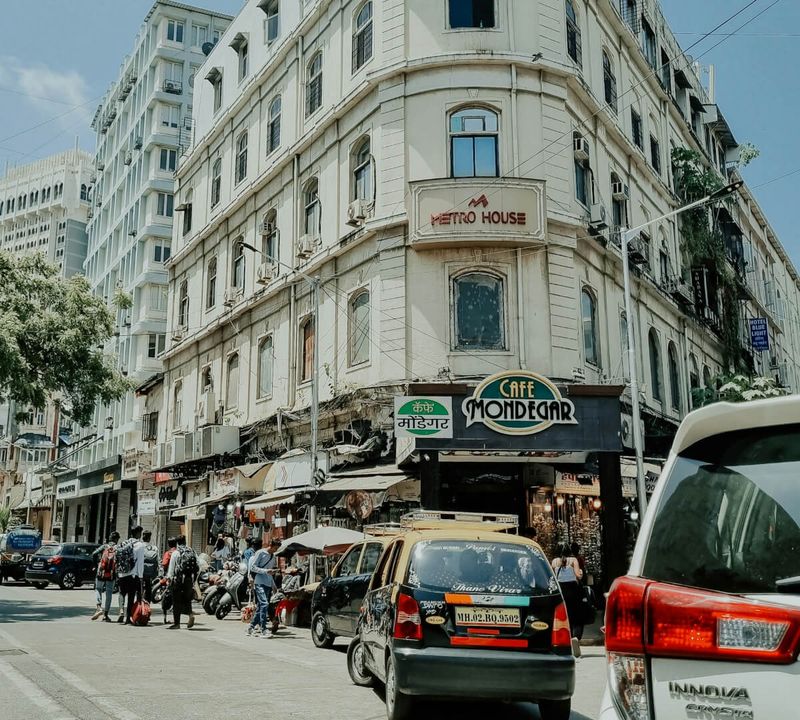
The Bombay Improvement Trust, established in 1898, is responsible for the distinctive street grid of South Mumbai — it was modelled on Haussmann's redesign of Paris and created the wide arterial roads and the systematic separation of residential from commercial zones that still define South Mumbai's urban structure, making it one of the few Indian cities whose colonial-era planning is still functionally legible today.
The specific detail most visitors miss about Mumbai's Irani cafés: they were founded by Zoroastrian immigrants from Iran's Yazd region — the same community as Mumbai's Parsis — who began arriving in Mumbai in the late 19th and early 20th centuries. The cafés were designed as democratic spaces: a working-class man could sit for an hour over a single chai without being pressured to order more, which was radical for a city where caste and class determined access to almost everything. That culture — the deliberate unhurriedness, the tolerance for lingering, the marble tables that wipe clean between all classes of customer — is what made the Irani café a specifically Bombay institution. And it's what is being lost, one closure at a time.
CSMT (Chhatrapati Shivaji Maharaj Terminus): 10am. A 15-minute walk from Marine Lines. Entry: free to the exterior at any hour; the Heritage Gallery museum costs ₹200 ($2.13 USD), open 10am–5pm Monday–Saturday. The building itself is the exhibit.
Chhatrapati Shivaji Maharaj Terminus — still widely called VT or Victoria Terminus by Mumbaikars — was designed by the British architect Frederick William Stevens and built between 1878 and 1888. It is simultaneously a functioning railway station carrying approximately 4 million commuters per day and a UNESCO World Heritage Site. Stevens designed the building as a deliberate hybrid: the central dome, pointed arches, and Gothic spires are Victorian Gothic Revival; the peacock-tail window tracery, the corbelled balconies, and the carved Indian deities and mythological figures in the ornamentation are Indian Saracenic. The building refused to be one thing.
The specific detail that makes CSMT unlike any other colonial building in India: Stevens placed an Indian peacock (the national bird of India) on the India-facing side of the central dome and a British lion on the British-facing side. He literally divided the building's symbolism between its two cultural masters — a compromise so deliberate that architectural historians have argued it was either a deeply diplomatic gesture or a very subtle act of dissent. Both interpretations are probably correct.
Visit CSMT at night for its best hour. The building is lit from below after dark, the yellow stone glowing against the Mumbai sky, the Gothic spires and dome visible from 500 metres. It is one of the great lit monuments in Asia and costs nothing to stand in front of.
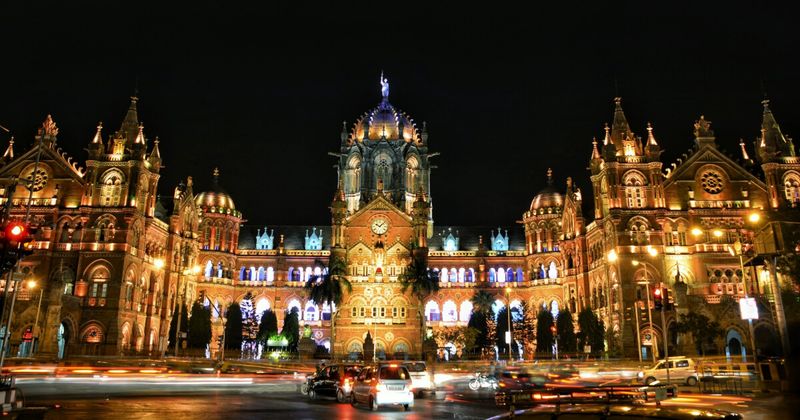
CSMT handles approximately 4 million commuters per day — more than the entire population of New Zealand passing through a single building — making it simultaneously the most-used UNESCO World Heritage Site in the world and one of the most photographed buildings in India; despite this, the building's interior stonework and the dozen carved Indian mythological figures on its facade are examined closely by almost no one, because everyone is running for a train.
Walk the Fort area neighbourhood between CSMT and the waterfront — the dense grid of colonial-era commercial buildings housing banks, law offices, old-style stationers, and the Asiatic Society Library (the oldest library in Mumbai, housed in a neoclassical townhall building, free to enter the reading room). The Crawford Market (officially Mahatma Jyotiba Phule Market) is a five-minute walk — a covered Victorian market designed with friezes by Lockwood Kipling, Rudyard Kipling's father — selling fruit, meat, pets, and domestic goods in a building that is itself architecturally extraordinary. Free to enter.
Colaba Causeway: afternoon. The 19th-century market street running south from the Gateway of India area — antiques, silver jewellery, embroidered textiles, bootleg sunglasses, brass Ganesh statues, and the specific kind of vigorous negotiation that turns shopping into sport. No pressure to buy. Walk the full length.
Gateway of India: 5pm. The basalt arch built in 1924 to commemorate the visit of King George V and Queen Mary — free to approach and walk through, chaotic at any hour, extraordinary at sunset when the light catches the Arabian Sea behind it and the Taj Mahal Palace Hotel glows ochre on the right. Don't queue for an interior view that doesn't exist; the Gateway is best experienced from the waterfront esplanade, chai in hand, watching the harbour.
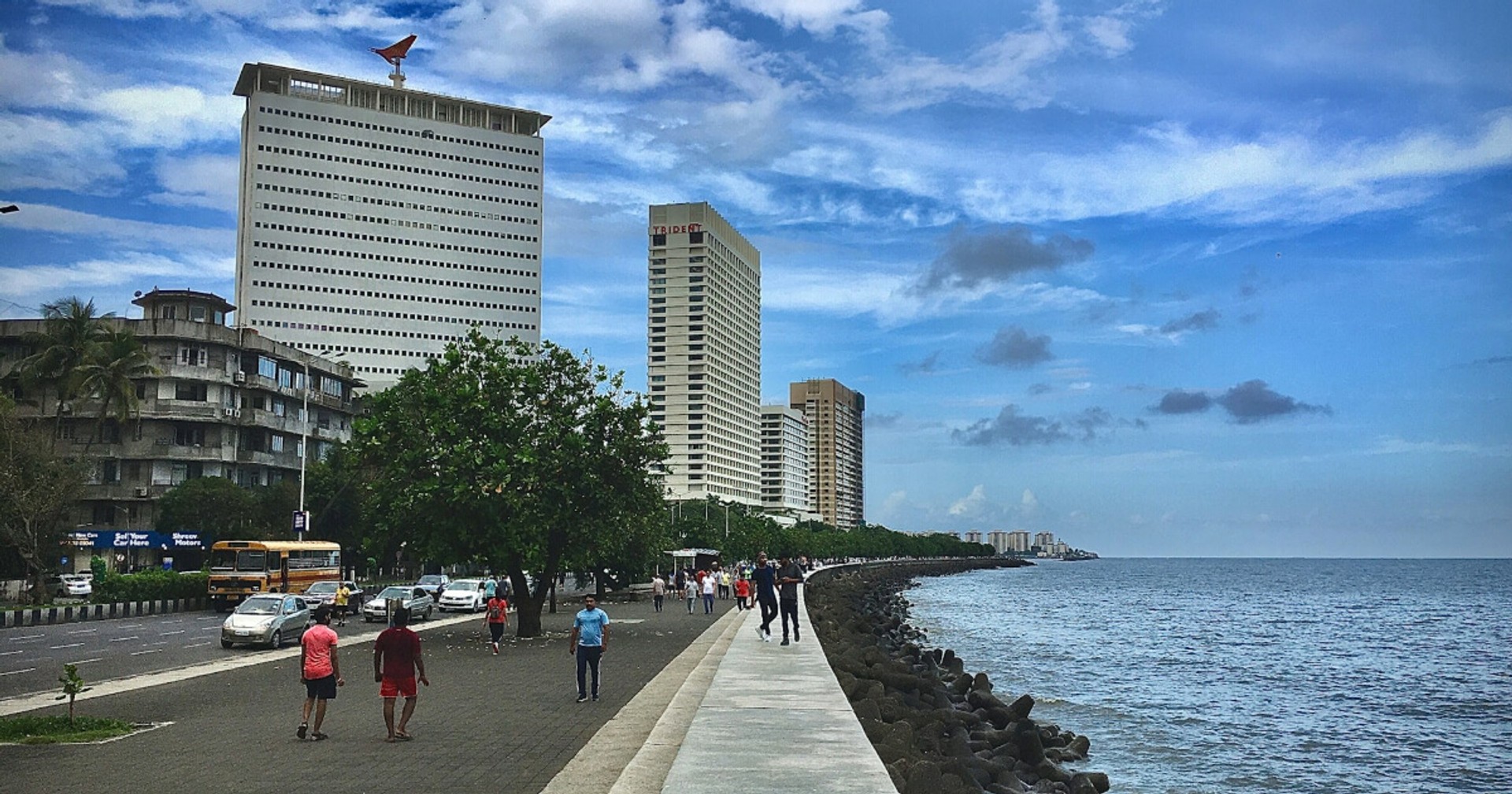
Marine Drive: 6:30pm. Take a cab north along the coast (15 minutes, ₹150–250/$1.60–2.66 USD by auto). Marine Drive — officially Netaji Subhash Chandra Bose Road — is the 3.6-kilometre Art Deco promenade built on reclaimed land in 1920, curved along the Back Bay coastline from Nariman Point to Malabar Hill. At night, the arc of streetlights viewed from Malabar Hill looks like a string of pearls draped along the coast — hence the name "Queen's Necklace." At ground level, at 6:30pm in October, it is: joggers, couples on the sea wall, bhel puri vendors selling paper cones of puffed rice and tamarind chutney (₹30–50/$0.32–0.53 USD), police constables, fishermen, and more humans per square metre than most cities have per square kilometre. Walk the full length. Sit on the sea wall. Eat the bhel puri.
Book your Day 1 transfers and Colaba area guided walk through Intui.travel — a fixed-fare driver for the day covers the Fort-Colaba-Marine Drive circuit without the auto-negotiation overhead.
Check Live Flight Prices
Day 2: The Mumbai Most Itineraries Skip
Day 2 is the most demanding and most rewarding. It goes to two places that require either advance booking or early arrival — and combines, in a single day, Asia's most productive informal economy and a 6th-century cave temple complex on an island in the Arabian Sea.
Dharavi Tour: 9am. Book through Klook with one of Mumbai's ethical local tour operators — Reality Tours, No Footprints, or Magical Mumbai Tours. Tours led by resident guides: ₹500–1,500 ($5.32–15.96 USD) per person depending on duration (2 hours to full day) and operator. Book at least 24 hours ahead; the best resident-guide slots fill quickly.
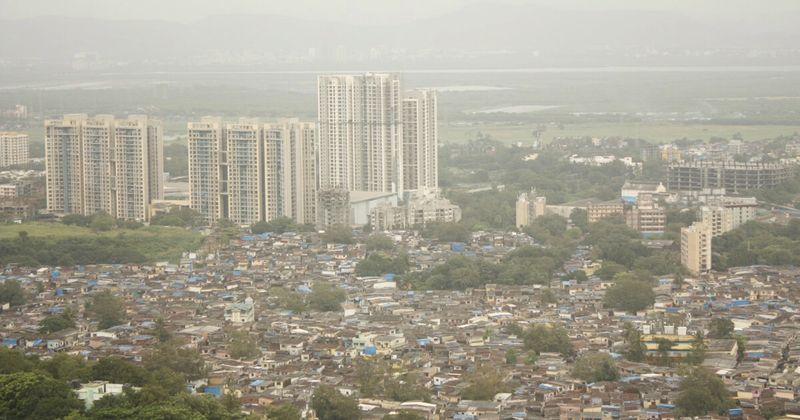
Dharavi sits on some of the most valuable real estate in Mumbai — its central location between Bandra and Kurla makes it accessible to both business districts — which is precisely why successive redevelopment plans have been proposed since 1997; the current Adani Group project, underway since 2023, involves relocating residents to peripheral sites while the central land is redeveloped as commercial and residential towers, a pattern critics argue prioritises land value over the community's economic network that requires proximity to function.
The framing matters. Dharavi is consistently described by the global media as "Asia's largest slum" and by the Bollywood industrial complex as Slumdog Millionaire's backdrop. Both are accurate and neither is the point. What Dharavi actually is: a 2.4-square-kilometre settlement in central Mumbai that generates an estimated $1–1.5 billion in annual economic output, employs over 250,000 people in its recycling industry alone, processes approximately 80% of Mumbai's plastic waste, and exports leather goods to markets in the United States, Europe, and the Middle East. More than 20,000 micro-enterprises operate within it. Commercial rents in the most productive lanes can reach ₹5 lakh ($5,319 USD) per month — higher than many formal commercial districts in Mumbai.
This is not a poverty zone. It is one of the most productive square kilometres in India, operating without government infrastructure support, planning permission, or formal business registration. The Adani Group is currently engaged in a contested redevelopment plan (as of 2024) that has displaced approximately 700,000 residents in survey processes — making the current Dharavi the last version of the city that many of its residents will recognise.
A tour with a resident guide covers: the recycling district (the 13th Compound), where plastic, metal, cardboard, and e-waste are sorted, crushed, and sold to manufacturing units across India; the leather workshops along 90-Feet Road; the Kumbharwada pottery district, where Gujarati Kumbhar families have worked 120 shared kilns in a 99-year lease granted by the British colonial government in 1895 — the same families, the same kilns, 130 years later; and the residential lanes, which are not photographed. Good operators enforce a no-camera rule in residential areas and compensate by showing you the industrial sections in genuine depth.
Photography protocol: follow your guide's instructions absolutely. The residential zones are people's homes, not exhibits.
Dhobi Ghat: 12pm. 3 kilometres from Dharavi by auto-rickshaw (₹80–120/$0.85–1.28 USD). The open-air laundry adjacent to Mahalaxmi station is Mumbai's most famous working institution — 731 wash pens spread over 6,000 square metres where approximately 10,000 dhobis (washermen) process the laundry of Mumbai's hotels, hospitals, and restaurants. Entry: free. Best viewed from the bridge over the railway line on Dr. E. Moses Road — the full scale of the operation is visible from above, the white laundry racks extending in every direction. Do not enter the wash pens themselves — it is a working facility, not a tourist attraction.
The specific Dhobi Ghat detail most guides miss: each dhobi family controls a specific set of pens (washing stations) that are inherited across generations. A pen that belonged to a grandfather is passed to his son and then his grandson — making Dhobi Ghat one of Mumbai's last hereditary occupational systems, a family-owned stake in a communal urban facility that has operated continuously since the British established it in the 1890s. The families also use a complex coding system of marks — stitched thread colours, knotted corners, specific fold patterns — to return hundreds of items of laundry to their correct owners every day without a single label. It works. It has always worked.
Lunch: The vegetable stalls and lunch dhabas along Mahalaxmi Road serve unlimited thali (₹120–180/$1.28–1.91 USD) to the dhobis and nearby office workers. Sit at a plastic table. Order a thali. The food is the kind that feeds the city rather than impresses tourists, and it is genuinely good.
Elephanta Island: 2pm ferry. From Dhobi Ghat, take an auto to Gateway of India jetty (20 minutes, ₹200–300/$2.13–3.19 USD). The MTDC ferry to Elephanta Island departs from the Gateway of India jetty every 30 minutes from 9am. Ferry cost: ₹100–200 per person roundtrip ($1.06–2.13 USD) depending on the boat — the basic state ferry is ₹100; the deluxe AC boat is ₹200. The 11-kilometre crossing takes approximately 1 hour and crosses the Mumbai harbour — the city's industrial skyline visible on one side, the open Arabian Sea on the other. Entry to the caves: ₹600 foreigners ($6.38 USD). Closed Mondays. Last return ferry from the island: 5:30pm. Book ferry tickets and cave entry through Klook for confirmed timings.
The Elephanta Caves. Built between the 5th and 8th centuries CE, the rock-cut temples on Elephanta Island were carved by unknown artisans during the period of the Chalukya and Rashtrakuta dynasties. They were never built — they were removed: the entire complex of seven cave-temples exists because sculptors cut into the existing basalt rock of the island and took away everything that wasn't a pillar, a deity, or a ceiling.
The centrepiece is the Trimurti — a 6-metre-high three-faced representation of Shiva carved into the rear wall of the main cave. The three faces represent Shiva's three aspects: creator (serene, gentle), preserver (female-presenting, flowers in hair), and destroyer (fierce, powerful). The central face — the one you see from the entrance axis — is approximately 25 feet above the cave floor and looks down the full length of the main hall with an expression that art historians have described as simultaneously beneficent and terrible. The Portuguese, who controlled Mumbai's harbour in the 16th century, used the main cave as a stable and reportedly fired cannon at the sculptures for target practice. The Trimurti survived. The side panels did not.
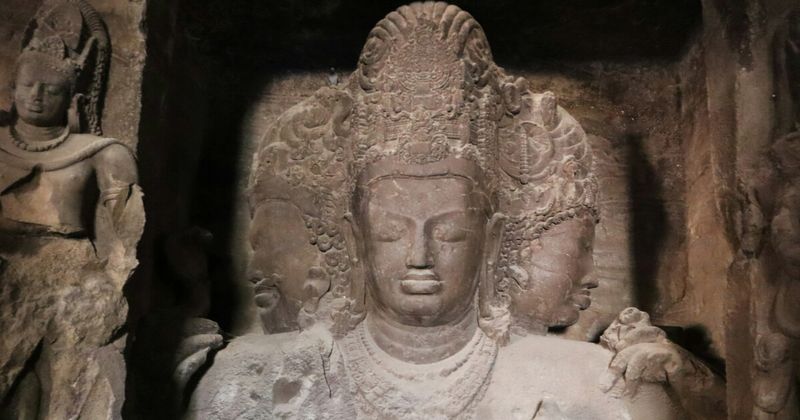
The Elephanta Caves were given their name by Portuguese colonisers who discovered a large stone elephant at the island's landing point — the elephant statue is now in the Bhau Daji Lad Museum in Mumbai after being moved in the 19th century; the original name of the island was Gharapuri, meaning "place of caves," which the local fishing communities had used for centuries before European arrival and which is still used in Marathi.
Take the toy train from the island jetty to the cave entrance (₹10/$0.11 USD) rather than climbing the full 120 steps in the heat. The train covers the equivalent climb in 5 minutes.
Return ferry to Gateway of India by 5:30pm. Take an auto or Uber back to your hotel.
Dinner: Britannia & Co, Ballard Estate. One of Mumbai's oldest Irani restaurants, open since 1923 — lunch only, Monday to Saturday, closing at approximately 4pm. If Day 2 runs late and Britannia is closed, its spiritual alternative is Bademiya in Colaba — a legendary outdoor kebab stall operating from a lane behind the Taj Mahal Palace Hotel since 1946, seekh kebabs and chicken tikka from ₹150–300 ($1.60–3.19 USD), open until midnight.
If you can make Britannia for lunch (build it into the Dharavi/Dhobi schedule): the berry pulao is the reason to go — a Persian recipe adapted for the Indian palate, pilaf rice with barberries (tart dried Iranian berries imported by Boman Kohinoor's family), roasted cashews, and caramelised onion served in an aluminium plate. ₹400–500 ($4.26–5.32 USD). Britannia & Co was built on the ground floor of a 1920s building designed by George Wittet — the Scottish architect who designed the Gateway of India, making Britannia literally housed in a building by the same man who built Mumbai's most famous monument.
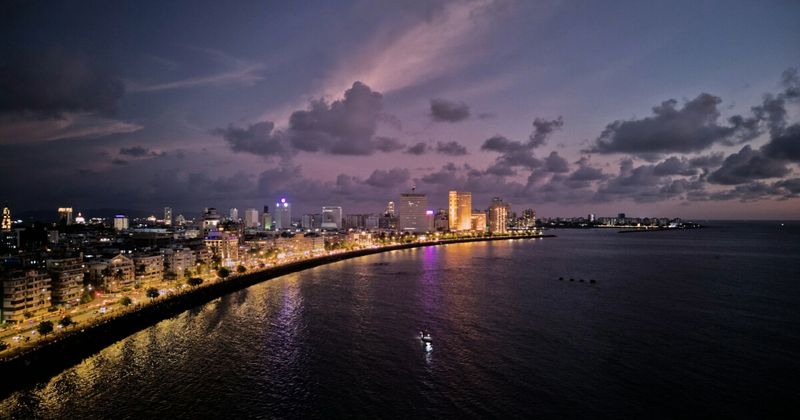
The Art Deco buildings of Marine Drive's western frontage were built primarily in the 1930s and 1940s — the decade between the Depression and India's independence produced a distinctive Mumbai architectural style that blended the Miami-influenced streamline moderne aesthetic with Gujarati and Parsi decorative motifs; the Marine Drive Art Deco district is now proposed as India's next UNESCO World Heritage Site, jointly with the earlier Victorian Gothic buildings around CST.
Day 3: Bandra, the Sea Link and Juhu Beach
Day 3 moves north — out of the colonial city and into the Mumbai of the last 40 years: the suburb that swallowed its own history and built something new on top, the cable bridge that connects two worlds across the harbour, and the beach at sunset where the city's 23 million people come to remember that they live next to the ocean.
Bandra West: 9am. The suburb 22 kilometres north of Colaba by the Western railway line or 30 minutes by cab. Bandra has been Mumbai's most self-consciously cosmopolitan neighbourhood since the 1980s — shaped by its Catholic Koli fishing heritage (the Portuguese colonised this coast), its Bollywood star residents (Shah Rukh Khan's Mannat bungalow is on the seafront at Bandstand), and a restaurant and café scene that outranks any comparable neighbourhood in Delhi. For a 3-day Mumbai itinerary it offers a completely different version of the city from Day 1 and 2.
Bandra's street art corridor. The lanes of Bandra West between Hill Road and Carter Road have the densest concentration of outdoor murals in India — commissioned works, political graffiti, folk art traditions, and street artists who repaint new work over old work in real time. No map covers all of it. Walk from Hill Road toward the sea, turning randomly into lanes. The walls tell you more about contemporary Mumbai than most museums.
St. Andrew's Church: 10am. The 1575 Portuguese colonial church on Hill Road — one of the oldest functioning churches in Mumbai, still serving Bandra's East Indian Catholic community (the East Indians are a specific Mumbai Catholic group, distinct from Goan Catholics, named for the East India Company that converted their ancestors). The church's whitewashed facade and Portuguese-influenced interior are the oldest intact architecture in Bandra. Free entry; observe modesty inside.
Breakfast: The café culture in Bandra West surpasses anything in South Mumbai's tourist zone. Prithvi Café (a legendary heritage café at the Prithvi Theatre in Juhu, technically further north but worth the auto fare) or the dozens of independent filter coffee and dosa places along Hill Road — a full South Indian breakfast (idli, sambhar, coconut chutney, filter coffee) costs ₹150–250 ($1.60–2.66 USD).
Bandra-Worli Sea Link: 12pm. The 5.6-kilometre cable-stayed bridge connecting Bandra to Worli across the mouth of Mahim Bay — opened in 2009 and still one of the more extraordinary pieces of infrastructure in India. You cannot walk across it; you drive. Book an auto or cab for the crossing (₹70 toll one way, $0.74 USD) and ask the driver to slow at the midpoint for the harbour view: the city's towers on one side, Dharavi visible beyond the bay, the Arabian Sea opening westward. The bridge at sunset is one of Mumbai's best photographs. Book a vehicle through Intui.travel for the Bandra–Sea Link–Juhu circuit on a fixed-fare basis.
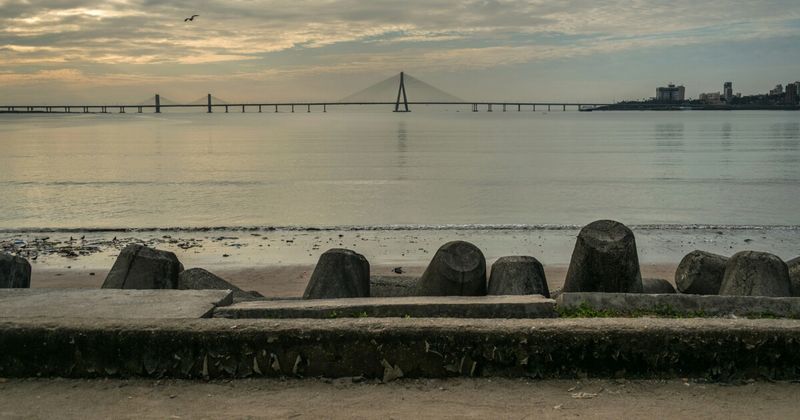
The Bandra-Worli Sea Link uses 900 km of high-tensile steel wire in its cables — enough to circle the earth twice — and was designed to withstand wind speeds of 130 km/h in cyclone conditions; it reduced the commute between Bandra and Worli from 45–60 minutes via the city roads to approximately 6–8 minutes, though traffic congestion on the approach roads has partially absorbed the time saving.
Worli Sea Face: afternoon. At the Worli end of the Sea Link, a promenade runs south from the bridge base along the Arabian Sea. Less famous than Marine Drive and proportionally less crowded — local families, fishermen casting lines from the rocks, a few tourists who figured out it exists. Walk south to the Haji Ali Dargah viewpoint: the 15th-century Sufi shrine sitting on a small islet 500 metres offshore, connected to the mainland by a causeway that submerges at high tide. The exterior view from the Worli promenade — the dargah white against the dark sea, accessible by a thin strip of land — is one of the more beautiful urban religious images in India.
Juhu Beach: 5pm. The 6-kilometre beach in the suburb that has historically been Mumbai's answer to a weekend. In the evening it becomes the city's most democratic space: families, Bollywood aspirants, street food vendors, sand art, cricket games on the hard wet sand, and a selection of chaat that represents the full range of the Mumbai street food tradition.
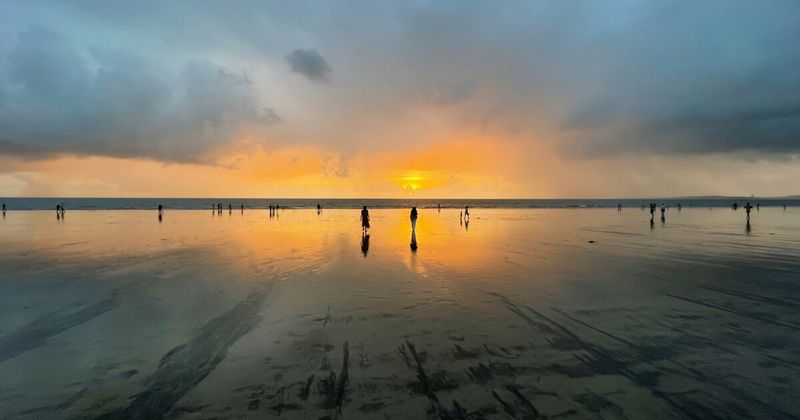
Juhu Beach is adjacent to the neighbourhood where Amitabh Bachchan, Shah Rukh Khan, Salman Khan, and dozens of other Bollywood stars maintain residences — the combination of beach access and residential proximity made Juhu the preferred location for Bollywood's first generation of bungalow-building celebrities in the 1970s; the proximity means Juhu's chaat stalls have occasionally served the kind of regulars whose faces appear on the billboard advertising the stalls.
Essential Juhu food order: pav bhaji (spiced mashed vegetable curry with toasted bread, ₹80–150/$0.85–1.60 USD), bhel puri (puffed rice with tamarind and chutney, ₹30–50/$0.32–0.53 USD), and vada pav — the fried potato dumpling in a bread roll that is Mumbai's essential street food, available everywhere from ₹20–40 ($0.21–0.43 USD) and better at Juhu beach stalls than almost anywhere else because the volume keeps the oil fresh.
The sun sets over the Arabian Sea from Juhu at approximately 6:30–7pm (season-dependent). The sky above the horizon at this hour in November — orange, then red, then purple, then gone — is the postcard Mumbai has been trying to sell since the 1950s. You'll understand why.
What to Skip in 3 Days
A Bollywood studio tour unless you're specifically a film fan. Film City in Goregaon (the main studio complex) is 25 kilometres from South Mumbai, takes 2.5–3 hours roundtrip, and the touring experience requires specific timing and advance arrangement. If Bollywood is your primary interest in Mumbai, it deserves its own day-trip structure. Otherwise, it competes directly with Dharavi and Elephanta — both of which are more historically significant.
Sanjay Gandhi National Park and Kanheri Caves. The Buddhist rock-cut caves at Kanheri (inside the national park) are genuinely excellent — 109 caves carved between the 1st and 9th centuries CE, more extensive than Elephanta's seven. However, they're 40 kilometres from South Mumbai, require a 30-minute safari vehicle from the park gate, and compete with Elephanta for the same day slot. Choose one cave complex. Elephanta is the right choice for a first visit: closer, earlier to reach, and the Trimurti is the single most extraordinary piece of Indian sculpture accessible to day-trip tourists anywhere near Mumbai.
Multiple bazaars. Crawford Market, Chor Bazaar (the Thieves' Market), Dharavi's own market, and Colaba Causeway collectively consume hours without necessarily rewarding non-shopping visitors proportionally. One market per day is the right allocation. Crawford Market's architecture justifies 30 minutes even without buying anything; Chor Bazaar on Fridays (the best day) is genuinely good for antiques; Colaba is the tourist standard. Pick one and walk it properly.
The Gateway of India interior. There isn't one. It's an arch. It's extraordinary from outside and from the water. You don't need to queue for anything.
Pace and Burnout: Managing Mumbai
Mumbai has a specific trap for energetic visitors: the city's pace is so relentless that it's easy to confuse movement with experience. You can spend a day in an auto-rickshaw going between ten sites and end it feeling simultaneously exhausted and like you've missed everything important.
The correct Mumbai approach is geographic: organise each day by district rather than by landmark category. Day 1 is South Mumbai — everything walkable or auto-accessible within 3 kilometres. Day 2 uses Dharavi (central) as the base before cutting south to Elephanta via the Gateway. Day 3 is entirely north. This structure eliminates cross-city transit that eats hours.
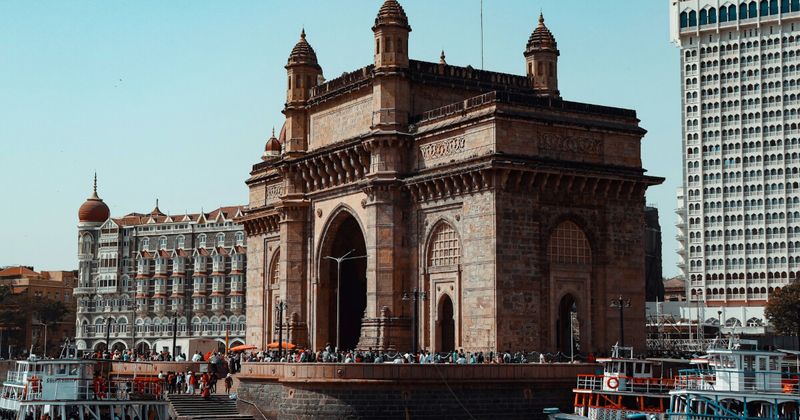
The Gateway of India was built to commemorate a royal visit that George Wittet — the architect — would not live to see inaugurated: Wittet died in 1926, two years before the formal inauguration ceremony in 1928; the arch that greets every visitor arriving to Mumbai by sea was completed by a man who didn't see it finished, adding it to the long list of grand colonial projects completed by people other than those who began them.
The local train. Mumbai's suburban railway carries 7.5 million people per day — the most intense mass transit usage of any system in the world. For tourists: the Western line (Churchgate to Andheri) and Central line (CST to Thane) are the most useful. A single journey costs ₹10–30 ($0.11–0.32 USD). Avoid 8–10am and 5:30–8pm — the rush hours when carriages reach 14–16 people per square metre. Outside rush hour, the local train is the fastest way across the city and the most authentic.
Heat and humidity. Mumbai at 18° north in April–June is 35–40°C with 70–90% humidity — the worst combination for walking. October–February is the comfortable window: 28–32°C, lower humidity, manageable. December–January is peak; book accommodation 4–6 weeks ahead.
The vada pav question. Every visitor encounters their first vada pav from a street stall and has a decision to make about water, cleanliness, and risk tolerance. The general guidance from experienced Mumbai travellers: trust your gut (both literally and figuratively), eat at stalls with visible high turnover, avoid stalls near standing water, and accept that some intestinal adjustment is inevitable regardless. The vada pav is worth it.
For a longer Mumbai circuit — adding Pune as a day trip or connecting to Goa by overnight train — our Mumbai to Goa transport guide covers the onward journey in full.
3-Day Mumbai Budget Breakdown
| Expense | Budget | Mid-Range | Splurge |
|---|---|---|---|
| Accommodation (3 nights) | ₹1,500–3,000 ($15.96–31.91)/night | ₹4,000–8,000 ($42.55–85.11)/night | ₹15,000+ ($159.57+)/night |
| BOM airport transfer | ₹600–800 ($6.38–8.51) auto | ₹1,500–2,500 GetTransfer/KiwiTaxi | ₹4,000+ |
| Dharavi ethical tour | ₹500 ($5.32) 2hr | ₹1,000–1,500 ($10.64–15.96) full day Klook | ₹5,000+ ($53.19) private |
| Elephanta Island ferry | ₹100 ($1.06) state ferry | ₹200 ($2.13) AC deluxe ferry | — |
| Elephanta Island entry | ₹600 ($6.38) foreigners | ₹600 ($6.38) | — |
| CSMT Heritage Gallery | ₹200 ($2.13) | ₹200 ($2.13) | — |
| Bandra-Worli Sea Link | ₹70 ($0.74) toll | ₹70 ($0.74) | — |
| Day vehicle Intui.travel | — | ₹3,000–5,000 ($31.91–53.19) day | ₹7,000+ |
| Street food (3 days) | ₹200–400 ($2.13–4.26)/day | ₹500–1,000 ($5.32–10.64)/day | ₹3,000+ |
| Restaurant meals (3 days) | ₹400–800 ($4.26–8.51)/day | ₹1,000–2,500 ($10.64–26.60)/day | ₹5,000+ ($53.19+)/day |
| Local auto/Uber transport | ₹400–800 ($4.26–8.51)/day | ₹800–1,500 ($8.51–15.96)/day | — |
| Klook experiences + guides | — | ₹2,000–4,000 ($21.28–42.55) | ₹8,000+ |
| Travel insurance | VisitorsCoverage/EKTA from ~$12 | from ~$12 | from ~$12 |
| 3-day total per person (excl. int'l flights) | ₹15,000–25,000 ($160–$266) | ₹40,000–70,000 ($426–$745) | ₹1,50,000+ ($1,596+) |
All prices INR. USD at ₹94 = $1. INR prices reliable; USD approximate — check current rate before budgeting.
Check Live Flight Prices
The Bottom Line
Mumbai is the argument against the idea that any Indian city can be summarised in a list of monuments. It doesn't have the Taj Mahal or Mehrangarh Fort. What it has instead is a level of urban density, cultural layering, and economic intensity that makes even three days feel like you've encountered something genuinely without precedent.
The Gateway of India is worth 20 minutes. The Dharavi tour is worth 3 hours. Elephanta's Trimurti is worth the hour-long ferry and the 120 steps. The first bun maska at Kyani & Co at 8am is worth the trip from any city in the world.
Mumbai doesn't need you to love it immediately. It gives you everything and waits.
Your Mumbai Trip Planning Checklist
🛡️ Travel Insurance — First, Always: VisitorsCoverage — Compare plans; minimum $100K USD medical; 3-day Mumbai policies from ~$12–25 USD; sort before flights, accommodation, or anything else | EKTA — Affordable second option from $0.99/day at ektatraveling.com; worldwide coverage, 24/7 multilingual support; compare both and choose.
✈️ Flights & Delay Protection: FlyFlick — Search all routes into Mumbai (BOM); check open-jaw options into BOM, out of Goa (GOI), Kochi (COK), or Delhi (DEL) for onward circuits | Compensair — Claim up to €600 for delayed/cancelled flights; BOM has heavy traffic and EU-connected return legs carry full compensation eligibility.
🚖 Airport & City Transfers: GetTransfer — Pre-booked fixed-fare BOM airport arrival and departure; eliminates the T2 arrivals-hall tout negotiation | KiwiTaxi — Confirmed for BOM airport routes; also covers Mumbai intercity connections | Intui.travel — Full-day fixed-fare vehicle for Day 1 South Mumbai circuit, Day 3 Bandra–Sea Link–Juhu circuit.
🎟️ Experiences to Pre-Book: Klook — Dharavi ethical tour (24 hours ahead minimum; slots with resident guides fill fast in peak season); Elephanta Island ferry + caves (confirm timing); CSMT Heritage Gallery ₹200.
🚂 Onward Connections: 12Go Asia — Book trains from Mumbai Central or CST to Goa (overnight Konkan Railway, 9–12hrs), Pune (2hrs), or further; international card support.
📱 Connectivity: Saily — 5G eSIM; excellent coverage across all Mumbai districts | Drimsim — Off-grid eSIM; useful for Dharavi lanes and the Elephanta ferry crossing where single-carrier SIMs occasionally drop.
The city doesn't ease you in. Go anyway.