


The cheapest round-trip flight from Singapore to India found in the last 72 hours is S$268 to Delhi — and the September floor fare on the same corridor sits at S$158. Those two numbers frame the full story: Singapore is not just cheap for India travel, it's structurally cheap in a way that no other Asian hub matches, and for reasons that go far beyond the fact that it's a major transit point.
880 direct flights per week. Seven airlines competing for the same passengers. The world's highest-rated transit airport. A Tamil diaspora community that drives consistent year-round demand on specific South India routes. And a delay rate of just 16% — the lowest of any India flight corridor tracked in this series. Singapore to India in 2026 is a different category of flying experience from any other international India gateway. This guide explains why — and how to use it.
FlyFlick's search engine does something Skyscanner, KAYAK and Google Flights don't: it dynamically combines tickets from airlines that don't officially partner — Virtual Interlining — to surface connection routes traditional platforms never show. On India-bound legs from Singapore, this regularly finds prices 20–30% below market rate. One search. Hundreds of combinations. Including the ones your usual booking site ignores.
Check Live Flight Prices
Why Singapore Is the Cheapest Asian Gateway to India
The answer is competition — and the specific geography of competition on this corridor.
880 direct flights per week operate from Singapore Changi to Indian cities across seven carriers: Singapore Airlines, Air India, IndiGo, Air India Express, Scoot, AirAsia, and Air New Zealand (through codeshare arrangements). On a single corridor between a city-state of 5.8 million people and a country of 1.4 billion, this volume of competing weekly seats is extraordinary. For comparison, the Frankfurt–India corridor — Germany's largest — has approximately 289 weekly flights. The London–India corridor has roughly 400 weekly flights. Singapore, a city smaller than London's Zone 2, has more than twice Germany's weekly India frequency.
What 880 weekly competing flights does to pricing: it creates continuous inventory pressure on all carriers. When IndiGo drops a Wednesday evening departure price, Air India Express and Scoot respond within hours. When Singapore Airlines holds a promotional fare window, Air India's S$318 round-trip becomes the benchmark that budget carriers undercut. This real-time competitive dynamic is why Singapore produces India floor fares of S$158–$171 — prices that no London or New York gateway can match on equivalent routes.
The geographic factor compounds this. Singapore sits 3,161 km from India's coastline — shorter than the Mumbai–London or Delhi–New York routes by orders of magnitude. Shorter routes = lower fuel costs = lower base fares. The shortest route on this corridor — Singapore to Chennai at 3 hours 55 minutes — is barely longer than a London–Athens flight. Airlines can turn around aircraft twice as fast as on European or American India routes, which means the economics of the corridor are fundamentally different.
| Key Statistic | Singapore–India | UK–India | USA–India |
|---|---|---|---|
| Weekly direct flights | 880 | ~400 | ~250 |
| Delay rate | 16% | ~22% | ~38% |
| Avg delay (minutes) | 115 | ~150 | ~180 |
| Floor fare (return) | S$158 ($117) | £297 ($376) | $509 |
| Fastest route | 3h 55m (SIN-MAA) | 8h 30m (LHR-DEL) | 13h 40m (EWR-DEL) |
| Optimal booking window | 4 weeks | 8–10 weeks | 8–12 weeks |
Sources: FlyFlick, KAYAK SG, Momondo, Cheapflights.sg — May 2026.
The table makes the case. On every metric that matters to a traveller — price, reliability, speed, and booking flexibility — the Singapore–India corridor outperforms both the UK and USA corridors significantly.
The Most Popular Route Is Not Delhi — And Why That Matters
Every generic India flight guide defaults to Delhi as the headline destination. On the Singapore–India corridor, this default is wrong.
The most popular route from Singapore to India is Singapore Changi to Chennai (MAA), and the cheapest round-trip on this route in the last 72 hours was S$293. Singapore to Tiruchirappalli (TRZ) in Tamil Nadu is also among the highest-volume city pairs on this corridor. Neither appears in any mainstream India travel blog's Singapore flight coverage.
The reason is Singapore's Tamil diaspora community. Singapore has one of the world's largest Tamil populations outside India — approximately 240,000 Tamil Singaporeans, representing roughly 9% of the citizen population — alongside a large South Indian migrant worker and professional community. This creates consistent, high-volume, year-round demand on SIN–MAA and SIN–TRZ routes that's structurally different from the tourism-driven demand on SIN–DEL.
The practical pricing implication: SIN–MAA is one of the most competed routes on the corridor — IndiGo, Air India, Singapore Airlines, and Scoot all operate direct SIN–MAA flights — and the fare competition on this specific city pair regularly produces some of the corridor's cheapest pricing. The cheapest Air India round trip on Google Flights is $318 to Delhi; the cheapest on some Singapore–Chennai searches runs below that on specific dates. If your India itinerary involves Tamil Nadu or South India, flying SIN–MAA is not just geographically convenient — it's often the cheapest option too.

Singapore's Tamil diaspora community makes SIN–Chennai and SIN–Tiruchirappalli among the most competed and frequently cheapest routes on the corridor — a pricing dynamic that exists nowhere in mainstream India travel guides but is the single most important route fact for South India-bound travellers transiting through Singapore.
Price Comparison: Every Route From Singapore to India in 2026
Here is the full city-pair picture across the corridor's most popular routes.
| Departure | Arrival | Airlines | Return Range (S$) | Floor Fare | Flight Time |
|---|---|---|---|---|---|
| SIN | DEL (Delhi) | Air India, IndiGo, SQ, Scoot | S$268–$650 | S$268 (AI, Aug) | 5h 30m |
| SIN | MAA (Chennai) | Air India, IndiGo, SQ, AI Express | S$293–$600 | S$293 (KAYAK, 72h) | 3h 55m |
| SIN | BOM (Mumbai) | Air India, IndiGo, SQ, Scoot | S$300–$650 | S$300 (IndiGo, Sep) | 5h 30m |
| SIN | TRZ (Tiruchirappalli) | Scoot, IndiGo | S$280–$550 | S$280 (Scoot, Jul) | 4h 00m |
| SIN | BLR (Bengaluru) | Air India, IndiGo, SQ | S$290–$600 | S$290 (IndiGo, Sep) | 4h 35m |
| SIN | HYD (Hyderabad) | Air India, IndiGo, SQ | S$300–$620 | S$300 (AI, Sep) | 4h 35m |
| SIN | COK (Kochi) | AirAsia, IndiGo, SQ | S$272–$540 | S$272 (SQ, Jun) | 4h 15m |
| SIN | AMD (Ahmedabad) | Singapore Airlines | S$272–$580 | S$272 (SQ, Jun) | 5h 00m |
| SIN | ATQ (Amritsar) | Scoot | S$272–$550 | S$272 (Scoot, Jun) | 5h 45m |
Sources: FlyFlick, KAYAK SG, Skyscanner, Google Flights — May 2026.
The corridor's breadth is remarkable. Singapore direct service covers nine Indian cities — more than any other Asian single-hub gateway to India. Bangkok serves 3–4 Indian cities; Kuala Lumpur serves 6–7; Hong Kong serves 4–5. Singapore's nine-city direct network reflects the combination of Singapore Airlines' premium network and IndiGo's budget expansion strategy, both prioritising the corridor's traffic volume.
Check Live Flight Prices
FlyFlick's search engine does something Skyscanner, KAYAK and Google Flights don't: it dynamically combines tickets from airlines that don't officially partner — Virtual Interlining — to surface connection routes traditional platforms never show. On Singapore–India legs, this regularly finds prices 20–30% below market rate. One search. Hundreds of combinations.
Airlines: Who Flies, What They Charge, and the Honest Assessment
Seven operators serve the Singapore–India corridor. Here's the complete picture.
IndiGo — the price leader and reliability winner:
IndiGo holds the lowest delay rate on this route at just 12% — the best performance of any carrier on the corridor. Its floor fare from Singapore to Delhi sits at S$326 return (Google Flights) and from Singapore to Chennai as low as S$158 on specific September dates (Skyscanner). IndiGo operates 7 nonstop Singapore–Delhi flights per week and 204 connecting flights — a network that covers essentially every Indian city from the Singapore hub, including Tiruchirappalli, Kochi, and secondary cities that no other Singapore-based carrier serves.
The honest IndiGo assessment: no-frills, paid meals, smaller seat pitch than Singapore Airlines, but consistent, reliable, and among the cheapest options on every date. For price-sensitive India travel, IndiGo from Singapore is a different proposition from IndiGo within India — the international service on A321neo aircraft is meaningfully better than its domestic product.
Air India Express — the best value for direct flights:
Air India Express offers the best prices for direct flights between Singapore and India on average per KAYAK data. It's Air India's low-cost international subsidiary, serving SIN–DEL, SIN–MAA, SIN–COK, and SIN–BOM with a product that sits between IndiGo's budget offering and full Air India's service level. The Air India Express SIN–MAA route is particularly well-established given Singapore's Tamil community travel demand.
Singapore Airlines — the premium benchmark:
Singapore Airlines operates 138 flights per week between Singapore and India — the highest frequency of any single carrier on the corridor. Its SIN–DEL route sees 14 nonstop Air India weekly flights vs Singapore Airlines' premium service. Singapore Airlines' India fares start at S$381 return to Delhi (September), which is S$55–$113 above IndiGo equivalents. The premium buys: Singapore Airlines' 787-9 or A350 cabin, Changi Club lounge access for eligible passengers, reliable KrisFlyer miles, and the SQ service standard that makes 5–6 hours genuinely comfortable rather than merely tolerable.
Scoot — the underused budget option:
Scoot (Singapore Airlines' budget subsidiary) serves Amritsar, Tiruchirappalli, and other India routes alongside its more mainstream city pairs. Scoot's Amritsar return from Singapore at S$272 is worth knowing for Punjabi community travellers — a direct SIN–ATQ route that doesn't show up on most generic India flight searches because ATQ isn't in the standard city dropdown.
AirAsia — the cheapest for Kochi and South India:
AirAsia and AirAsia X hold the cheapest one-way prices on some South India routes, with one-way fares from S$53 per Cheapflights data. For a Singapore–Kochi routing targeting Kerala, AirAsia's prices regularly undercut even IndiGo on specific dates. The Kuala Lumpur connection (AirAsia is a Malaysian carrier) adds 1–2 hours but is frequently worth the saving.
| Airline | Return Range (S$) | Best For | Delay Rate |
|---|---|---|---|
| IndiGo | S$158–$384 | Price + reliability | 12% |
| Air India Express | S$171–$420 | Direct flights, best value | ~15% |
| AirAsia / AirAsia X | S$171–$400 | Kochi, South India | ~18% |
| Scoot | S$272–$480 | Amritsar, TRZ | ~16% |
| Air India | S$312–$650 | Full-service, Delhi | ~16% |
| Singapore Airlines | S$381–$700 | Premium, loyalty miles | ~14% |
Sources: FlyFlick, KAYAK SG, Google Flights, Momondo — May 2026.

IndiGo holds the lowest delay rate of any carrier on the Singapore–India corridor at 12% — significantly below the 16% corridor average — making it not just the cheapest but also the most punctual airline for Singapore–India travel in 2026.
The Cheapest Months — and Why May Breaks the Pattern
The Singapore–India corridor has month-by-month pricing that differs from the UK and US corridors in one important way: May is expensive here, not cheap.
September is the cheapest month at S$158 average return (Skyscanner floor fare) and S$158–S$200 consistent pricing. July is the second cheapest at approximately S$281 average (Cheapflights data). September and July both benefit from the India monsoon-season demand drop that suppresses leisure tourist travel from Singapore.
The May reversal: May averages S$343 — the most expensive non-December month. This is inverted from Germany and UK corridors where May is among the cheapest months. The explanation is Singapore school holidays. Singapore's school holiday calendar places a major break in late May and early June — May 31 to June 29, 2026 — driving concentrated family travel demand from Singapore to India that pushes prices sharply above the corridor average. This is a Singapore-specific demand pattern caused by the local school calendar, not by any India-side seasonal factor.
December is most expensive at S$476 average on Cheapflights data — consistent with every other corridor, driven by holiday season demand and NRI family travel.
| Month | Avg Return (S$) | Verdict |
|---|---|---|
| January | S$320–$400 | Good — post-holiday drop |
| February | S$300–$380 | ✅ Solid value |
| March | S$290–$370 | ✅ Strong — Momondo cheapest |
| April | S$310–$400 | Decent |
| May | S$343–$476 | ❌ Expensive — Singapore school holidays |
| June | S$272–$380 | Mixed — school holiday tail |
| July | S$281–$380 | ✅ Second cheapest |
| August | S$290–$380 | ✅ Good value continues |
| September | S$158–$250 | ✅ Cheapest month — significant gap |
| October | S$280–$380 | Good — post-monsoon weather bonus |
| November | S$320–$420 | Building toward Christmas |
| December | S$476–$650 | ❌ Most expensive month |
Sources: FlyFlick, KAYAK SG, Momondo, Cheapflights.sg — May 2026.
September is not only the cheapest month to fly but also produces the shortest optimal booking window on the corridor — which brings us to the most counterintuitive finding for frequent India travellers from Singapore.

May is expensive from Singapore to India due to local school holidays — the inverted seasonality that makes May cheap from Germany or the UK doesn't apply here, where Singapore's late-May school break drives a demand spike that pushes fares to their highest non-December level.
The 4-Week Booking Window — Why Singapore Is Different
This is the finding that most directly contradicts what Singapore-based India travellers usually hear — and what every competitor guide says without checking the Singapore-specific data.
For UK and US India travel, this guide series recommends 8–12 weeks advance booking for off-peak months. For Australia, 10–14 weeks. For Canada, 7–10 weeks.
For Singapore to India: booking 4 weeks before departure gives the absolute cheapest price per KAYAK data. Booking 2 weeks out still saves 14% versus last-minute on this corridor. Cheap flights confirms: booking 53 days in advance — approximately 7–8 weeks — is the average best timing, but 4 weeks specifically is the optimal floor-price window.
Why is Singapore's booking window so much shorter than Western corridors?
The 880 weekly flights create continuous inventory management. With flights departing multiple times daily on multiple carriers, airlines can afford to hold discount inventory open closer to departure because they have real-time visibility into filling patterns. A Singapore–Chennai flight that's half-empty 4 weeks out will see IndiGo, Air India Express, and Scoot all drop prices competitively as they try to fill seats — creating a discount window that Western corridors, with their lower weekly frequencies, can't sustain.
The practical implication: if you're based in Singapore and planning an India trip in September or October, you don't need to set your calendar reminder for 10 weeks out. Monitor prices from 6 weeks before departure, set your alert, and target the 4-week window for the booking action.
This is why last-minute India travel from Singapore is also more viable than from Western countries. While we don't recommend leaving it to the final 2 weeks as a planned strategy, the 14% saving over truly last-minute suggests that Singapore's high-frequency corridor stays price-competitive significantly closer to departure than any UK or USA equivalent.
Singapore as a Connecting Hub for International Travellers
For travellers flying to India from Australia, New Zealand, or other Pacific countries — Singapore deserves specific attention as a transit option rather than just a direct departure city.
Singapore Airlines and Scoot both offer seamless connections from Australian cities (Sydney, Melbourne, Brisbane, Perth) through Changi to multiple Indian cities on a single booking. The Australia–Singapore leg runs 7–8 hours; the Singapore–India leg adds 4–6 hours. Total journey time of 11–14 hours from Australia to South India via Singapore competes favorably with Middle East hub alternatives, particularly from Perth and Adelaide.
The Changi connection advantage for transiting passengers: the minimum viable connection time at Changi is 1.5 hours — the most efficient of any hub airport in Asia. A Singapore Airlines Australia–Singapore–Chennai itinerary with a 2-hour Changi connection totals approximately 13–15 hours from Sydney, comparable to Dubai-routing but with a significantly better layover experience and often at a lower total fare.
For Western travellers already in Southeast Asia — Thailand, Malaysia, Indonesia, Vietnam — Singapore is the natural India gateway for the final leg. A budget traveller ending a Southeast Asia circuit in Singapore can add a S$158–$272 return ticket to India for a final destination. No other Asian city produces this combination of frequency, price, and reliability for India connections.
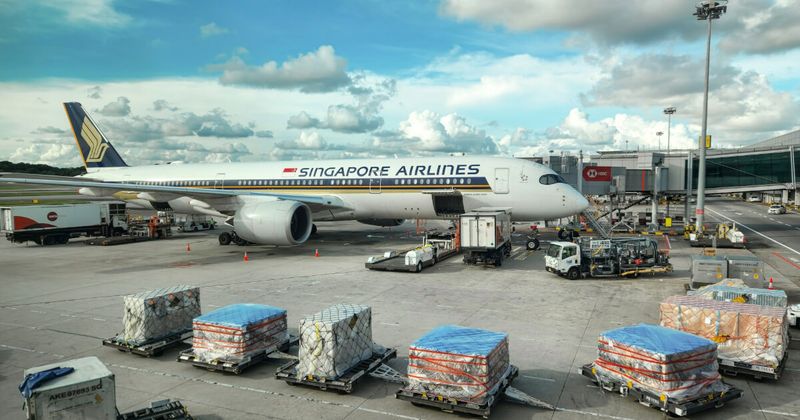
Changi Airport's 1.5-hour minimum viable connection time — combined with its position on the Pacific great circle route from Australian cities — makes Singapore the fastest and most comfortable Asia-Pacific connecting hub for India travel in 2026.
The 16% Delay Rate: Why Singapore–India Is the World's Most Reliable India Corridor
This is the statistic that should be leading every Singapore–India flight article and appears in none of them.
Historically, only 16% of flights between Singapore and India experience a delay, with the average delay length running 115 minutes. Compare this with the corridors covered elsewhere in this series: Canada–India runs 47% delay rate with 223-minute average delays. Australia–India runs 28% with 183-minute average delays. UK–India runs approximately 22%. USA–India varies but sits significantly above Singapore's 16%.
What drives Singapore's exceptional reliability? Three factors converge:
High frequency buffers schedule recovery. With 880 weekly flights across 7 carriers, airlines can absorb single-flight disruptions without cascading into multi-hour delays. When an IndiGo flight is delayed, 5 more IndiGo flights to the same city depart within 24 hours. Recovery options exist at a scale unavailable on lower-frequency corridors.
Changi's operational efficiency. Singapore Changi Airport has won the Skytrax World's Best Airport award multiple times — its ground handling, ATC coordination, and gate management reduce turnaround delays to industry-minimum standards. Aircraft that might wait 45 minutes for a gate at Heathrow or Mumbai clear Changi in 15–20 minutes.
IndiGo's remarkable reliability on this specific route. IndiGo, despite being a budget carrier, holds the lowest delay rate at 12% on Singapore–India — significantly outperforming Singapore Airlines' own performance. IndiGo's India–Singapore operations benefit from Singapore's Changi efficiency and IndiGo's own slot discipline at Indian airports on this route.
The practical meaning for travellers: on a corridor where only 16% of flights delay and the average delay is under 2 hours, Compensair's delay protection is less urgent than on the Canada or Australia corridors — but still worth adding before any connecting itinerary. If your India travel continues domestically after landing, a 115-minute average delay at the Singapore end is still enough to miss a domestic connection. Always build 3-hour buffers for domestic Indian connections after international arrivals.
Before any Singapore–India booking, add VisitorsCoverage travel insurance from $1/day (~S$1.35). Lower delay risk doesn't eliminate trip cancellation, medical, or other travel disruption scenarios. VisitorsCoverage. EKTA from $0.99/day as budget backup. EKTA. Compensair covers delays over 3 hours for up to €600 per person on eligible flights — still worth having even on the corridor with the lowest delay rate. Compensair
Activate your India eSIM before boarding at Changi. Saily's India 5G eSIM from ~$8.50 (S$11.50) for 7 days. Saily. Yesim unlimited for 2+ week India trips. Yesim. Drimsim for remote India beyond major cities. Drimsim. For the widest destination coverage across both Singapore and India in one plan: Airalo offers 200+ country eSIM plans from $1.50/day. Airalo
For airport arrival strategy once you land in India — which city to fly into, immigration timing, and transfer options — see FlyFlick's Delhi vs Mumbai vs Kochi vs Chennai arrival guide. And for the Gulf hub comparison if you're connecting via Dubai, Doha, or Abu Dhabi as an alternative to Singapore, see our Gulf stopover guide.
Check Live Flight Prices
How to Book the Cheapest Singapore–India Fares: The Full System
Step 1: Set a FlyFlick price alert for your primary route 6 weeks before departure. FlyFlick's Virtual Interlining search surfaces combinations that KAYAK, Skyscanner, and Google Flights don't show — including non-partner airline pairings on Singapore–India legs that can price 20–30% below single-airline options. This is the first search tool to run, not the last.
Step 2: Cross-check against KAYAK SG's Hacker Fares feature. KAYAK SG specifically offers Hacker Fares for Singapore–India — it "allows you to combine one-way tickets in order to save you money over a traditional return ticket." This is KAYAK's version of what FlyFlick does with Virtual Interlining. Run both simultaneously.
Step 3: Target the 4-week booking window for off-peak travel. Booking 4 weeks before departure gives the absolute cheapest price on this corridor per KAYAK data. For May and December, book 8–10 weeks out — Singapore school holidays front-load May demand just as NRI families front-load December bookings.
Step 4: Depart on Wednesday, return on Friday. Wednesday is cheapest departure day from Singapore to India; Friday is most expensive. Friday is cheapest for the return leg; Monday most expensive. This day-of-week pattern is specific to the Singapore corridor and aligns with the broader departure-day findings in FlyFlick's best day to book India flights guide.
Step 5: Search departure times in the late afternoon. Flights departing in the early afternoon tend to experience fewer delays per Momondo data for this corridor — this is the opposite of some other corridors. The most common departure time is 20:00, when 60% of Singapore–India flights depart. Earlier afternoon departures (14:00–17:00) statistically have better on-time performance.
Step 6: Check SIN→TRZ and SIN→COK before defaulting to SIN→DEL. If your India itinerary includes South India at any point, these direct routes often price below the Delhi equivalent and save a domestic connection within India.
Check Live Flight Prices

The 4-week booking window that works for Singapore–India is dramatically shorter than the 8–12 week window needed for UK or US corridors — the 880 weekly competing flights mean airlines manage inventory dynamically right to the edge of departure, creating deal opportunities that don't exist at equivalent lead times on other India corridors.
Bottom Line
Singapore is the cheapest Asian gateway to India in 2026 by every measurable standard — lowest floor fares (S$158 return), highest competing frequency (880 weekly flights), lowest delay rate (16%), fastest South India routing (3h 55m to Chennai), and the shortest optimal booking window (4 weeks) of any India corridor.
The most counterintuitive fact on this corridor: avoid May. Singapore's school holiday calendar makes it the most expensive non-December month — the inverted seasonality that makes May cheap from Europe simply doesn't apply from Singapore.
For South India travellers specifically, the SIN–MAA and SIN–TRZ routes deserve a specific fare check before defaulting to SIN–DEL. The Tamil diaspora travel demand on these routes creates consistent competitive pricing that rivals Delhi equivalents on most dates.
Book in September or July. Depart on Wednesday. Book 4 weeks out for off-peak, 8–10 weeks for May and December. Run FlyFlick's Virtual Interlining search alongside KAYAK's Hacker Fares for maximum price discovery. On a corridor this competitive, the lowest fare available is usually substantially below what any single platform shows.
Your Singapore to India Flight Planning Checklist
🛡️ VisitorsCoverage — Trip cancellation, medical and delay cover from $1/day (~S$1.35). Add before confirming any Singapore–India booking.
🛡️ EKTA — Budget secondary cover from $0.99/day at ektatraveling.com.
✈️ FlyFlick Flight Search — 700+ airlines + Virtual Interlining. Search SIN→MAA and SIN→TRZ alongside SIN→DEL — South India routes often price below Delhi equivalents. Surfaces non-partner combinations that Skyscanner, KAYAK and Google Flights don't show.
✈️ Compensair — Claim up to €600 for delays over 3 hours. Even with 16% delay rate, domestic India connections after international arrival are still at risk.
🚗 GetTransfer — Pre-book fixed-fare airport pickup at Delhi T3, Mumbai T2, Chennai MAA or Kochi COK on arrival. No negotiating after a 5-hour flight.
🚗 KiwiTaxi — Fixed-fare intercity India from your arrival airport: Delhi–Agra, Chennai–Pondicherry, Mumbai–Goa.
📱 Saily — India 5G eSIM from ~$8.50 (S$11.50)/7 days. Activate before boarding at Changi — connectivity on landing.
📱 Yesim — Unlimited data for 2+ week or multi-city India trips.
📱 Drimsim — Off-grid coverage for remote India and hill stations.
📱 Airalo — 200+ country plans from $1.50/day. One plan covering Singapore and India — useful if you're in SG short-term before flying.
🛂 India e-Visa — Apply at indianvisaonline.gov.in. $25 (~S$34). Most nationalities eligible. Allow 4 business days minimum before travel.
🛂 Singapore school holiday check — Avoid May departures if price-sensitive. Late May–June school holidays drive Singapore–India fares to their highest non-December levels.
880 flights weekly. S$158 return. Wednesday departure. Book it right.