
There's no airline in this comparison that wins everywhere, and any article that tells you otherwise is selling something. IndiGo's base fares are often 15% to 30% lower than Air India's — but additional charges for seat selection, meals, and baggage can increase the final cost by 20% to 50%, meaning travellers who compare only the headline fare often make the wrong decision. Air India bundles more into its published fare but has had inconsistent punctuality. On one measured date in February 2026, IndiGo recorded 79.80% on-time performance against Air India's 62.7% — a gap wide enough to matter if you're connecting onward to an international flight. Emirates is the most expensive of the three on most routes but includes the most as standard.
This guide doesn't crown one winner. It breaks the comparison down by what actually changes the outcome for an Indian traveller booking an international trip in 2026: real baggage allowances in kilograms, real fare-inclusive pricing (not just headline numbers), punctuality data, in-flight product, network reach including IndiGo's new 2026 long-haul routes that almost nobody has covered yet, and — most usefully — which airline wins for which kind of trip. A Dubai weekend, a Bangkok holiday, and a London family visit don't have the same answer.
We compared fares on FlyFlick with major Indian booking platforms — and found savings of ₹1,000–₹2,500 on most international routes. Search below and compare yourself before booking anywhere else.
FlyFlick's search engine does something Skyscanner, KAYAK and Google Flights don't: it dynamically combines tickets from airlines that don't officially partner — Virtual Interlining — to surface connection routes traditional platforms never show. On outbound routes from India, this regularly finds prices 20–30% below market rate. One search. Hundreds of combinations. Including the ones MakeMyTrip and Goibibo will never show you.
Booking in USD through FlyFlick? No GST applies on international flights booked via foreign platforms — you're not paying Indian service tax here. To avoid your bank's forex markup, use a zero-forex card like Niyo or Scapia. Note: a 5% TCS applies on foreign currency payments but is fully refundable when you file your ITR.
Comparing IndiGo, Air India, and Emirates for the same route? FlyFlick shows all three side by side with the real total cost — not just the headline fare.
Check Live Flight Prices
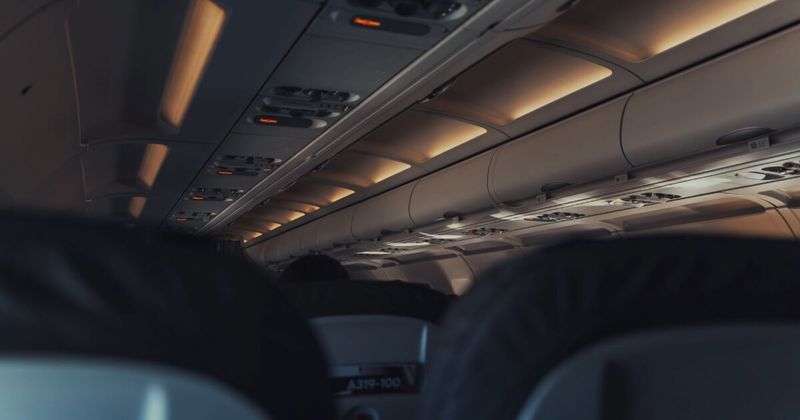
IndiGo's 2026 long-haul expansion to Istanbul, Amsterdam, Manchester, and Athens — operated by A321XLR aircraft or wet-leased Boeing 777s — is the airline's first serious move into Europe, and most Indian travellers planning international trips this year still don't know it exists.
The Honest Price Comparison — Headline Fare vs Total Cost
This is the section that resolves most of the confusion. The fare you see on a search results page is not what you'll pay if you need a checked bag, want a meal, and prefer to pick your own seat — and the gap between "headline fare" and "total cost" is dramatically different across these three airlines.
| IndiGo | Air India | Emirates | |
|---|---|---|---|
| Base fare vs market | 15–30% lower than Air India | Reference point | 10–25% higher than Air India |
| Checked baggage (cheapest fare) | Not included on Lite fares; 7kg cabin only | Value fare includes 1×23 kg | Economy Special includes 1×23 kg |
| Checked baggage (mid-tier fare) | 20–30 kg international, route-dependent | Classic/Flex include 2×23 kg | Economy Saver includes 2×23 kg |
| Meal on international | Free only on flights longer than 4 hours per fare tier; otherwise paid | Included on all international fares | Included on all fares |
| Extra checked bag cost | ₹600–800/kg airport, ₹400–500/kg pre-booked | $240 flat for an extra piece on long-haul | USD 70–100 for an extra piece |
| Seat selection | ₹300–800 depending on row, chargeable | Free on most fare tiers | Free in economy |
| Convenience/booking fee | Additional ₹150 per sector | None reported | None reported |
Prices are approximate and route-dependent. Verify exact fare-class inclusions at booking — they vary by specific route and date.
The pattern that emerges: IndiGo's headline fare advantage shrinks — and on some routes disappears entirely — once you add the things most international travellers actually need: a checked bag and a meal. Air India offers more baggage allowance than IndiGo, complimentary meals on board considered among the best airline meals available, and a Frequent Flier Programme that IndiGo does not have at all. Emirates costs the most upfront but includes the most by default — there's very little add-on math required because the baggage and meal are already in the base fare on nearly every tier.
Real Example: A Family of 4 Flying to Dubai — Total Cost Compared
Numbers make this concrete in a way percentages don't. Here's a real-world calculation for a family of four flying Delhi to Dubai return, each carrying one 20kg checked bag, wanting one meal each way, with two passengers needing seat selection together.
IndiGo (Lite/Saver fare, headline ₹18,000 per person return): Base fare ₹72,000 (4 passengers) + checked bags (4 × ₹3,000 round-trip pre-booked) ₹12,000 + meals (4 × ₹800 round-trip) ₹3,200 + seat selection (2 × ₹600) ₹1,200 + convenience fee (4 × ₹300) ₹1,200 = ₹89,600 total.
Air India (Value fare, headline ₹22,000 per person return): Base fare ₹88,000 (4 passengers, includes 23kg bag and meal already) + seat selection if needed for 2 passengers travelling together (often free or nominal on Value) ₹0–800 = ₹88,000–₹88,800 total.
Emirates (Economy Special, headline ₹26,000 per person return): Base fare ₹1,04,000 (includes 23kg bag and meal) + seat selection (usually free in economy) ₹0 = ₹1,04,000 total.
The result on this specific family scenario: Air India's higher headline fare actually produces the lowest real total cost once IndiGo's add-ons are calculated honestly. IndiGo's "cheaper" fare becomes essentially tied with Air India once a bag and a meal are added — and the convenience fee per sector adds up fast across four passengers. Emirates remains the most expensive but the difference per passenger (₹15,400 more than Air India) buys 30kg baggage instead of 23kg, the ICE entertainment system, and Emirates' overall service consistency.
This calculation changes for carry-on-only solo travellers — where IndiGo's lean fare genuinely is the cheapest option with no add-ons required.
For a family travelling with checked baggage, the real cost comparison between IndiGo, Air India, and Emirates can produce a different winner than the headline fare suggests — the math is worth running before assuming the lowest displayed price is the cheapest total cost.
Punctuality and Network — Why On-Time Performance Matters More for International Connections
Punctuality records show IndiGo at 79.80% versus Air India's 62.7% on-time performance as of a recent February 2026 measurement, with IndiGo securing 6th rank among Asia-Pacific carriers at 78.12% on-time arrivals across over 800,000 flights tracked. DGCA's passenger-grievance dashboard ranks IndiGo at 0.31 complaints per 10,000 passengers as of April 2026 — below the industry average of 0.45.
For a domestic-only trip, this gap matters but is manageable. For an international itinerary where IndiGo is your connecting flight to a long-haul departure — say, a Kolkata-to-Delhi IndiGo hop connecting to an Air India or Emirates international flight — IndiGo's stronger punctuality reduces your risk of a missed connection. Conversely, if you're booking an Air India domestic feeder flight into an Air India international flight, the airline's own punctuality variability becomes a single point of risk across your entire journey, though Air India does typically offer same-airline rebooking protection that IndiGo's narrower network sometimes can't match for missed international connections.
IndiGo operates 89 domestic and 38 international destinations as of May 2026 — the widest network of any Indian carrier — with its international core spanning the Gulf (Dubai, Abu Dhabi, Sharjah, Doha, Riyadh, Jeddah), Southeast Asia (Bangkok, Kuala Lumpur, Singapore, Bali, Ho Chi Minh City, Hanoi), Sri Lanka, Maldives, and Nepal. Air India covers 90+ domestic and 40+ international destinations, with deeper reach into long-haul Europe, North America, and Australia where IndiGo (outside its brand-new 2026 routes) doesn't yet compete. Emirates' network advantage comes through its Dubai hub — virtually anywhere in the world is reachable via one connection, at the cost of that connection's added time.
Cabin Product and In-Flight Experience
IndiGo operates a single-aisle narrowbody fleet (A320 family, A321neo) with a standard seat pitch of roughly 29–31 inches and a uniform cabin experience — no first or business class on most routes, though IndiGoStretch, a 2-class A321 with recliner seats, is rolling out slowly on select metro and now some international routes in 2026. It's a recliner product, not flat-bed — for true business class on international routes, Air India or a foreign carrier remains the only option.
Air India operates a mixed fleet including widebody Boeing 787 Dreamliners and 777s on international routes, offering more space and better legroom, with options across Economy, Business, and First Class on long-haul flights. Air India's Premium Economy, installed during the 2024–2026 fleet retrofit, uses Recaro seats with a 38-inch pitch and 7-inch recline on A350, 787, and 777 aircraft. The newest A350 business class features 28 suites in a 1-2-1 configuration with the Collins Aerospace Horizon product and privacy doors — genuinely competitive with international full-service carriers for the first time in Air India's modern history.
Emirates' ICE entertainment system carries 6,500+ channels, free Starlink Wi-Fi is being rolled out across the fleet, Premium Economy offers 40 inches of pitch, and the A380 fleet includes onboard showers in First Class and a standing social lounge in business and first. On A380 routes — which include Delhi, Mumbai, and Bengaluru — passengers have access to the onboard lounge, a feature no other airline operating to India currently replicates. For a long overnight flight, Emirates' product remains the most consistently polished of the three.
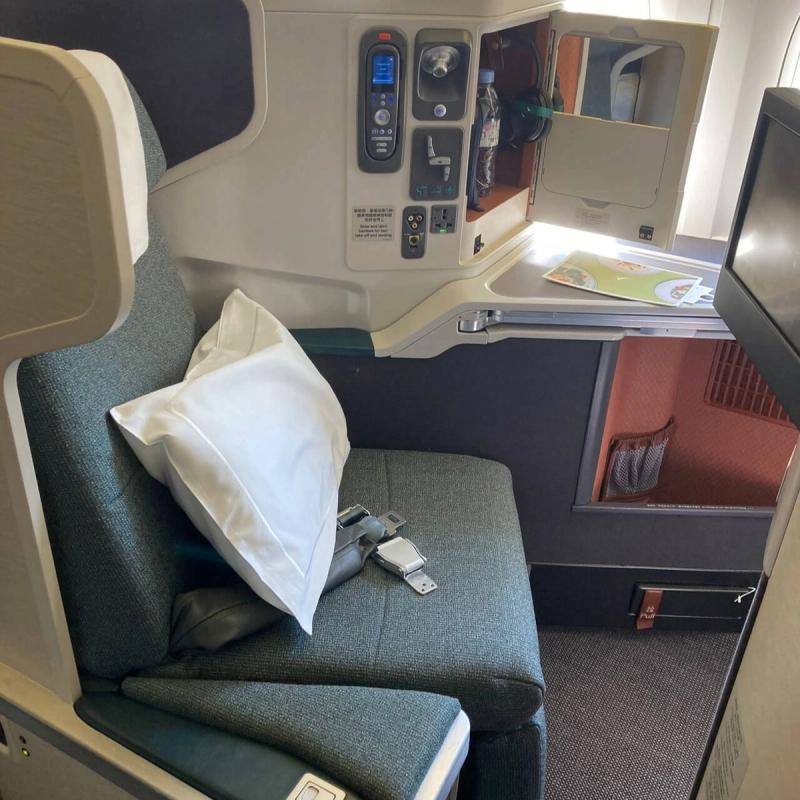
Air India's new A350 business class — featuring privacy doors and the Collins Aerospace Horizon seat — represents the first time the airline's premium cabin has been genuinely competitive with Emirates' established product since the Tata Group takeover.
Which Airline Wins for Which Trip — The Honest Route-by-Route Verdict
This is the section that actually answers the question, because the right airline changes completely depending on what kind of trip you're booking.
Short Gulf hop (Dubai, Sharjah, Abu Dhabi, Doha) for a weekend or under a week, carry-on or light bag: IndiGo or Air India Express win on price, and the short flight time (3–4 hours) makes the comfort gap with Emirates largely irrelevant. On the Chennai–Dubai route specifically, when most fare classes include checked baggage and a meal, the all-in price for a family often beats IndiGo once seat selection and meals are added on the low-cost side. Our Delhi to Dubai and Mumbai to Dubai guides cover this route in full, including the Sharjah airport angle that beats both.
Southeast Asia (Bangkok, Singapore, Kuala Lumpur) for 5–10 days with a checked bag: Air India or Air India Express generally win once baggage is factored in, though route-specific carriers like Thai Lion Air sometimes beat both — see our Mumbai to Bangkok and Delhi to Singapore guides for the full breakdown by destination.
Long-haul Europe or USA where comfort matters on a 9–16 hour flight: Air India's nonstop routing (where available) combined with its bundled fare and improving cabin product is the rational default for most travellers — Air India wins nonstop routing, price (often 10-25% cheaper), Star Alliance access, and the new A350 business class with privacy doors. Emirates makes sense specifically when its connecting time through Dubai is short (under 2 hours), when you're collecting Skywards miles, or when premium cabin comfort is the priority over journey time — Emirates wins checked baggage on the cheapest fare, ICE entertainment, free Starlink Wi-Fi, Premium Economy pitch, A380 onboard showers, and consistent service across its fleet. Our Delhi to London, Mumbai to London, and Cheapest Month India to USA guides cover these long-haul comparisons route by route.
Budget travel with carry-on only, anywhere IndiGo flies (including its new 2026 long-haul routes): IndiGo genuinely wins. No bag to add, no meal needed for a short hop, and the headline fare advantage holds without erosion. The new Istanbul, Amsterdam, Manchester, and Athens routes are worth checking even for travellers who'd normally default to Air India for Europe — IndiGo's pricing on these routes, while less mature, has shown competitive early fares.
Check Live Flight Prices
Booking in USD through FlyFlick? No GST applies on international flights booked via foreign platforms — you're not paying Indian service tax here. To avoid your bank's forex markup, use a zero-forex card like Niyo or Scapia. Note: a 5% TCS applies on foreign currency payments but is fully refundable when you file your ITR.
The right airline genuinely changes by trip type — a 3-hour Dubai weekend and a 14-hour London family visit don't share the same optimal carrier, regardless of which name appears first on a search results page.
Loyalty Programs — Does It Matter for a One-Off International Trip?
IndiGo does not run a frequent-flyer programme; 6E Rewards is a co-brand credit card, not a miles programme. Air India, as a full-service carrier, runs the Maharaja Club, offering Frequent Flier miles, Star Alliance access to 25–26 partner airlines, and lounge access for elite members, with points that don't expire as long as one flight is taken every 24 months. Emirates Skywards is an independent programme with strong upgrade and partner-redemption value but no formal alliance membership.
For a one-off leisure trip, loyalty program depth is close to irrelevant — you won't accumulate enough miles in a single booking to matter. For travellers who fly internationally more than once or twice a year, Air India's Star Alliance membership has genuine value: 26 partner airlines means miles earned on an Air India flight can be redeemed broadly, and elite status (even modest tiers) unlocks lounge access at airports Air India itself doesn't serve directly. If you're choosing between Air India and Emirates specifically for a trip and have no existing loyalty affiliation with either, this factor shouldn't decide the booking — but if you already hold Star Alliance status through another airline, that tips meaningfully toward Air India.
Safety, Reliability, and the Things Rarely Compared
IndiGo holds a 5/7 safety rating with zero fatal accidents since inception. Air India recorded 1.09 technical incidents per 1,000 flights in January 2026. Both airlines maintain IOSA registration (IATA's Operational Safety Audit), as does Emirates. None of the three carriers in this comparison present a safety differentiator significant enough to factor into a booking decision — all meet the international standard, and the differences that exist are well within normal operational variance for major carriers.
Baggage handling complaints against IndiGo jumped from 27% to 42% of total complaints over a recent twelve-month period — worth knowing if you're checking valuable or fragile items, though this reflects complaint composition (what proportion of total complaints are baggage-related) rather than an absolute increase in mishandling incidents. Air India offers real-time baggage tracking across check-in, loading, transfers, and claim areas, accessible through mobile app barcode scanning — a feature IndiGo doesn't currently match for international routes.
Step-by-Step: How to Actually Choose Between These Three
Step 1 — Define your trip type. Short Gulf hop, Southeast Asia, or long-haul Europe/USA — the answer changes by category, as covered above.
Step 2 — Decide if you're checking a bag. If carry-on only: IndiGo's headline fare genuinely wins on most routes. If checking a bag: run the real total cost comparison (base fare + bag + meal + seat selection) before assuming the cheapest displayed fare is actually the cheapest trip.
Step 3 — Weigh punctuality against your connection risk. If your itinerary includes a tight domestic-to-international connection, factor IndiGo's stronger on-time performance into the calculation — a missed connection costs far more than any fare difference.
Step 4 — Decide what comfort is worth to you on long-haul. Emirates' premium over Air India (typically 10–25%) buys 30kg baggage instead of 23kg, a more polished entertainment system, and generally more consistent service. Whether that premium is worth it depends on flight length and personal priorities — it matters more on a 14-hour USA route than a 4-hour Gulf hop.
Step 5 — Compare all three on FlyFlick before booking on any single airline's site. Virtual Interlining occasionally surfaces a connecting combination (an IndiGo domestic feeder + Air India international leg, for example) that beats any single-airline option — covered in full in our 7 Tricks guide.
Step 6 — Sort insurance and eSIM regardless of which airline you choose. Before confirming, get VisitorsCoverage sorted — medical coverage up to $1,000,000 for any international destination. For budget secondary cover, EKTA starts from $0.99/day at ektatraveling.com. For flight delay compensation up to €600 — genuinely useful given the punctuality variance covered above — Compensair handles claims from your phone at no upfront cost.
For eSIM: Saily covers 150+ countries from $1.99/day with 5G. Yesim covers multi-country unlimited data. Drimsim handles off-grid connectivity. For the widest eSIM destination coverage, Airalo offers 200+ country plans from $1.50/day — browse, compare and activate from one app before you board.
See your specific route across IndiGo, Air India, and Emirates side by side — with the real total cost, not the headline fare — below.
Check Live Flight Prices
Booking in USD through FlyFlick? No GST applies on international flights booked via foreign platforms — you're not paying Indian service tax here. To avoid your bank's forex markup, use a zero-forex card like Niyo or Scapia. Note: a 5% TCS applies on foreign currency payments but is fully refundable when you file your ITR.

The five-step decision sequence above — trip type, bag status, connection risk, comfort priority, then a three-way comparison on FlyFlick — takes under 10 minutes and reliably produces the genuinely cheapest or most appropriate option, rather than whichever airline's name you searched first.
Bottom Line
There's no single winner between IndiGo, Air India, and Emirates — and any comparison that hands you one is skipping the part where your actual trip matters more than any airline's average rating. IndiGo wins on price for carry-on-only travel and short hops, but its add-on costs erode that advantage fast once a bag and a meal enter the picture. Air India's bundled fare, improving cabin product, and Star Alliance network make it the rational default for most checked-bag international trips, particularly long-haul. Emirates costs the most but includes the most by default — worth it when comfort on a long flight outweighs a 10–25% premium.
Run the real total cost, not the headline fare. Check punctuality if your itinerary has a connection. Decide what comfort is worth to you on the specific flight length you're booking. The right answer changes by trip — which is exactly why nobody should be telling you there's only one.
Compare honestly. Book the right one for this trip.
Your Airline Comparison Checklist
✈️ IndiGo — Cheapest for carry-on; add-ons erode the saving fast with a checked bag.
✈️ Air India — Best bundled value with a checked bag; improving long-haul product.
✈️ Emirates — Most expensive; best baggage and comfort by default.
🎒 Carry-on only? — IndiGo usually wins; skip the rest of this checklist.
🧳 Checking a bag? — Run the real total cost before trusting the headline fare.
⏱️ Tight connection? — Factor IndiGo's stronger punctuality into the risk.
✈️ FlyFlick Flight Search — Compare all three side by side; UPI and NetBanking accepted.
🛡️ VisitorsCoverage — Medical cover up to $1,000,000; sort before any booking.
🛡️ EKTA — Budget secondary cover from $0.99/day.
✈️ Compensair — Up to €600 delay compensation; file from your phone.
📱 Saily — 5G eSIM, 150+ countries, from $1.99/day.
📱 Airalo — 200+ country eSIM plans from $1.50/day.
No forced winner. The right one depends on the trip.