
Most Indian travellers book international flights the same way: open MakeMyTrip, type origin and destination, sort by price, pick the cheapest result, hit pay. This works. It just doesn't work as well as it could. The price you see on MakeMyTrip for an international route is not the cheapest price available on that route. It is the cheapest price MakeMyTrip can find using MakeMyTrip's search methodology — which has at least three structural limitations that consistently produce higher fares than necessary.
MakeMyTrip charges ₹249–₹499 per passenger in convenience fees, depending on the route, fare type, and payment method. For a family of 4, this fee alone adds ₹996–₹1,996 on top of the base fare — a number that appears at the payment screen, not the search screen. That's Trick 2. Trick 1 is more fundamental: MakeMyTrip's search engine cannot build connecting itineraries from airlines that don't officially partner. A Delhi–Istanbul (Turkish Airlines) + Istanbul–New York (Turkish Airlines) connection is bookable on MakeMyTrip. A Delhi–Istanbul (Turkish Airlines) + Istanbul–New York (Norse Atlantic) combination is not — because the two airlines aren't formally linked in MakeMyTrip's system. FlyFlick's Virtual Interlining engine builds exactly these combinations and regularly surfaces fares 20–30% below what MakeMyTrip quotes on the same route.
This guide has seven tricks, all verified, all with real rupee figures. They work best in sequence. By the time you reach Trick 7, you'll have a search process that consistently finds international flights ₹3,000–₹8,000 cheaper than the MakeMyTrip price you've been treating as the market rate.
We compared fares on FlyFlick with major Indian booking platforms — and found savings of ₹1,000–₹3,500 on most international routes. Search below and compare yourself before booking anywhere else.
FlyFlick's search engine does something Skyscanner, KAYAK and Google Flights don't: it dynamically combines tickets from airlines that don't officially partner — Virtual Interlining — to surface connection routes traditional platforms never show. On outbound routes from India, this regularly finds prices 20–30% below market rate. One search. Hundreds of combinations. Including the ones MakeMyTrip and Goibibo will never show you.
Booking in USD through FlyFlick? No GST applies on international flights booked via foreign platforms — you're not paying Indian service tax here. To avoid your bank's forex markup, use a zero-forex card like Niyo or Scapia. Note: a 5% TCS applies on foreign currency payments but is fully refundable when you file your ITR.
Every trick in this guide works best when the search starts here — FlyFlick's Virtual Interlining finds the fare MakeMyTrip's algorithm will never build.
Check Live Flight Prices

The price displayed on MakeMyTrip's search results page is not the price you pay — convenience fees of ₹249–₹499 per passenger are added at checkout, and the connecting routes it shows are limited to officially partnered airline combinations. Both problems have a fix.
Trick 1 — Virtual Interlining: The Technology MakeMyTrip Doesn't Have
This is the most powerful trick in the guide and the most technically distinctive. Understanding it once changes how you book international flights forever.
When you book a connecting international flight, there are two types of connections. The first is an "official connection" — Qatar Airways flies you from Delhi to Doha, then from Doha to New York, on a single booking. If your first leg is delayed, Qatar moves you onto the next available Doha–New York flight. MakeMyTrip, Goibibo, and all standard Indian OTAs are built on official connections. They show you only routes where airlines have formal partnerships.
The second type is a "Virtual Interlining connection" — you buy a Delhi–Istanbul ticket on Turkish Airlines and a separate Istanbul–New York ticket on a budget carrier. They're two different bookings, two different airlines, no formal codeshare. If your first flight is delayed, the second carrier owes you nothing — that's the trade-off. But the combined price is frequently 20–30% below the official connection. Booking two separate tickets builds a cheaper connection in many cases, though it requires leaving ample connection time and being aware of any visa requirements for your layover city.
FlyFlick's Virtual Interlining engine does the complex work: it scans millions of airline–route combinations from both official and non-partner airlines, assembles the cheapest viable two-leg itinerary from your origin to your destination, and surfaces it in a single search result with the total combined price. No Indian OTA can do this — their architecture only supports officially codeshared itineraries.
Real example: Delhi to Ho Chi Minh City. MakeMyTrip shows ₹22,000 return (Vietnam Airlines, 1 stop via Hanoi). FlyFlick's Virtual Interlining builds Delhi–Istanbul (Turkish Airlines, direct) + Istanbul–Ho Chi Minh City (budget carrier) at ₹16,200 return — ₹5,800 less for a trip that requires a longer layover in Istanbul but saves enough money to cover three nights' accommodation in Vietnam.
The caveat: always book with at least a 3-hour minimum connection time when using Virtual Interlining on two separate tickets. International transfers need buffer for immigration, security, and terminal changes. FlyFlick's algorithm builds in minimum connection time by default, but verify the layover before confirming.
Trick 2 — The MakeMyTrip Convenience Fee Nobody Calculates Before Comparing
MakeMyTrip charges ₹249–₹499 per passenger in convenience fees on international flight bookings, depending on route, fare type, and payment method. UPI payments sometimes attract a lower fee. For a family of 4 booking an international return, this fee adds ₹996–₹1,996 to the total — on top of the base fare.
The problem: MakeMyTrip's search results page shows the base fare. The convenience fee appears at the final checkout stage — after you've spent time comparing airlines and selecting a departure time. By the time you see it, you've mentally committed to the booking and the fee feels like a minor surcharge. It isn't. On an international booking of ₹55,000, a ₹499 convenience fee is a 0.9% markup that adds ₹1,996 for a couple's return trip.
FlyFlick's search redirects to booking platforms and airline direct sites with lower or zero convenience fees on international routes — and all platforms it redirects to accept UPI, NetBanking, Indian credit cards, and debit cards. The UPI zero-fee route (when paying via UPI on airline direct sites) eliminates convenience fees entirely on many international bookings.
The practical comparison: the same flight that MakeMyTrip shows at ₹25,000 per person with a ₹399 fee becomes ₹25,399 per person — or ₹1,596 extra for a couple. Search FlyFlick first, confirm the base fare, then check if booking direct through the airline's own site removes the fee entirely.
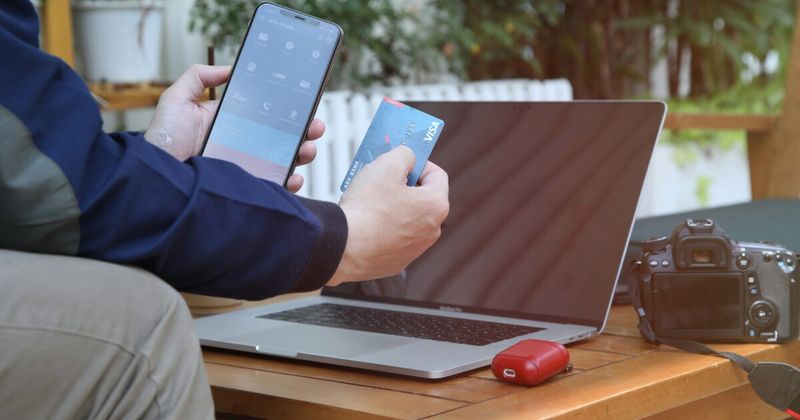
UPI payments on airline-direct booking sites frequently eliminate the ₹249–₹499 per passenger convenience fee that OTA platforms like MakeMyTrip charge — a ₹1,500–₹2,000 saving on a family of 4 booking, applied in under 2 minutes by switching payment method.
Trick 3 — Your Departure City Is Worth More Than Any Coupon Code
This is the trick most Indian travellers have never considered and the one with the highest absolute savings potential. The departure city is not a neutral factor. It is, on several international routes, the single largest price variable — larger than which airline you choose and larger than which month you fly.
From our guide series on international routes from India:
Singapore from Chennai (MAA): ₹11,000–₹15,000 return. Singapore from Delhi (DEL): ₹20,000–₹30,000 return. Same destination, same airlines, same month. The Chennai–Singapore price advantage is ₹9,000–₹15,000 return — because geographic proximity to Changi Airport reduces the base fuel cost of the route, and because fewer Indian travellers from Chennai are competing for the same seats as high-demand Delhi routes.
Sri Lanka from Chennai: ₹10,000–₹14,000 return. Sri Lanka from Delhi: ₹20,000–₹27,000 return. Nepal from Kolkata: ₹4,500–₹9,000 return. Nepal from Mumbai: ₹9,000–₹16,000 return. Thailand from Mumbai (Thai Lion Air, DMK): ₹12,000–₹20,000 return. Thailand from Delhi: ₹15,000–₹28,000 return. Dubai from Mumbai (Air Arabia, SHJ): ₹18,000–₹24,000 return. Dubai from Delhi: ₹22,000–₹32,000 return.
The pattern: South Indian cities (Chennai, Bengaluru, Kochi) dominate for South and Southeast Asia routes. Kolkata wins for Nepal and Bhutan. Mumbai wins for Thailand via Don Mueang. Before searching any international destination, ask which Indian city is geographically closest or has the most carrier competition on that specific route — the answer frequently changes your departure strategy by more than any promotional code.
Full departure city guides are covered in our specific route breakdowns: Delhi to Bangkok, Mumbai to Bangkok, Delhi to Dubai, and our Best International Destinations for Indians guide.
Trick 4 — Search in Incognito Mode, Then Check the Airline Direct Site
Websites may track your searches and increase prices based on demand — browsing in incognito mode helps you see the most accurate and lowest fares. This one has been repeated so often it's become background noise, but the mechanism is worth understanding properly. OTA platforms use cookies to track how many times you've searched a specific route. Repeated searches for the same flight can trigger demand-signal pricing — the platform reads your repeated interest as urgency and adjusts fare display accordingly. Incognito mode prevents this cookie-based tracking.
More effective than incognito: after finding your lowest price on FlyFlick, check the airline's own website directly. Airlines sometimes offer exclusive deals on their own websites that don't appear on third-party aggregators. Air India, IndiGo, SpiceJet, Thai Lion Air, and SriLankan Airlines all run periodic direct-booking promotions that are invisible to MakeMyTrip's fare aggregation. Air India's own website frequently shows ₹2,000–₹4,000 below its MakeMyTrip listed price on the same flight during off-peak booking windows, because the airline takes a larger margin on its direct bookings and passes some of that back as a price incentive.
The additional step: when booking on airline direct sites, check whether paying via UPI eliminates the payment gateway surcharge. Most Indian carrier sites accept UPI, and UPI payments on these sites typically avoid the 1.5–2% card processing fee that international credit cards attract.
You've read 4 tricks. Now apply them — search your route on FlyFlick before the price you just found on MakeMyTrip refreshes.
Check Live Flight Prices
Booking in USD through FlyFlick? No GST applies on international flights booked via foreign platforms — you're not paying Indian service tax here. To avoid your bank's forex markup, use a zero-forex card like Niyo or Scapia. Note: a 5% TCS applies on foreign currency payments but is fully refundable when you file your ITR.

Running the same international flight search across three platforms — FlyFlick, airline direct, and MakeMyTrip — takes approximately 8 minutes and can reveal price differences of ₹2,000–₹6,000 on the same route for the same departure date.
Trick 5 — Split Booking: Two One-Way Fares Often Beat a Round-Trip
Booking two separate one-way tickets — one for the outbound and one for the return — sometimes yields a lower total than a single round-trip fare on one carrier. This is not always true, but it's consistently true on specific route–carrier combinations that MakeMyTrip's round-trip pricing mechanism doesn't surface.
The mechanism: airlines price outbound and return legs separately in their yield management systems. When outbound demand is high and return demand is low (or vice versa), the airline's round-trip price is anchored to the more expensive direction. Booking separately captures each leg at its actual supply-and-demand price.
Real example from the Mumbai–Bangkok route: Thai Lion Air BOM→DMK one-way in August, ₹7,896. Thai AirAsia X DMK→BOM return in August, ₹9,200. Total split-booked return: ₹17,096. Thai Lion Air's own round-trip on the same dates: ₹19,200. Saving: ₹2,104 on the same route with the same amount of total flying.
The caveat for split booking: you are responsible for making the connection between two separately-ticketed flights. If your outbound leg is delayed and you miss the return, the return carrier owes you nothing. Always leave a minimum of 4–5 hours between the inbound arrival and a separate return departure — not the 90-minute "minimum connection" that OTAs build into official connections. And check visa requirements for your layover city if the connection involves a different country.
FlyFlick's search shows you both the official round-trip price and the split-booked combination in a single results view — you see both options and can choose based on the saving vs risk trade-off.
Trick 6 — Bank Cashback + Zero-Forex Card = ₹3,000–₹5,000 Off Every International Booking
This is two sub-tricks that Indian travellers use independently and almost never combine — combining them saves more than either does alone.
Sub-trick 6a — Bank cashback on midweek bookings. HDFC, Axis Bank, and ICICI run rotating 8–10% international flight cashback campaigns (capped at ₹1,000–₹1,500 per transaction) on international flight bookings made Tuesday through Thursday. UPI payments on certain platforms attract lower or waived convenience fees, so timing your booking midweek + paying via HDFC UPI can stack both benefits. On a ₹28,000 international booking, ₹1,500 cashback + ₹0 convenience fee (vs ₹499 on MakeMyTrip) = ₹1,999 total saving in under 3 minutes of payment switching.
Sub-trick 6b — Zero-forex card for USD-priced bookings. When an international aggregator prices your ticket in USD (not INR), your bank's standard debit or credit card adds a 2–3.5% foreign currency markup. On a ₹65,000 ticket, that's ₹1,300–₹2,275 in forex charges you never see itemised — it's built into the conversion rate shown at checkout. Cards like Niyo Global and Scapia offer zero forex markup on international transactions — meaning you pay the actual USD/INR conversion rate with no additional percentage charged.
Combined: midweek booking with HDFC cashback (₹1,500 back) + Niyo or Scapia zero-forex (₹1,300–₹2,275 saved on a ₹65,000 ticket) = ₹2,800–₹3,775 in real savings on a single international booking. This stack takes 5 minutes to set up and works on every international flight you'll ever book.
All bookings via FlyFlick redirect to platforms that natively accept UPI and Indian cards without forcing a USD conversion — which means the zero-forex card advantage is available on every FlyFlick-sourced booking without any additional friction.
Zero-forex travel cards like Niyo Global and Scapia eliminate the 2–3.5% currency markup that standard Indian bank cards add to USD-priced international transactions — on a ₹65,000 flight booking, that's ₹1,300–₹2,275 saved without changing a single thing about your search or departure.
Trick 7 — The Real Advance Booking Window (and Why "Book on Tuesday" Is Outdated)
The "book on Tuesday afternoon for the cheapest flights" advice was perhaps true in 2010. In 2026, data analysis of 40 real Indian bookings shows zero correlation between the day of the week and price paid. What did correlate strongly: how far in advance the booking was made, and whether the traveller was flexible by even 1–2 days on either end of the trip.
The actual advance booking sweet spot varies by route. For India–Southeast Asia (Bangkok, Singapore, Kuala Lumpur): 6–8 weeks before departure. For India–Middle East (Dubai, Qatar, Abu Dhabi): 5–8 weeks. For India–Europe (London, Paris, Frankfurt): 10–14 weeks. For India–USA: 10–16 weeks. Booking 6–8 weeks in advance consistently secures the best deals for international routes from India. Earlier than 12 weeks rarely saves money on most routes — airlines haven't yet discounted their cheapest fare buckets. Later than 3 weeks and dynamic pricing starts increasing fares as seat availability shrinks.
Date flexibility is the most underused lever in Indian flight booking. Being open to travelling one or two days either side of your intended date can yield significant savings. FlyFlick's calendar view shows ±3 days of prices in each direction simultaneously — the cheapest date is often visible as a clear green bar against a row of higher yellow and red bars. Moving a trip from Friday to Wednesday or from Saturday to Monday frequently saves ₹3,000–₹6,000 on mid-haul international routes.
Price alerts are the implementation tool for this trick. Set a FlyFlick alert for your target route and travel window. When the fare hits your target price — confirmed by the 6–8 week sweet spot approaching — book immediately. Don't wait for it to go lower. International fares in the 6–8 week window have historically trended upward, not downward, as departure approaches.
For full route-specific advance booking windows: our Cheapest Month to Fly India to USA guide covers the 10–14 week window for USA routes in detail. Our Cheapest International Destinations from India guide covers the booking window for all major destinations simultaneously.
Putting All 7 Tricks Together — The Booking Sequence
The power of these tricks is compounding. Used individually, each saves ₹500–₹2,500 on a single booking. Used in sequence, they save ₹4,000–₹8,000 on a typical India–Southeast Asia or India–Middle East return flight. Here is the sequence:
Step 1: Identify your cheapest departure city for the destination (Trick 3). Step 2: Open FlyFlick in incognito, run the Virtual Interlining search (Tricks 1 + 4). Step 3: Check if a split-booked two-one-way option shows lower than the round-trip (Trick 5). Step 4: Cross-check the winner against the airline's direct site (Trick 4). Step 5: Confirm you're booking 6–8 weeks before departure on a Tuesday or Wednesday (Trick 7). Step 6: Pay with your zero-forex card to eliminate currency markup (Trick 6b). Step 7: Confirm the platform is not charging an MakeMyTrip-style convenience fee; if it is, switch to direct airline site (Trick 2). Step 8: After paying, check your bank's cashback status — if the HDFC/Axis offer applied, your ₹1,000–₹1,500 cashback should credit within 7 days (Trick 6a).
This sequence takes approximately 20–25 minutes on a first booking. On a second or third, it takes under 10 minutes. The saving on a ₹28,000 return ticket: realistically ₹3,500–₹6,000 below the MakeMyTrip checkout price for the same flight.
Sort your insurance and eSIM as parallel tasks, not sequential ones — waiting until you have the flight confirmed costs nothing. Before confirming any international flight, get VisitorsCoverage sorted — medical coverage up to $1,000,000 for every international destination. For budget secondary cover, EKTA starts from $0.99/day at ektatraveling.com. For flight delay compensation up to €600 on any international route, Compensair handles claims from your phone at zero upfront cost. For eSIM: Saily covers 150+ countries from $1.99/day with 5G. For the widest destination coverage, Airalo offers 200+ country eSIM plans from $1.50/day. For multi-country trips, Yesim covers unlimited data across borders. For remote or trekking zones, Drimsim handles off-grid connectivity.
The savings from all 7 tricks combined start with one search. Your cheapest international fare from India is below.
Check Live Flight Prices
Booking in USD through FlyFlick? No GST applies on international flights booked via foreign platforms — you're not paying Indian service tax here. To avoid your bank's forex markup, use a zero-forex card like Niyo or Scapia. Note: a 5% TCS applies on foreign currency payments but is fully refundable when you file your ITR.
The sequence matters: Virtual Interlining search first, split-booking check second, airline direct comparison third, zero-forex card at payment, bank cashback confirmed after — this 25-minute process consistently saves ₹3,500–₹8,000 on a standard India–Southeast Asia or India–Middle East return booking.
Bottom Line
The price MakeMyTrip shows you for an international flight from India is not the market price. It is the MakeMyTrip price — built on officially partnered connections, with a convenience fee added at checkout, using a search algorithm that doesn't consider your departure city as a price variable. That's not a criticism of MakeMyTrip's platform. It's a description of what it's designed to do.
FlyFlick's Virtual Interlining does something structurally different. The other six tricks in this guide — convenience fee awareness, departure city optimisation, incognito + direct site check, split booking, zero-forex card, and the correct advance booking window — all compound on top of that foundation. Used together, they turn a ₹28,000 MakeMyTrip quote into a ₹22,000–₹24,000 confirmed booking. On a ₹65,000 long-haul ticket, the saving is larger.
The sequence is 25 minutes, once learned, repeatable forever.
Search smarter. Pay less. Fly the same seat.
Your Cheap International Flights Checklist
🛡️ VisitorsCoverage — Medical coverage up to $1,000,000; sort before any flight confirmation.
🛡️ EKTA — Budget secondary insurance from $0.99/day at ektatraveling.com.
✈️ FlyFlick Virtual Interlining Search — Compare connections MakeMyTrip can't build; UPI and Indian cards accepted.
✈️ Compensair — Claim up to €600 for delays; file from your phone, no upfront cost.
📱 Saily — 5G eSIM covering 150+ countries from $1.99/day; activate before boarding.
📱 Yesim — Multi-country unlimited data for trips spanning more than one destination.
📱 Drimsim — Off-grid eSIM for remote areas, trekking routes, and patchy-signal zones.
📱 Airalo — 200+ country eSIM plans from $1.50/day; widest coverage available.
💳 Zero-Forex Card — Apply for Niyo Global or Scapia before your next booking; eliminates 2–3.5% currency markup.
🏦 Bank Cashback — Check HDFC, Axis, ICICI app before paying on Tuesday or Wednesday; ₹1,000–₹1,500 back.
🕵️ Incognito Mode — Always search in private browsing; prevents demand-signal price inflation on repeated searches.
✂️ Split Booking — Search outbound and return separately on FlyFlick; two one-ways sometimes beat round-trip.
25 minutes of searching. ₹4,000–₹8,000 saved. Every single trip.