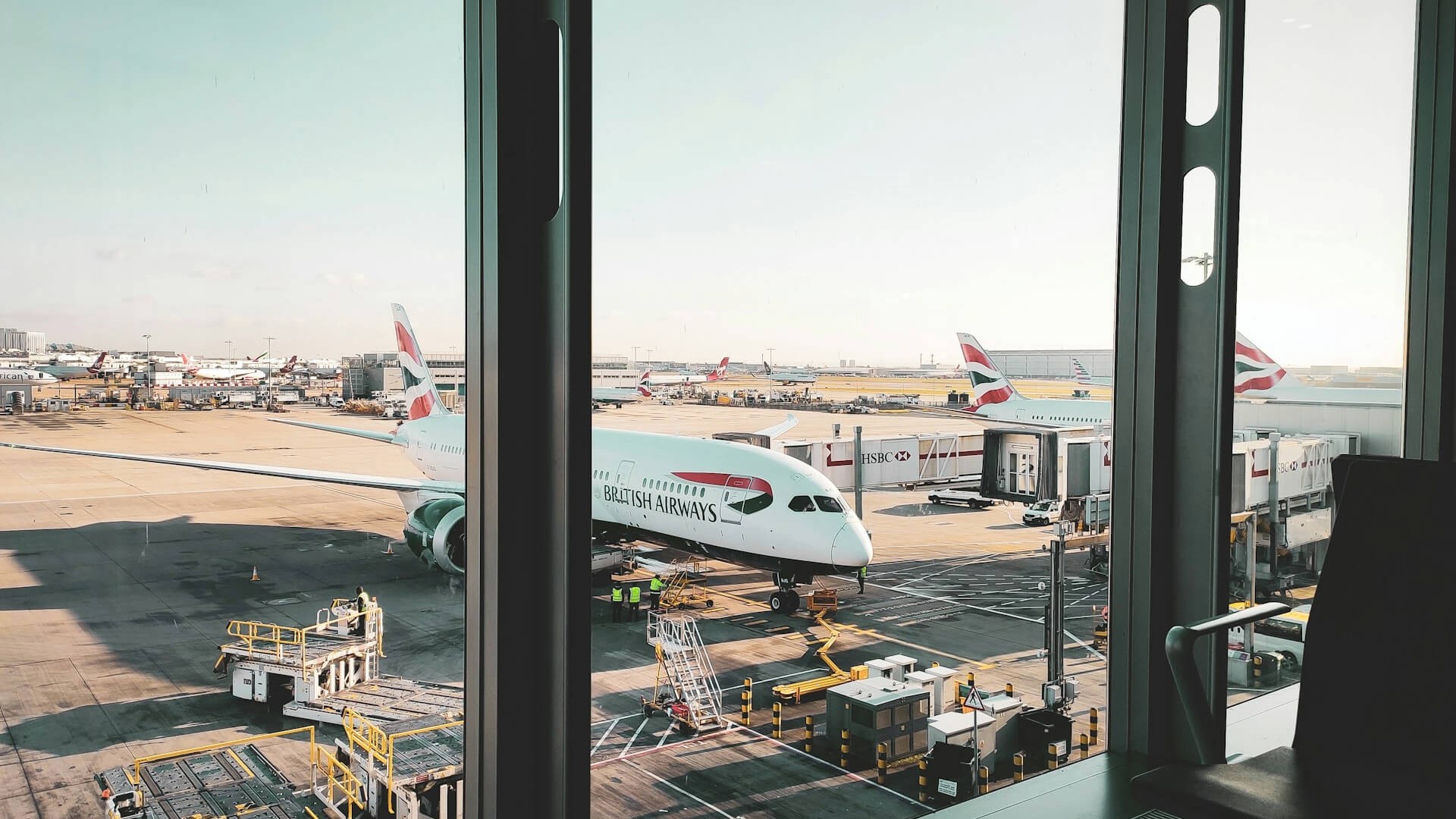

The first time you arrive at Heathrow T2 for an Air India economy seat and someone at the gate tells you you're on the A350-900, your expectations recalibrate. There's a specific version of this story that's been common among India travellers in 2026: they booked Air India because it was £120 cheaper, fully expecting to regret it for nine hours, and landed at Delhi surprised that the seat was genuinely comfortable, the IFE worked, and the biryani was better than anything they'd eaten on British Airways in the last four years.
The inversion is real. In 2026, Air India's economy seat on its best aircraft has overtaken British Airways' economy seat on its older aircraft on the London–India route. That statement would have sounded absurd three years ago. It is not absurd now. But — and this caveat is the entire point — it depends entirely on which aircraft you're on. Air India's worst economy seat, on its unrenovated Boeing 787-8, is not competitive with British Airways or Virgin Atlantic's equivalent. The airline operates a split fleet, and the gap between its best and worst cabin is wider than the gap between any two airlines on this comparison.
This is the honest 2026 seat review. Not which airline has the better tail livery. Which seat you're actually likely to sit in for nine hours on the London–Delhi or London–Mumbai overnight flight — and what that seat will feel like when you're trying to sleep at 2 AM somewhere over Turkmenistan.
FlyFlick's search engine does something Skyscanner, KAYAK and Google Flights don't: it dynamically combines tickets from airlines that don't officially partner — Virtual Interlining — to surface connection routes traditional platforms never show. On India-bound legs, this regularly finds prices 20–30% below market rate. Before picking your airline on seat quality alone, run the full search to confirm the price gap is worth the cabin differential.
Check Live Flight Prices
The Aircraft-First Framework: Why the Plane Beats the Airline
Every economy review that compares British Airways to Air India misses the most important variable. It's not the airline. It's the aircraft.
Three different widebody types operate the London–India route across these three airlines. Each has different seat dimensions, different IFE systems, different cabin pressure, and different sleep ergonomics. Understanding the aircraft before the airline is how you actually choose the right seat.
| Aircraft | Airlines Using It | Economy Config | Seat Pitch | Seat Width | Cabin Pressure Equivalent |
|---|---|---|---|---|---|
| Airbus A350-900 | Air India | 3-3-3 | 31–32" | 17.5" | ~6,000 ft |
| Boeing 787-9 | Air India, BA, Virgin | 3-3-3 | 31" | 17–17.5" | ~6,000 ft |
| Boeing 787-8 | Air India (some), BA (some) | 3-3-3 | 31" | 17–17.5" | ~6,000 ft |
| Boeing 777-200ER | BA (some India routes) | 3-4-3 or 3-3-3 | 31" | 17" (3-4-3) / 17.5" (3-3-3) | ~8,000 ft |
| Boeing 777-300ER | BA (some India routes) | 3-3-3 | 31" | 17.5" | ~8,000 ft |
Sources: SeatGuru, airline seat maps, aviation data — July 2026.
The cabin pressure entry matters more than it looks. The Boeing 777-200ER has lower cabin pressure than the 787 or A350 — an 8,000 foot equivalent versus 6,000 feet on the modern composites. Over nine hours, lower cabin pressure means drier air, increased dehydration risk, and measurably more passenger fatigue. British Airways operates 777-200ERs on some London–India rotations alongside its 787-9 fleet. On a 9-hour overnight flight that ends with you needing to be functional in a business meeting or starting a holiday, the aircraft pressure difference is not trivial.
The practical check: before booking any flight on any of these three airlines to India, look up your specific flight number on SeatGuru. It takes 45 seconds and tells you the aircraft type. That aircraft type tells you more about your economy seat experience than any other variable in this review.
Air India Economy: The Two-Tier Reality
The A350-900 Economy Seat — The Best in This Comparison
Air India's A350-900 economy cabin is the product that has genuinely surprised travellers in 2026. The A350 entered Air India's fleet as part of the Tata Group's transformation programme, and the economy cabin reflects a deliberate intent to compete on product quality rather than just price.
The RECARO CL3710 seat on Air India's A350 features a 31–32 inch pitch, 17.5-inch width, and an adjustable headrest with fold-out wings that actually function for side-sleeping on overnight flights. The tray table slides forward on a track and offers a tablet holder slot — a small detail that becomes meaningful when you're trying to eat and hold your phone simultaneously at 35,000 feet. USB-A and USB-C charging at every seat. The Thales AVANT Up IFE system: a large, responsive touchscreen (not the sluggish resistive screens that characterized older economy IFE), with a library of 1,000+ movies and TV episodes that includes Bollywood, Hollywood, and regional Indian cinema in a ratio that reflects who the airline actually flies.
The A350 fuselage is wider than the 787's — meaning the 3-3-3 configuration produces genuinely wider seats than the same 3-3-3 on a 787. This is the "3-3-3 cabin paradox" that no review explains: the configuration number doesn't tell you the actual seat width because it depends on the fuselage diameter. On the A350, the middle seat in a 3-3-3 is approximately 17.5 inches. On the 787's same 3-3-3, the equivalent is closer to 17 inches. That half-inch difference is noticeable when you're shoulder-to-shoulder with the person next to you for nine hours.
Air India's food on the A350 is the feature that most consistently exceeds expectations. The Indian meal on the outbound London–Delhi sector is genuine — biryani with a proper consistency, dal makhani that isn't the reconstituted variety, a bread option that isn't a bread roll with an Indian name painted on it. For vegetarian travellers, Air India's default menu coverage is the best of the three airlines. The Western meal option is adequate — not remarkable. The Indian meal option is meaningfully better than British Airways or Virgin Atlantic's approximations of Indian food on the same route.
Best seats on Air India A350: Rows 35–36 (emergency exit — extra legroom, no reclining seat in front). Avoid seats in the last three rows — proximity to galley, reduced seat recline. Window seats in rows 10–15 have good overhead bin access on the A350's slightly wider aisles.
The registration check: Air India A350 registrations begin VT-JRA through VT-JRO (approximately). Look up your flight on SeatGuru or FlightAware — aircraft showing as A350-900 is confirmed. Book with confidence.
The 787-9 Economy Seat — Good with a Caveat
Air India's new 787-9 aircraft — line-fitted from February 2026 — carries the same RECARO CL3710 seats as the A350, making it effectively equivalent in seat quality. Registrations in the VT-JEA to VT-JEN range indicate the new line-fit 787-9 configuration. These are the aircraft that departed on Air India's expanded Heathrow operations from October 2025.
The retrofitted 787-8 from April 2026 also received the RECARO seat refresh across 25+ aircraft — check SeatGuru for VT-series registrations showing updated interior configuration.
The Unrenovated 787-8 — The One to Avoid
Older Air India Boeing 787-8 aircraft — recognisable by VT-AIL, VT-AIM, VT-AIN, VT-AIO series registrations on some rotations — carry the pre-retrofit interior. These are the seats that generate the negative passenger reviews: IFE screens that don't load across entire seat sections, tray table integrity issues, dated cabin design. The cabin is not dangerous or unusable. It's just significantly worse than the new Air India product — and significantly worse than British Airways or Virgin Atlantic's economy on equivalent aircraft.
If SeatGuru shows an unrenovated 787-8 on your Air India booking, the calculus changes: either pay the premium for British Airways or Virgin, or accept that you're flying a pre-upgrade Air India product that is not competitive with either competitor in 2026.
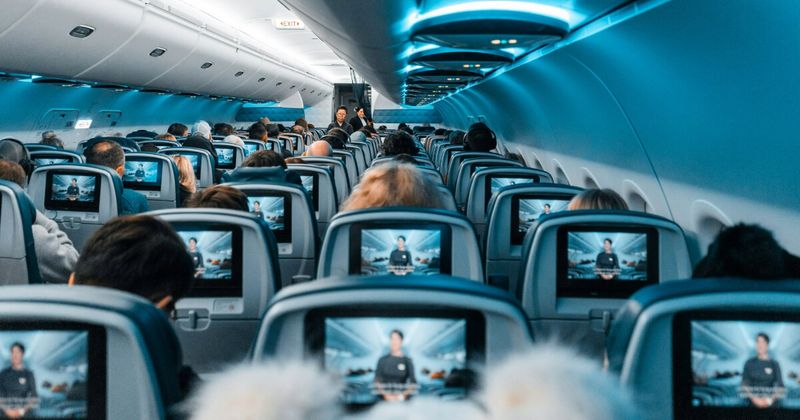
Air India's A350-900 economy cabin features RECARO CL3710 seats with Thales AVANT Up IFE — the same seat family that competitors use on premium widebody products, representing a genuine step-change from Air India's historical economy product and the reason the airline's A350 economy is now competitive with British Airways and Virgin Atlantic at a lower price point.
British Airways Economy: The Aircraft Lottery and the Starlink Advantage
British Airways operates London–India routes on a mix of aircraft — primarily Boeing 787-9 and Boeing 777-200ER, with 777-300ERs also in rotation. The economy experience varies more between these types than the experience between different airlines on the same aircraft type.
BA World Traveller on the 787-9 — The 2026 Product
The 787-9 World Traveller seat is 31 inches pitch, 17–17.5 inches width, in a 3-3-3 configuration. It's a functional, modern economy seat — not dramatically different in dimensions from Air India's 787-9 or Virgin's equivalent. The differentiator in 2026 is what's above the seat: British Airways is rolling out free Starlink WiFi across its long-haul fleet in 2026 — on the 787-9 with Starlink, the IFE ranking is excellent plus free WiFi.
Free WiFi on a 9-hour overnight flight to India is a specific category of valuable. If you're a business traveller who needs to clear email before landing in Delhi, or a parent who needs to keep a child entertained with their own content, or simply someone who has learned that airline IFE libraries rarely have what you actually want to watch — the Starlink connection changes the in-flight proposition fundamentally. You're no longer dependent on what the airline loaded into its entertainment system. You're connected.
The World Traveller IFE screen on the refreshed 787-9 interior is responsive and well-organised — 300+ hours of content including a decent selection of Bollywood and Indian cinema that has expanded as BA has invested in the India route. Meals included, complimentary drinks, a service that is professional if occasionally impersonal — typical of a large airline at scale.
The seat fee issue: Unlike Virgin Atlantic, British Airways charges for standard seat selection unless you have Executive Club Silver or Gold status, or book a higher fare class. British Airways requires payment to reserve your seat more than 24 hours before departure for most economy passengers without elite status. On a 9-hour overnight flight where seat location genuinely affects sleep quality, paying to choose a specific seat — exit row, window for sleeping against the fuselage — is worth factoring into the total cost comparison.
BA World Traveller on the 777-200ER — The One to Avoid
British Airways' 777-200ER is the aircraft that generates the consistent criticism on the India route, and it deserves direct treatment. The 777-200ERs have lower cabin pressure than the 787 or A350 — a concrete comfort difference on a 9-hour flight. The cabin pressure at 8,000 feet equivalent (versus 6,000 feet on the modern composites) produces measurably drier air, higher dehydration, and more passenger fatigue at arrival.
The 777-200ER's economy configuration on some Indian routes uses a 3-4-3 layout — meaning the middle section has four seats across rather than three. The middle seat in a 3-4-3 middle block is arguably the worst economy seat in commercial aviation: surrounded on both sides, no armrest that doesn't require negotiation, no window, no aisle access without disturbing three people. Book a 777-200ER on a late night Delhi–London flight and draw the middle-middle seat, and the question of whether Air India's A350 was worth the £100 premium answers itself immediately.
Check your BA flight on SeatGuru before booking. Aircraft showing 787-9 = book confidently. Aircraft showing 777-200ER = verify the cabin configuration and pay to choose a non-middle-middle seat if you proceed.
Best seats on BA 787-9: Row 28–32 (exit row extra legroom on some 787-9 configurations). Window seats A or K for overnight flights — the fuselage wall provides head support impossible in a centre or aisle seat. Avoid the back four rows — proximity to galley noise.

BA's 787-9 Starlink WiFi rollout changes the in-flight economy proposition on the India route in 2026 — but only on 787-9 aircraft, not the 777-200ER which carries older IFE, lower cabin pressure, and the potential for a 3-4-3 middle-block configuration that is consistently the worst economy seat option across the three airlines.
Virgin Atlantic Economy: The Overnight Sleep Champion
Virgin Atlantic has built a reputation for creating a more relaxed and friendly on-board experience — its premium economy is ranked World's Best by Skytrax 2025 — but this review is about economy specifically. And in economy, Virgin's differentiation is more nuanced than the premium cabin headline suggests.
Virgin Atlantic operates the Boeing 787-9 on its London–India routes (Delhi and Mumbai). The economy cabin has two tiers: Economy Classic and Economy Delight.
Economy Classic (31" pitch) — Competitive but Standard
Economy Classic at 31-inch pitch and 17.5-inch width is the entry economy product — comparable in dimensions to Air India's 787-9 and BA's 787-9. The Vera IFE system is Virgin's latest — well-organised, responsive, with a curated content library that skews toward popular Western releases alongside solid Bollywood coverage for the India route market. USB charging at every seat.
The meal service in Economy Classic shows more personality than BA's equivalent — better presentation, more interesting menu design — but the actual food quality difference is marginal. It's above average economy catering, not remarkable.
The crew culture difference is real but hard to quantify. Virgin Atlantic cabin crew are known for friendly, relaxed service that many travellers appreciate on long-haul flights. On the specific Delhi–London and London–Delhi sectors, Virgin crew tend to maintain a lighter, more conversational service approach than BA's more formal equivalent. Whether this matters to you personally is subjective — but on a 9-hour overnight where you might need a water refill at 3 AM, a crew that's genuinely attentive rather than just technically completing their duties makes a real difference.
Economy Delight — The Overnight Flight Recommendation
Economy Delight gives you 3 more inches of legroom at 34 inch pitch and you can choose your seat for free when booking directly on Virgin's website.
That 34-inch pitch is the number that changes the overnight flight equation. At 31 inches, lowering the seat recline and trying to sleep with your knees pressed against the reclined seat in front requires a specific body size and sleep style to make work. At 34 inches, the space between the front seat's fully-reclined position and your knees is genuinely comfortable — you can cross your legs, you can shift position, you can adopt more than one sleeping posture across nine hours.
A light sleeper consistently managed four hours of rest on Virgin Atlantic's 787-9 on the Delhi–London overnight — a reviewer who specifically tested the sleep experience on this route. Four hours of sleep in Economy Delight on a 9h 50m red-eye is the difference between arriving at Heathrow at 06:15 as a functional person and arriving as a wreck who needs an hour in the T3 arrivals lounge before they can face the Piccadilly Line.
The free seat selection in Economy Delight without the BA equivalent seat fee is a tangible additional saving. Virgin doesn't charge standard seat selection fees regardless of status — unlike British Airways, Virgin Atlantic doesn't charge to select a standard seat unless you book one of its Light basic economy fares.
Best seats in Virgin Economy Delight: The Delight tier is typically located in rows 20–30 on the Virgin 787-9 (varies by aircraft). Window seats on the India route specifically: on the London–Delhi sector with an 02:00–03:00 departure time from London, window seats on the left side (A column) offer a view of sunrise over Central Asia on the approach to Delhi — a specific experience the window-right passengers miss.
Best seats in Virgin Economy Classic: Exit row seats typically in rows 41–44 on the 787-9 configuration. The 3-3-3 on Virgin's 787-9 tends to have slightly more consistent seat quality than some BA 787-9 variants due to Virgin's lower density configuration.
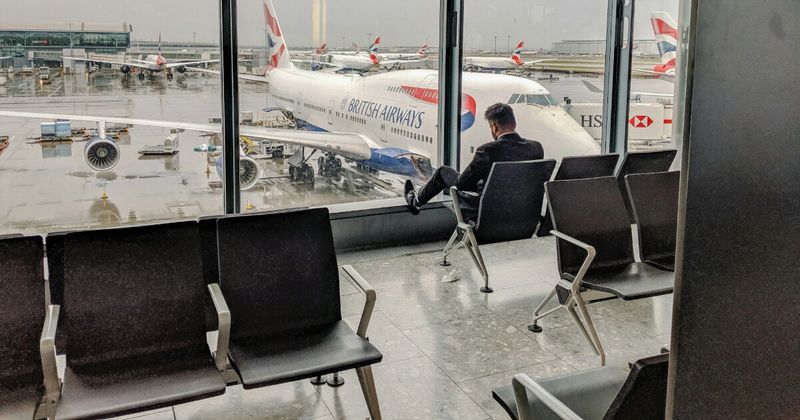
Virgin Atlantic's Economy Delight at 34-inch pitch is the strongest overnight sleep economy product across the three airlines on India routes — and unlike British Airways, Virgin doesn't charge for standard seat selection, making the marginal cost of choosing the right overnight seat zero for direct bookings.
The Overnight Flight Seat Strategy: Applied
All three airlines depart India for London at night — typically 01:00–03:30 from Delhi or Mumbai. The LHR–India direction often departs around 21:00–23:00 UK time and arrives Delhi in the early hours local time. This overnight nature of the route changes which seat features matter most.
On a daytime 9-hour flight, IFE and meal quality are the primary differentiators — you're awake and using them. On a 9h 50m overnight flight where you need to sleep, the hierarchy shifts:
Priority 1: Seat pitch. More pitch = more sleeping position options. Virgin Economy Delight's 34 inches beats every other economy option on this route.
Priority 2: Window seat availability. The fuselage wall is the only surface you can lean against without disturbing the person next to you or sliding off a flat headrest. On all three airlines, a window seat in row A or K (depending on aircraft) is the most valuable economy position for the overnight sector.
Priority 3: Headrest quality. The RECARO CL3710 seat on Air India's A350 has adjustable headrest wings — fold them in around your head and you have approximately 6 inches of lateral head support. This is better than the non-adjustable headrests on some BA and Virgin economy seats.
Priority 4: Avoiding the galley. All three airlines have galley service activity that continues through the night. The rear galley particularly creates noise from crew activity, trolley movements, and passenger queuing. Stay forward of the last 4–5 rows on any aircraft type across these three airlines.
The specific overnight recommendation: Virgin Economy Delight, window seat, forward of row 40. Book directly on Virgin's website for free seat selection. If Virgin is not operating the route or prices are substantially higher than Air India: Air India A350 economy, verify aircraft registration, select a window seat in rows 10–35. British Airways 787-9 is a strong alternative if Starlink WiFi connectivity matters — but pay to select window for the overnight.
The Food Comparison: Where Air India Wins Definitively
Food is a significant variable on a 9-hour flight with two meal services. Here's the honest ranking.
Air India: Genuine Indian cuisine on the India-route menu. The biryani on Air India's LHR–DEL sector has been consistently praised by travellers across review platforms in 2026 — not as a "surprisingly good for airplane food" hedged praise but as genuinely satisfying cooking. The vegetarian options cover South Indian (sambar rice, idli), North Indian (dal makhani, paneer makhani), and Jain (strict vegetarian) on request. The bread isn't a bread roll — it's a roti or paratha on the India route variants.
The fruit plate on Air India is reliably fresh. The raita is real. The mango kulfi dessert appears on some routes. These details sound minor and add up to a meal service that's meaningfully more enjoyable than the alternative.
British Airways: Competent, forgettable. World Traveller meal service on India routes includes an Indian option but it's approximated. The "chicken tikka" and "vegetable curry" are recognisable as attempting the category without quite achieving it. The overall meal quality is competent long-haul economy catering — not memorable. The bread roll is a bread roll.
Virgin Atlantic: Best designed, most creative. Virgin's menu has the most considered presentation and the best Western meal options. The Indian menu is better than BA's but below Air India's. The distinction: Virgin approaches meal service as a product design exercise. Air India approaches it as cooking. For Indian food specifically, cooking wins.
The food test is where Air India's economy specifically serves Indian route passengers differently from British Airways or Virgin — the same airline that lost on cabin product reputation for years has rebuilt its catering for the LHR–India route in a way that specifically rewards the passenger who actually wants to eat Indian food on a flight to India.
The IFE and WiFi Comparison in 2026
Air India A350/new 787-9: Thales AVANT Up — Excellent. Large screen, fast response, Bollywood and Hollywood in near-equal coverage depth, USB-C charging functional at every seat, no WiFi on most rotations (some A350s have connectivity announced for late 2026 — not yet standard).
British Airways 787-9 with Starlink: Excellent + free WiFi. The Starlink rollout makes BA's 787-9 IFE genuinely differentiated in 2026 — the combination of solid onboard content and unlimited free WiFi is the strongest in-flight connectivity proposition of the three airlines. If you work through long-haul flights, this is the product choice. If you sleep, WiFi is irrelevant and the advantage disappears.
Virgin Atlantic Vera IFE: Very good. Responsive touchscreen, curated library, good music options, 300+ films. Virgin's IFE is consistently rated as more user-friendly than BA's previous systems. No free WiFi currently — paid WiFi available. The gap between Virgin and BA on this dimension has narrowed as BA's Starlink rollout progresses.
The Complete Economy Seat Scorecard
| Category | Air India A350 | Air India Old 787 | BA 787-9 | BA 777-200ER | Virgin Delight | Virgin Classic |
|---|---|---|---|---|---|---|
| Seat Pitch | 31–32" | 31" | 31" | 31" | ✅ 34" | 31" |
| Seat Width | ✅ 17.5" | 17" | 17–17.5" | 17" (3-4-3) | 17.5" | 17.5" |
| IFE | ✅ Excellent | ❌ Variable | ✅ Excellent | Dated | ✅ Very good | ✅ Very good |
| Free WiFi | ❌ No | ❌ No | ✅ Starlink | ❌ No | ❌ No | ❌ No |
| Cabin Pressure | ✅ 6,000 ft | ✅ 6,000 ft | ✅ 6,000 ft | ❌ 8,000 ft | ✅ 6,000 ft | ✅ 6,000 ft |
| Food (Indian) | ✅ Best | ✅ Best | Adequate | Adequate | Good | Good |
| Free Seat Select | Varies | Varies | ❌ No | ❌ No | ✅ Yes | ✅ Yes |
| Crew Experience | Warm | Warm | Professional | Professional | ✅ Most relaxed | ✅ Most relaxed |
| Headrest | ✅ Adjustable | Basic | Fixed | Fixed | Fixed | Fixed |
| Overnight Sleep | Good | Poor | Good | Below average | ✅ Best | Average |
The Verdict by Traveller Type
For the price-value traveller: Air India A350 economy. Check registration, verify A350, book window. Superior food, excellent IFE, competitive seat dimensions, and typically £100–£200 below BA or Virgin on equivalent dates. This is the rational choice for travellers going to India who specifically want Indian food on the flight.
For the working traveller: British Airways 787-9 with Starlink WiFi. Pay to select a window or aisle seat. Free WiFi over 9 hours changes the working traveller's calculation — it's the only airline in this comparison offering this connectivity standard in 2026.
For the overnight sleep traveller: Virgin Atlantic Economy Delight, window seat. Three extra inches of pitch at 34 inches, free seat selection, relaxed crew service, and a 787-9 cabin that sleep-tests well on the specific overnight Delhi–London sector. Pay the modest Delight premium over Classic if sleep on the return journey matters to your first day back at work.
For families with children: Air India. The Indian food menu covers children's dietary norms better than any competitor. The crew's warmth with families is consistently noted. Air India's A350 and new 787-9 have USB-C charging at every seat, which matters for keeping devices alive during a 9-hour flight with children.
For frequent fliers with status: British Airways if Oneworld benefits apply. Avios earning on the India route adds up meaningfully for travellers who fly LHR–India multiple times annually. The T5 lounge access for eligible passengers before a long-haul night flight is a genuine quality-of-life benefit that compounds across repeated trips.
Before booking any of the three: add VisitorsCoverage travel insurance from $1/day (~£0.80). Trip cancellation and medical cover applies regardless of which airline you're on. VisitorsCoverage. EKTA from $0.99/day as budget backup. EKTA. And Compensair delay protection for up to €600 per passenger — the 29% LHR–India delay rate makes it relevant on any of the three airlines. Compensair
Activate your India eSIM before boarding. Saily's India 5G eSIM from ~$8.50 (£6.70) for 7 days — 5G from landing. Saily. Yesim unlimited for 2+ week trips. Yesim. Drimsim for remote India. Drimsim. Airalo 200+ country plans from $1.50/day. Airalo
Check Live Flight Prices
FlyFlick's search engine does something Skyscanner, KAYAK and Google Flights don't: it dynamically combines tickets from airlines that don't officially partner — Virtual Interlining — to surface connection routes traditional platforms never show. On India-bound legs, this regularly finds prices 20–30% below market rate. Compare all three airlines' fares on your specific dates before the seat quality review makes your decision.

The aircraft registration check on SeatGuru takes 45 seconds — and for Air India bookings specifically, it's the single most important action before confirming any economy ticket, because the gap between the A350 and an old unrenovated 787-8 is not a marginal cabin quality difference but a fundamentally different flight experience on a 9-hour overnight sector.
Bottom Line
The honest seat review conclusion for 2026 India routes: the aircraft beats the airline. Air India's A350 economy beats BA's 777 economy. BA's 787-9 beats Air India's old 787-8. Virgin's Delight beats every other economy-class option for overnight sleep.
The specific actions this review recommends: check your aircraft on SeatGuru before booking any of the three airlines. For Air India, the registration check is non-negotiable. For BA, confirm whether you're on 787-9 or 777-200ER. For Virgin, price the Delight upgrade — the seat pitch premium for overnight travel on a 9h 50m sector is likely worth every pound.
And run FlyFlick's Virtual Interlining search before committing to any airline based on seat quality alone. The fare gap between Air India A350 and Virgin Delight on specific dates is sometimes small enough that the overnight sleep advantage of the extra 3 inches costs less than you expect.
Your India Flight Economy Seat Checklist
🛡️ VisitorsCoverage — Trip cancellation, medical and delay cover from $1/day (~£0.80). Add before booking any LHR–India airline — 29% delay rate on this corridor.
🛡️ EKTA — Budget secondary cover from $0.99/day at ektatraveling.com.
✈️ FlyFlick Flight Search — 700+ airlines + Virtual Interlining. Compare Air India, BA and Virgin on your specific dates before the seat review makes your airline decision. Skyscanner, KAYAK and Google Flights don't surface the assembled combinations that price 20–30% below.
✈️ Compensair — Claim up to €600 (£510) under UK261 for delays over 3 hours. 29% delay rate on LHR–India makes this directly relevant regardless of airline.
🚗 GetTransfer — Pre-book fixed-fare airport pickup at Delhi T3 or Mumbai T2. After a 9-hour overnight, have your driver waiting with a name card.
🚗 KiwiTaxi — Fixed-fare intercity India from arrival airport: Delhi–Agra, Delhi–Jaipur, Mumbai–Goa.
📱 Saily — India 5G eSIM from ~$8.50 (£6.70)/7 days. Activate before boarding at Heathrow.
📱 Yesim — Unlimited data for 2+ week or multi-city India trips.
📱 Drimsim — Off-grid India coverage for remote areas.
📱 Airalo — 200+ country plans from $1.50/day. Gulf layover + India in one activation.
🛂 India e-Visa — Apply at indianvisaonline.gov.in. $25 (~£20). Allow 4 business days minimum.
🛂 Aircraft check — Before finalising any booking: SeatGuru your flight number. Air India: check for A350 or new 787. BA: check for 787-9 vs 777-200ER. This takes 45 seconds and changes the seat quality equation entirely.
Check the plane. Pick the window. Sleep the flight.