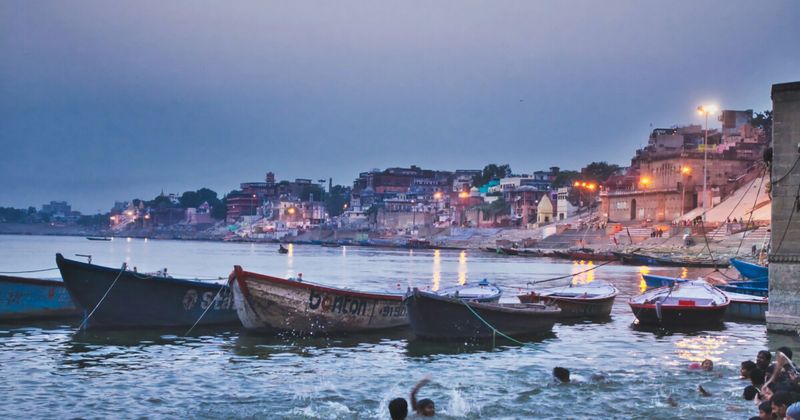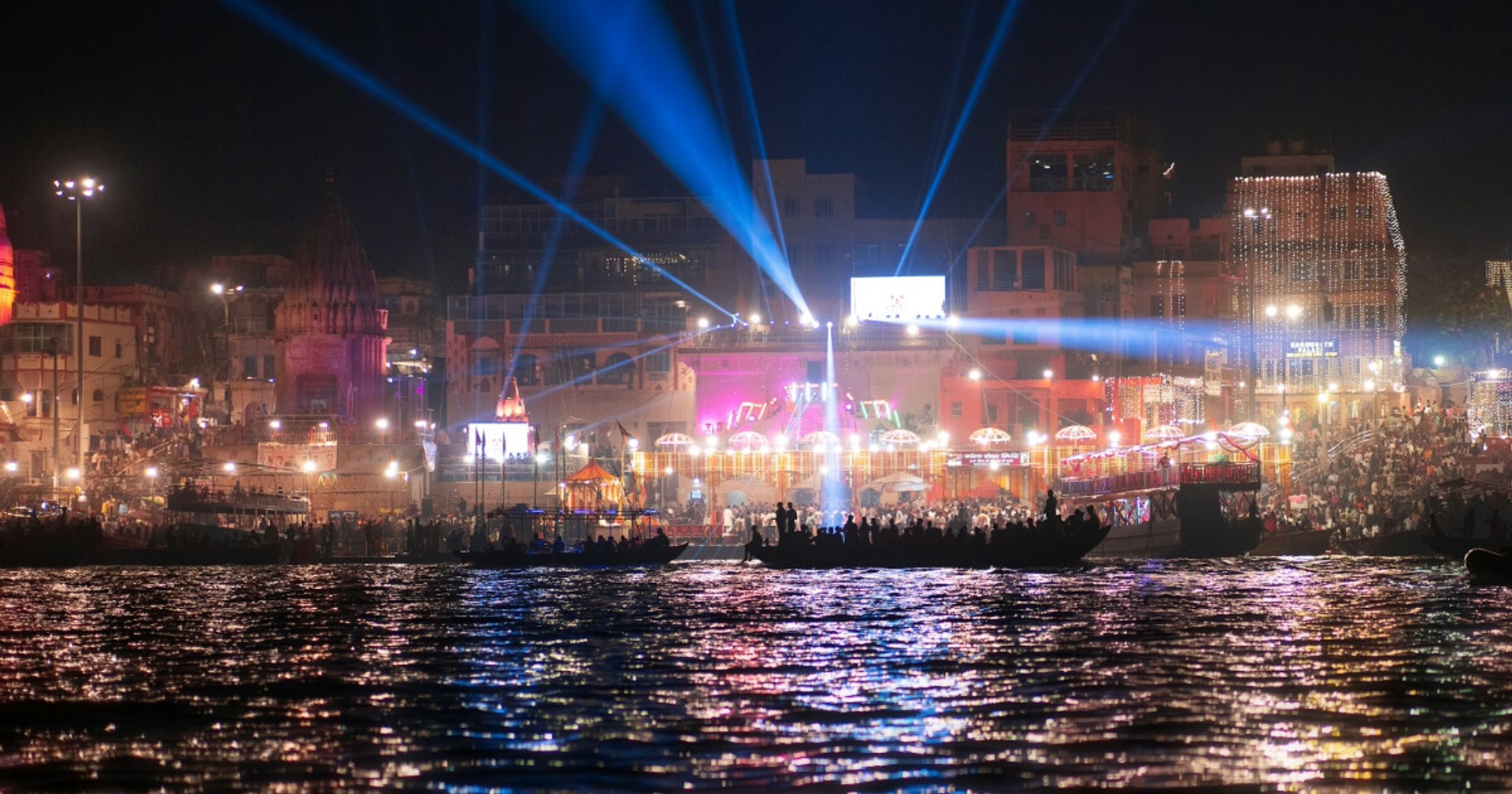

At Manikarnika Ghat in Varanasi — the main cremation ghat, where fires have burned continuously for 3,000 years and where bodies arrive on wooden litters around the clock — the Aghori sadhus and Shaivite priests play Holi with ash.
Not coloured gulal. Not flower petals. Ash from the funeral pyres. They collect the grey vibhuti from the cremation grounds, smear it across their faces, and throw it into the early morning air as the Ganga catches the first light. It is called Masan Holi — ghat Holi, cremation ground Holi. It takes place the day before the main festival. And it embodies something about Varanasi, and about India's relationship with its festivals, that no other single event quite articulates in the Shaivite philosophical tradition, death and celebration are not opposites. The cremation ground is Lord Shiva's dance floor. The ash is sacred, not mournful. Throwing it into the air on Holi — the festival of colour, of spring, of joy — is not irreverence. It is the most complete expression of what the festival actually means.
Most visitors to India during festival season experience a different version of the same insight: that the festivals are not decorative. They are not put on for tourism. They are living expressions of something that the people celebrating them have been carrying for centuries, and which changes — genuinely changes — what you understand about this country.
Holi and Diwali are India's two most internationally celebrated festivals. They occur six months apart, in entirely different seasons, and they deliver entirely different experiences. This guide helps you choose between them, plan for whichever you select, and understand what you're actually going to be in the middle of.
Before anything: sort VisitorsCoverage travel insurance. Festival periods in India involve enormous crowds, unscheduled transport changes, and the kind of logistical intensity that makes medical coverage non-negotiable. Policies from approximately $18–35 USD. EKTA offers a second comparison option from $0.99/day at ektatraveling.com. Compare both and choose before booking anything else.
Holi vs Diwali: The Decision Framework
Before the logistics, the honest comparison.
Holi is a spring festival — loud, physical, chromatic, and participatory in a way that doesn't have an equivalent elsewhere in the world. People throw coloured powder (gulal), spray coloured water, smear faces with pigment, and dance. The result is that everyone and everything in the vicinity becomes a canvas of magenta, yellow, green, and red by noon. It is joyful, chaotic, and requires a specific kind of visitor willingness: to surrender control over your appearance, your personal space, and the structural integrity of your clothing for the duration of the celebration.
Diwali is an autumn festival — the Festival of Lights, marking the victory of light over darkness and the return of Lord Rama to Ayodhya. It is celebrated with clay oil lamps (diyas), fireworks, rangoli (floor art), family meals, and the exchange of sweets. Diwali's visual spectacle is at night — a city illuminated from every window and rooftop, the sky lit with fireworks, the ghats of Varanasi covered in a carpet of flame. It is participatory in the sense that you're present inside a city-wide ceremony, but it doesn't require you to be a physical participant in the way Holi does.
The decision simplified:
| Holi | Diwali / Dev Diwali | |
|---|---|---|
| Season | Spring (March) | Autumn (Oct–Nov) |
| Duration | 1–2 days; Vrindavan up to 10 | 5 days; Dev Diwali is 1 peak night |
| Physical participation | High — you will get coloured | Low — observer is the role |
| Best for | Colour photography; high-energy travel | Night photography; spiritual atmosphere |
| Accommodation pressure | 3–4 months ahead | 6–8 weeks ahead |
| South India option | Very limited | Moderate celebrations in Kerala, Tamil Nadu |
| Weather | Pleasant spring, 20–28°C | Cool beginning autumn, 18–28°C |
If you're a first-time India visitor choosing one festival: Diwali in Jaipur or Dev Diwali in Varanasi is the more accessible entry point. The experience is extraordinary, you remain in control of your participation, and the city-wide atmosphere is easier to navigate than the full-body chromatic event of Holi in Vrindavan.
If you've been to India before or have a specific appetite for immersive chaos: Holi in Vrindavan or Barsana is unrepeatable.
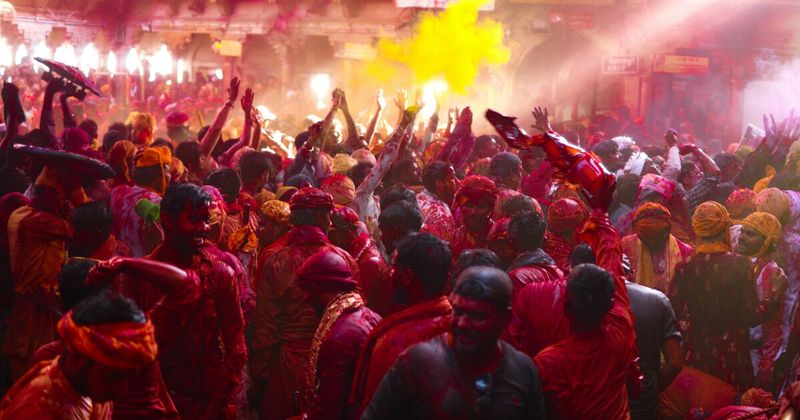
The natural dye in traditional Holi gulal was extracted from the flowers of the Palash tree (Butea monosperma), known as the Flame of the Forest, which blooms across India's forests and roadsides each March exactly as Holi approaches — the coincidence of the festival and the flowering season is embedded in the Hindu calendrical system, which connects the full moon of Phalguna (the Holi date) to the first flush of spring colour; synthetic dyes have now largely replaced natural Palash powder in urban areas, though traditional communities in Vrindavan continue to use the original flower-based pigments.
Holi 2027: Dates, Programme and Where to Be
Holi 2027: Holika Dahan — March 2, 2027; Rangwali Holi (main colour day) — March 3, 2027. (Holi 2026 fell on March 4, 2026 — now passed. All planning advice in this section applies to 2027.)
Holi is governed by the Hindu lunar calendar — it falls on the full moon (Purnima) of the month of Phalguna, which means the Gregorian date shifts each year. March 3, 2027 is the confirmed date. Start planning in October–November 2026 for accommodation in Vrindavan and Barsana.
The Vrindavan-Mathura-Barsana Circuit: Where Holi Actually Began
Mathura is the birthplace of Lord Krishna. Vrindavan is where he grew up. Barsana is the home village of Radha. The mythological origin of Holi — Krishna playfully dousing Radha and the Gopis (devotees) with colour in the forests of Vrindavan — means that this triangle of temples and towns in Uttar Pradesh celebrates the festival longer, more variously, and with more ritual depth than anywhere else in the world.
The full programme for 2027 (dates will shift slightly from 2026 — confirm locally from December 2026):
Phoolon Wali Holi (Flower Holi) — approximately 7 days before main Holi, Vrindavan: At the Banke Bihari Temple, priests shower devotees with fresh flower petals rather than gulal — marigold, rose, and jasmine filling the air above the temple courtyard instead of synthetic colour. The experience lasts approximately 30 minutes, is intensely fragrant, and requires arriving early to secure space near the doorway. This is the most photographically extraordinary and spiritually composed moment of the entire Holi calendar — and because most visitors have never heard of it, it's also the least crowded.
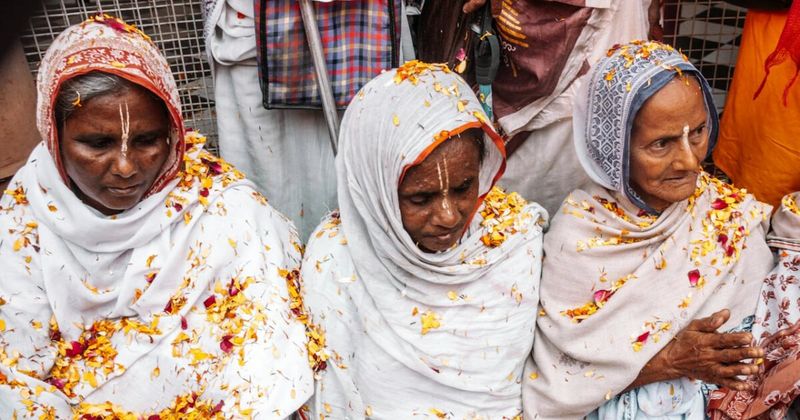
The Banke Bihari Temple in Vrindavan was established in 1862 to house an idol of Krishna that was discovered by the Vaishnava saint Swami Haridas in the 16th century — the idol was hidden in the Nidhivan forest, and Haridas revealed its location after performing music that Radha and Krishna were said to have been unable to resist; the 1862 temple building was funded by a Jaipur court musician and designed in the Rajasthani haveli style, its dark interior and slow-opening curtain (the deity is hidden between viewings to protect devotees from too much divine radiance, according to tradition) creating the most atmospheric darshan experience in Vrindavan.
Lathmar Holi — approximately 5–6 days before main Holi, Barsana then Nandgaon: In the village of Barsana (45km from Mathura), women beat men with long wooden sticks (lathis) in a re-enactment of Krishna's legendary teasing of Radha and her friends. The men of Nandgaon village — playing the role of Krishna's companions — arrive in procession carrying shields. The women drive them away with the sticks while the crowd cheers and colours fly. It is theatrical, loud, joyful, and entirely voluntary — the men are staging their own defeat. The following day, the Nandgaon men return to Barsana for a reciprocal event.
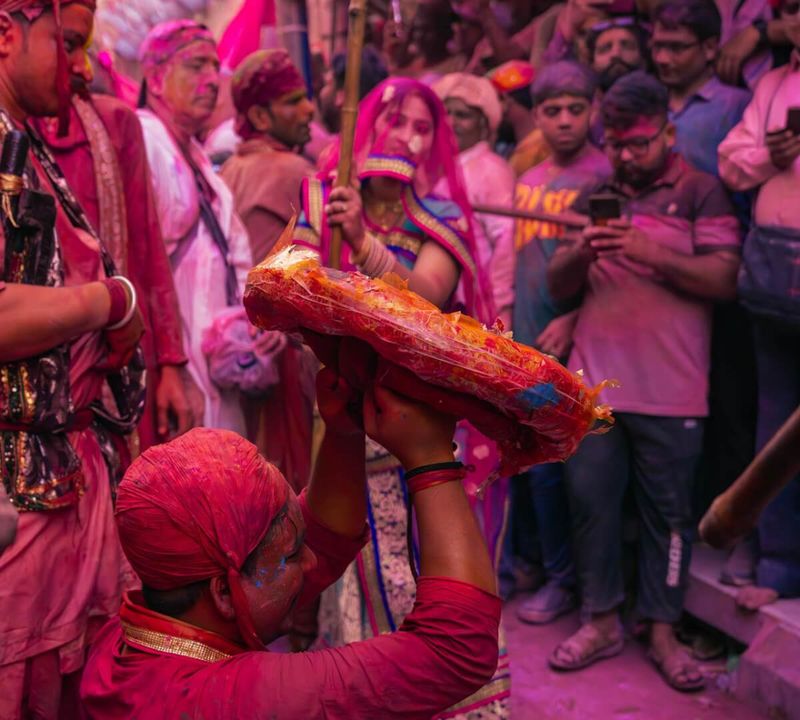
Barsana's Lathmar Holi at the Radha Rani (Shriji) Temple is not a recent tourist event — historical accounts of the tradition date back at least 400 years in Braj Bhoomi, and the specific dynamics of the celebration (men from Nandgaon arriving to 'tease' the women of Barsana, the women repelling them) maps precisely onto the geography of the two villages, which are 8 kilometres apart and have maintained this cross-village ritual relationship for centuries.
The logistics: Barsana is accessible by road from Mathura (45km, approximately 1.5 hours during Holi crowds). Book a vehicle through Intui.travel for the Mathura–Barsana–Vrindavan circuit — local auto-rickshaws during Lathmar Holi week charge 10x normal fares.
Masan Holi — the night before main Holi, Varanasi: At Manikarnika Ghat, the Aghori sadhus and Shaivite priests play Holi with ash from the cremation pyres. The event begins around midnight and runs until dawn. It is open to anyone willing to stand at the cremation ghat at 2am and witness something that has no parallel in the festival calendar anywhere in the world.
Main Holi (Rangwali / Dhulandi) — March 3, 2027: The full-colour day everywhere in North India simultaneously. In Vrindavan and Mathura, it is an all-day event. In Jaipur, the City Palace opens for ticketed Holi events. In Pushkar, the open squares around the lake become a community celebration. In Varanasi, the ghats see colour play alongside the river. In Delhi, it's building terraces and public parks.
Holi City Guide: Where to Stay and Why
Vrindavan: The spiritual centre. Base yourself here for the Phoolon Wali Holi (Banke Bihari Temple) and the main Holi day. Budget guesthouses from ₹1,000–₂,000 ($10.64–₂1.28 USD); ISKCON guesthouses (clean, vegetarian strict) from ₹1,500 ($15.96 USD). Book 2–3 months ahead for Holi week. The town is alcohol-free as a religious observance.
Barsana: The Lathmar destination. Day-trip from Mathura (45km) or Vrindavan (50km) rather than overnight — accommodation options are extremely limited. Leave by 7am for Lathmar day; the roads become impassable by 10am.
Jaipur: The accessible first-timer option. City Palace hosts an organised Holi event (ticketed, ₹2,000–₅,000/$21.28–₅3.19 USD) that includes folk performances, traditional colours, and elephant processions at some heritage hotels. The chaos level is calibrated — colour play happens in contained spaces. Comfortable midrange hotels available without the same 3-month advance pressure as Vrindavan, though peak Holi weekend in Jaipur books fast. Pre-book tickets through Klook.
Pushkar: For solo travellers and backpackers. The lakeside town is beloved among younger international visitors for Holi — the celebrations are open, community-spirited, and less ritually complex than Vrindavan. Budget guesthouses from ₹600–₁,500 ($6.38–₁5.96 USD).
Delhi: The city plays Holi everywhere — parks, building terraces, RWA (Residential Welfare Association) events. It's a legitimate option for travellers already in the city, but Delhi Holi lacks the ritual context of Vrindavan and the organised tourism infrastructure of Jaipur.
Book Delhi → Mathura/Vrindavan trains on 12Go Asia — the Taj Express and several intercity services cover the route in 2–3 hours. Book 3–4 weeks ahead for Holi week departures.
Practical Holi Survival Guide
What to wear: White cotton clothes you will never wear again. White is traditional — it becomes the canvas for colour. Avoid synthetic fabrics (colour stains permanently). Bring a change of clothes sealed in a waterproof bag.
Protect your valuables: Leave your phone in the hotel or carry it in a waterproof pouch (₹150–₃00/$1.60–₃.19 USD at any electronics market). Cameras with lens filters — semi-porous lens fabric to spray colour off before it sets. Avoid carrying wallets in pockets.
Eyes and hair: Wear glasses or goggles — colour powder in eyes requires a hospital visit and ruins the day. Apply coconut or mustard oil to hair and exposed skin before going out — it creates a barrier that allows colour to wash off more easily.
Safety for solo female travellers: Holi, particularly in Vrindavan's most crowded public spaces, produces the same crowd dynamics that any large-scale public celebration does. Travel in groups, stay within sightlines of your party, and be assertive about personal space. The Jaipur heritage hotel events and ISKCON Vrindavan programmes are more structured and safer for solo women. Our Solo Female Travel India Safety Guide covers the specifics.
Thandai: The celebratory milk drink consumed across North India during Holi — milk blended with almonds, saffron, rosewater, and spices. A traditional variant is bhang thandai, which contains cannabis (bhang leaves). Bhang is legal for religious use in several Indian states during Holi and is sold openly in government-licensed shops in Varanasi and Jaipur. Be explicit about your preference when ordering.
Activate Saily 5G eSIM before arriving — needed throughout the Vrindavan-Mathura-Barsana circuit. Drimsim handles the occasional rural coverage gaps along the Barsana road.
Check Live Flight Prices
Diwali 2026: Dates, Programme and Where to Be
Diwali 2026: October 20, 2026. Dev Diwali (Varanasi) 2026: November 5, 2026.
Diwali is a five-day festival with specific ritual observances on each day — though for international travellers, the main night (Lakshmi Puja, the third day) and the evening preceding and following it are the three days that matter for travel planning.
The critical Diwali travel insight that most guides fail to communicate: Varanasi's biggest Diwali event is not Diwali. It is Dev Diwali, two weeks later. If your goal is to see the ghats of Varanasi illuminated with millions of diyas — the image that defines Diwali in India in international imagination — you need to be in Varanasi on November 5, 2026, not October 20. On the main Diwali night, Varanasi is beautiful but comparable to other Indian cities. On Dev Diwali, it is unlike anything else on earth.
Dev Diwali Varanasi: The Festival That Deserves Its Own Trip
Dev Deepawali — "the Diwali of the Gods" — falls on Kartik Purnima, the full moon night of the Hindu month of Kartik, exactly 15 days after national Diwali. According to the tradition, this is the night the gods descend from the heavens to bathe in the sacred Ganga, celebrating Lord Shiva's victory over the demon Tripurasura. To welcome them, the people of Varanasi illuminate every step of all 84 ghats simultaneously with clay diyas — earthen lamps.
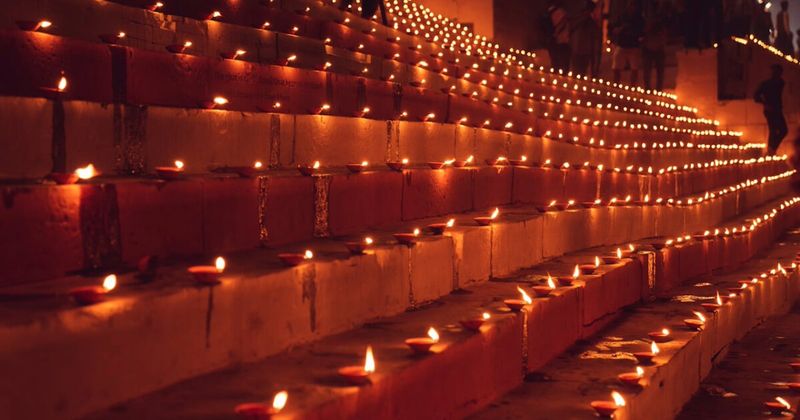
The Dev Diwali boat ride produces a specific visual effect that cannot be experienced from the ghats themselves: from the middle of the Ganga, equidistant from both banks, the illuminated ghats are visible on the western side while the Ramnagar Fort on the eastern bank is lit in parallel — the traveller sits between two illuminated city-scale fire installations simultaneously reflected in the still water below; the full moon of Kartik Purnima provides additional ambient light that makes the effect visible even in the gaps between lamp clusters.
Varanasi has exactly 84 ghats. The number is not coincidental: in Hindu cosmology, 84 lakh (8.4 million) is the total number of species through which the soul travels in its cycle of reincarnation before reaching human birth. The 84 ghats of Varanasi represent that complete cosmological journey, and lighting every one of them simultaneously on Dev Diwali is understood as illuminating the entire path of existence.
The experience: The ghats run for approximately 6.5 kilometres along the Ganges western bank. As the sun sets and the Lakshmi puja ceremonies on each ghat conclude, the lamp-lighters begin — tens of thousands of volunteers lighting individual clay diyas from Ravidas Ghat to Raj Ghat. From a boat on the river, the effect is visible as it becomes complete: a continuous ribbon of orange firelight descending from the city, reflected in the black water below, stretching to the horizon in both directions. The Ganga Aarti at Dashashwamedh Ghat — the largest nightly ritual in Varanasi, already among the most extraordinary daily events in India — is performed at this hour with amplified ceremony, dozens of priests on the main ghat swinging giant fire-lamps in synchronized arcs above the water.
Boat rides: Essential for the full view. Budget boats shared with other travellers: ₹200–₅00 ($2.13–₅.32 USD) per person. Private boat: ₹2,000–₅,000 ($21.28–₅3.19 USD) for the full ghat circuit on the night. Premium boats with guide and dinner: ₹8,000–₁3,000+ ($85.11–₁38.30+ USD). Pre-book through Klook — private boats for November 5, 2026 book out by September. Shared boats are available with less advance notice but the best ghat positions go early.
Arrive on the ghats by 3pm. The ceremony begins after sunset (approximately 5:30pm). Roads around Dashashwamedh Ghat become impassable by 4:30pm. Walk from wherever your vehicle parks — there is no driving through the crowd once it fully assembles. Pre-arrange your return transport with your driver: agree on a meeting point 500 metres from the ghat and a pickup time. Mobile signal in the ghat area during Dev Diwali is congested but functional — WhatsApp works if you're patient.
Accommodation: Book river-facing guesthouses or hotels with rooftop terrace views on the Ganga by August 2026 at the latest. Properties like Brijrama Palace, the guesthouses of Assi Ghat, and rooftop rooms at Lal Ghat book completely by September–October. Budget alternatives further from the river are available later but require a longer walk through festival crowds.
Diwali City Guide: Where to Go if Not Varanasi
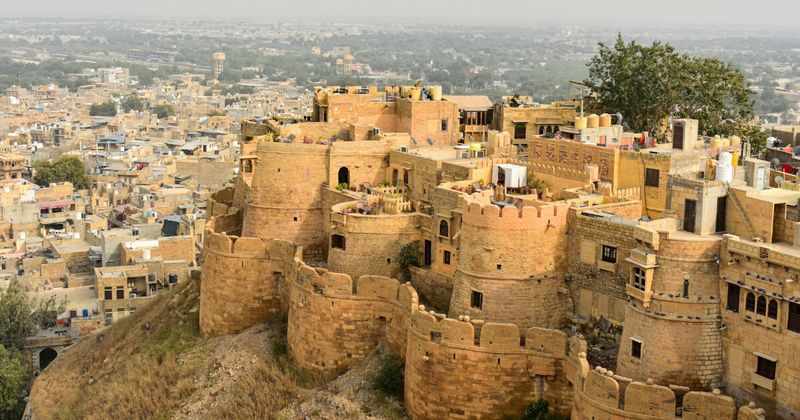
Jaipur — Diwali October 20, 2026: The most accessible and visually spectacular Diwali experience outside Varanasi. The City Palace, Hawa Mahal, Nahargarh Fort, and Amber Fort are illuminated. Johari Bazaar (the jewellery market) holds a friendly competition for the most brilliantly lit stall — described by regular visitors as Mumbai's Diwali market and Piccadilly Circus having a child together. The city's rooftops and balconies are lit with rows of diyas and electric lights simultaneously, creating a city-wide visual warmth that is best experienced by walking the old city lanes after dark.
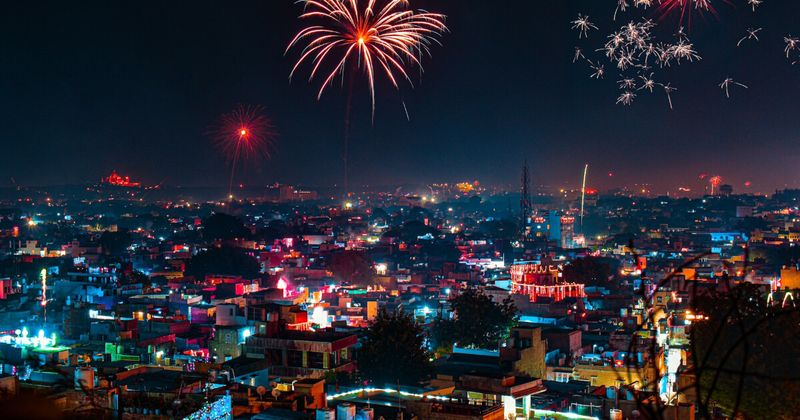
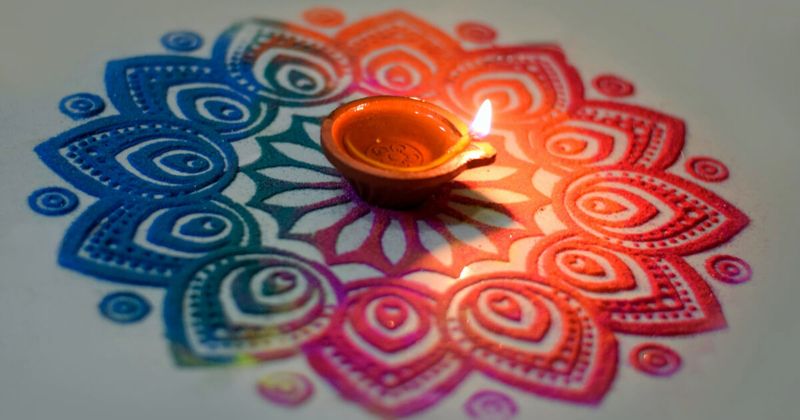
The rangoli — the coloured floor art drawn at doorways and in courtyards during Diwali — uses a specific set of natural powders and pigments (turmeric yellow, sindoor red, limestone white, charcoal black) arranged in geometric or floral patterns traditionally believed to guide Goddess Lakshmi into the home; in Rajasthan, rangoli competitions are held in neighbourhoods with prizes, producing some of the most intricate examples of the art; the designs are erased by foot traffic within 24 hours of creation, which is considered acceptable — the act of making, not the persistence of the object, is the point.
From Nahargarh Fort at night — ₹200 foreigners entry ($2.13 USD) — the whole illuminated city is visible below. One of the great Diwali photographs.
Midrange hotels in Jaipur during Diwali: from ₹4,000–₈,000 ($42.55–₈5.11 USD). Book 4–6 weeks ahead.
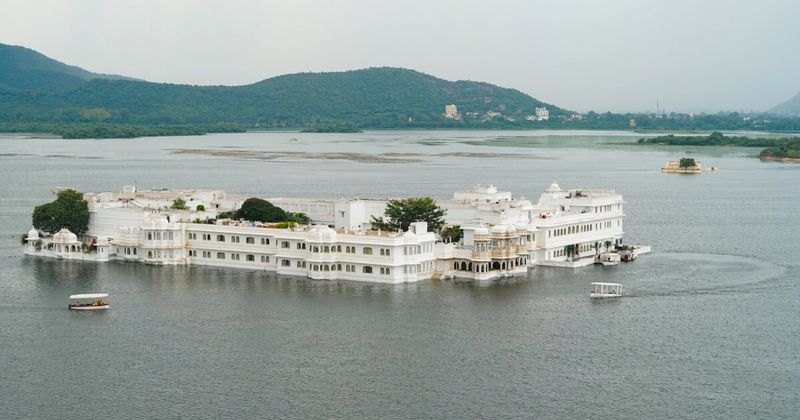
Udaipur — Diwali October 20, 2026: Lake Pichola during Diwali takes the visual logic of its golden-hour reflections and amplifies it with 10,000 diyas floating on the water. The City Palace lit at night from a boat on the lake is one of Rajasthan's finest Diwali images. Lal Ghat guesthouses with lake views: from ₹3,000–6,000 ($31.91–63.83 USD). Book 5–6 weeks ahead.
Amritsar — Diwali as Bandi Chhor Divas: Sikhs celebrate Diwali as Bandi Chhor Divas — the day Guru Hargobind Singh, the sixth Sikh guru, was released from Mughal captivity at Gwalior Fort and returned to Amritsar. The Golden Temple is illuminated with thousands of diyas on the night; the Amrit Sarovar reflects the lit shrine in what many visitors describe as the most serene Diwali experience in India, as opposed to the spectacle of Varanasi or the street-energy of Jaipur.
Book Amritsar trains from Delhi through 12Go Asia — the Shatabdi departs New Delhi 7:20am. Book 4–6 weeks ahead.
The Booking Timeline That Most Guides Don't Give You
For Holi 2027 (March 3):
| When | What |
|---|---|
| October–November 2026 | Book accommodation in Vrindavan, Barsana, and Jaipur for Holi week |
| November–December 2026 | Book trains Delhi → Mathura/Vrindavan on 12Go Asia for late February–early March dates |
| December 2026 | Book international flights via FlyFlick; confirm Holi event tickets in Jaipur through Klook |
| January 2027 | Sort VisitorsCoverage / EKTA insurance; book GetTransfer or KiwiTaxi airport transfers |
For Diwali 2026 (October 20) / Dev Diwali Varanasi (November 5):
| When | What |
|---|---|
| August 2026 | Book river-facing Varanasi accommodation for November 5 — critical deadline |
| August–September 2026 | Book private or group boats for Dev Diwali night through Klook |
| September 2026 | Book Jaipur/Udaipur accommodation for October 20 (5–6 weeks ahead) |
| September 2026 | Book trains on 12Go Asia for Diwali travel dates |
| October 2026 | Book international flights via FlyFlick if not already; confirm all transfers via GetTransfer/KiwiTaxi |
The single most common Diwali planning failure: arriving in Varanasi for October 20 expecting the ghat-illumination experience, which actually happens November 5. Book Dev Diwali if the ghats are your goal.
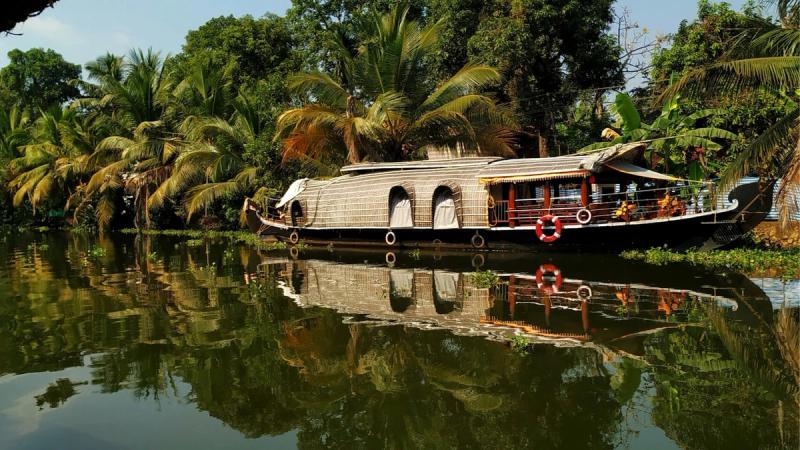
In Kerala, the Diwali equivalent is Thrissur Pooram — a different festival entirely, with temple elephant processions and percussion ensembles; in Bengal, the main day of Diwali coincides with Kali Puja rather than Lakshmi Puja — huge temporary structures housing statues of the goddess Kali are illuminated across Kolkata; and in Goa, effigies of the demon Narakasura are burned at dawn on Naraka Chaturdashi, the day before main Diwali; India celebrates what appears to be a single festival in at least four distinct and regionally specific ways simultaneously.
What No Festival Guide Tells You
Hotels charge 2–5x normal rates during festival week. Accommodation in Vrindavan during Holi week and Varanasi during Dev Diwali is priced at festival premium across all categories. This is expected, not a scam. Budget accordingly: what costs ₹2,000 in an off-peak week may cost ₹6,000–₈,000 during the festival. The solution is early booking at pre-peak rates, which is why the booking timelines above matter.
Transport to and from festival cities is the hardest part. The trains from Delhi to Mathura for Holi main day sell out 4–6 weeks ahead. Return trains from Varanasi after Dev Diwali night sell out even faster because everyone leaves simultaneously. If your return train is not booked when you book your outbound journey, your festival trip may end in an unplanned Varanasi extension.
Festival sound. Indian festivals are loud. Holi involves dhol drums from 7am. Diwali involves fireworks from dusk until well past midnight for several consecutive days. If you're a light sleeper, pack earplugs and accept that they will be partially insufficient.
The clay diya — the small earthen oil lamp that is Diwali's most iconic symbol — is made by the Kumhar (potter) caste from riverbank clay, shaped on a wheel or by hand, sun-dried, and fired; in the weeks before Diwali, Kumhar communities across India produce diyas by the millions, with a single family capable of making 500–1,000 per day; Varanasi's potters in the Mughalsarai district specifically supply the millions of diyas needed for Dev Diwali's 84 ghat illumination, an annual production cycle that sustains entire generations of the community.
Air quality during Diwali. The combination of mass fireworks across every Indian city simultaneously produces significant air quality degradation in North India for 2–3 days around Diwali. Delhi's AQI consistently spikes to hazardous levels during Diwali week. Varanasi and Jaipur are less extreme but still elevated. If you have respiratory conditions, consult a doctor before planning a Diwali trip to North India, and carry appropriate medication. The problem is worst in Delhi; Udaipur and Varanasi are comparatively better.
Holi and modesty. In Vrindavan and Barsana, the celebration happens in the context of a religious pilgrimage town where conservative dress norms apply outside festival hours. Cover up when entering temple premises. The licence of Holi colour play does not extend to social interactions outside the festival spaces.
Combining Both Festivals in One India Trip
If you're planning an extended India stay, both Holi and Diwali can be combined in a single trip:
The 14-Day Holi → India circuit (March 2027): Delhi arrival Day 1 → Agra and Golden Triangle Days 2–5 → Vrindavan/Barsana/Mathura for Holi week Days 6–10 → Varanasi (including Masan Holi on Day 9 if timing aligns) Days 10–13 → depart.
The 14-Day Diwali → Rajasthan circuit (October–November 2026): Jaipur Diwali October 20 (Days 1–3) → Udaipur Days 4–6 → Varanasi Days 7–10 → Dev Diwali November 5 (Day 10) → Delhi Days 11–13 → depart.
Note on the Diwali circuit: it requires very precise date management. The Jaipur-to-Varanasi section covers approximately 930 kilometres — a 2-hour flight or a 12–14 hour overnight train. Book through 12Go Asia or FlyFlick respectively. The window between Diwali October 20 and Dev Diwali November 5 is exactly 16 days — enough for both experiences with the Rajasthan circuit in between if timed efficiently.
Our India in 10 Days guide covers the base circuit that most festival trips extend.
The Bottom Line
Holi and Diwali are not the same type of experience, and they should not be planned for the same type of traveller or the same type of trip.
Holi at its best — Phoolon Wali at Banke Bihari Temple in Vrindavan, or Masan Holi at Manikarnika Ghat in Varanasi — is an encounter with festival as theological expression. The colour in the air is not decoration. The ash on the sadhus is not affectation. These are communities enacting something they've been enacting for centuries, and the traveller who shows up early enough, quietly enough, and respectfully enough gets to be present for it.
Diwali at its best — Dev Diwali in Varanasi from a boat on the Ganga as all 84 ghats catch their light simultaneously — is an encounter with scale and devotion that the photograph cannot contain. The point is to be there. In it. The light going on forever in both directions.
Holi 2027: March 3. Dev Diwali 2026: November 5. Start the conversation with your calendar now.
Your India Festival Trip Planning Checklist
🛡️ Travel Insurance — First, Always: VisitorsCoverage — Festival crowds and intense events need minimum $100K USD medical cover; from ~$18–35 USD per trip | EKTA — Second option from $0.99/day at ektatraveling.com; 24/7 multilingual support, digital claims. Compare both and choose before booking.
✈️ Flights & Delay Protection: FlyFlick — Search Delhi (DEL) arrivals for Holi or Varanasi/Jaipur connections for Diwali; open-jaw options often available | Compensair — Claim up to €600 for delayed/cancelled flights; festival-period delays are frequent on congested routes.
🚂 Trains — Book As Early As Possible: 12Go Asia — Delhi → Mathura/Vrindavan for Holi (2–3hrs); Delhi → Varanasi overnight for Dev Diwali (13–14hrs); Delhi → Jaipur for Diwali Shatabdi (4.5hrs); Delhi → Amritsar for Bandi Chhor Divas (6hrs). Festival trains sell out 4–6 weeks ahead.
🚖 Transfers: GetTransfer — Pre-booked fixed-fare arrival transfers at Delhi, Jaipur, or Varanasi airports | KiwiTaxi — Confirmed for intercity and airport routes across Rajasthan and Delhi | Intui.travel — Full-day vehicle for the Mathura–Barsana–Vrindavan Holi circuit; essential for Lathmar Holi day.
🎟️ Experiences to Pre-Book: Klook — Jaipur Holi at City Palace/heritage hotels (tickets required, limited capacity); Dev Diwali boat ride on the Ganga Varanasi (private boats book by September for Nov 5); Varanasi Ganga Aarti front-row experience; guided Vrindavan Holi temple tour.
📱 Connectivity: Saily — 5G eSIM for Jaipur, Vrindavan, Varanasi city areas; activate before arrival | Drimsim — Covers the Barsana rural road and Mathura-area spots where single carriers drop.
Two festivals. Two seasons. One country that makes both possible.