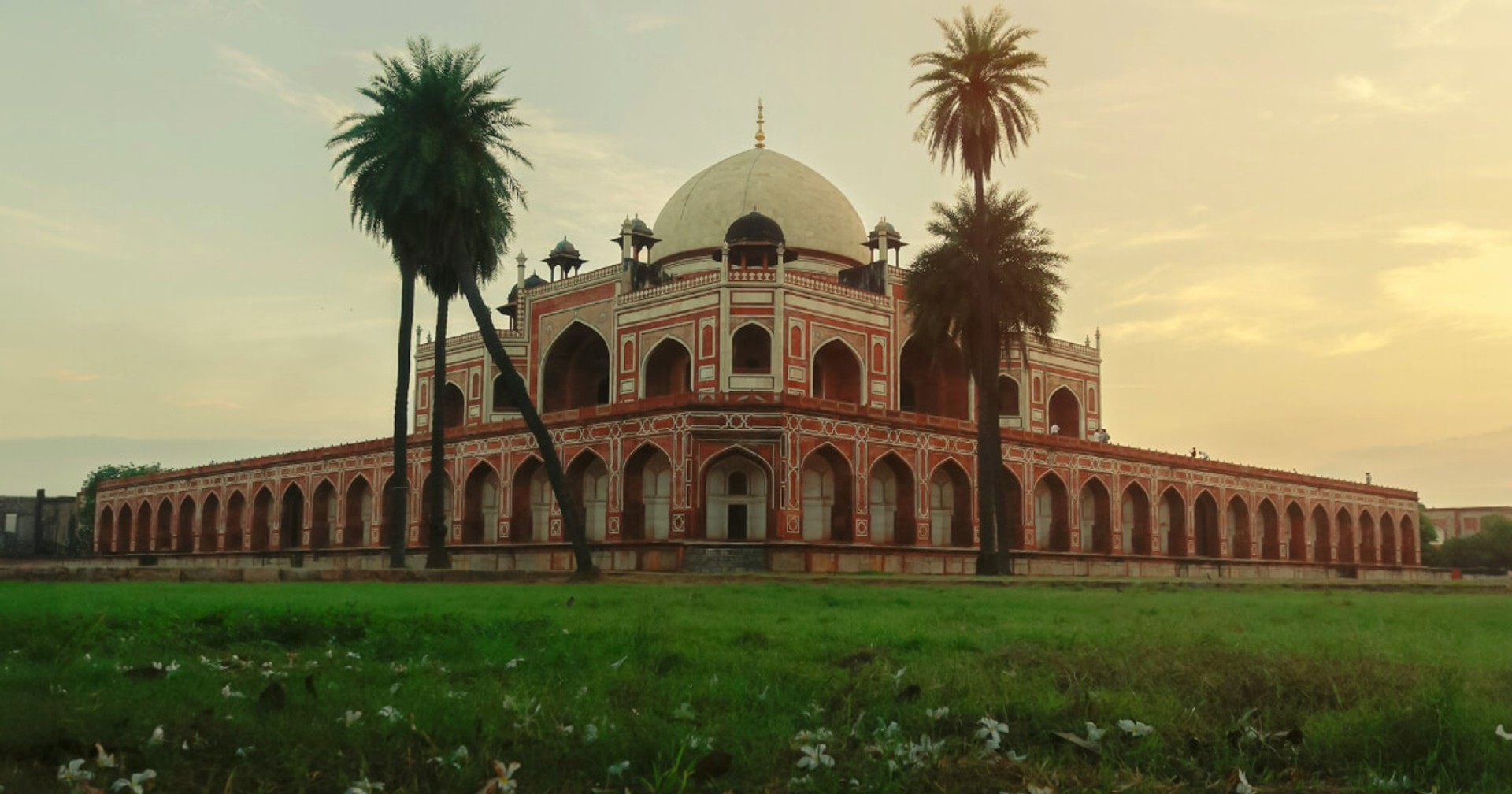

Somewhere in the middle of New Delhi's corporate office district — between a Starbucks and a DLF tower — there is a 14th-century stepwell. It has 108 steps. They drop 60 feet straight into the earth, narrowing as they descend, the walls on both sides carved with arched galleries that grow progressively darker and cooler. At the bottom on a weekday morning, there is nobody. Just pigeons and stone and a quiet that the city 30 metres above you has forgotten it's capable of producing.
It's called Agrasen ki Baoli. It's free. It takes 20 minutes. Most Delhi travel guides don't mention it because there's no ticket counter and it isn't a UNESCO site. It is, however, one of the strangest and most quietly extraordinary things you will see in any major city in the world.
That's the kind of Delhi this guide is about. Not the version where a tuk-tuk driver quotes you eight monuments in two days and you arrive back at the hotel with a headache and no memory of anything in particular. The version where you spend three days in three distinct parts of the city, eat the food, take the metro, and come away with a genuine understanding of why this place has been continuously inhabited for over 3,000 years.
Delhi has been at least eight cities on the same patch of ground. The Indraprastha of the Mahabharata. The medieval sultanate. Shah Jahan's Shahjahanabad. The British capital. The independent Indian capital. Each one built on top of the last, which is why you can stand at Qutub Minar (12th century) and see a mobile phone tower, walk through Lodhi Garden (15th-century Mughal tombs) surrounded by morning joggers, and eat a 110-year-old recipe for seekh kebab behind a 350-year-old mosque.
Three days isn't enough to see all of it. It is, however, enough to see the right parts of it.
Before anything else: sort VisitorsCoverage travel insurance before you fly. Medical costs in Delhi for food poisoning, a motorbike accident, or a heat-related hospitalisation run ₹30,000–₹1,50,000 ($319–$1,596 USD) before treatment begins. Your home country policy doesn't cover this. Policies from ~$12 USD for a week's cover. Sort it before booking hotels or anything else. If you want a second, budget-friendly quote, EKTA offers travel insurance from $0.99/day with worldwide coverage, fully digital claims, and 24/7 multilingual support at ektatraveling.com.
At a Glance: 3-Day Delhi Route
| Day | Area | What You See |
|---|---|---|
| Day 1 | Old Delhi | Red Fort, Jama Masjid, Chandni Chowk, Karim's |
| Day 2 | New Delhi + Central | Humayun's Tomb, Lodhi Garden, Hauz Khas, India Gate |
| Day 3 | South Delhi | Qutub Minar, Agrasen ki Baoli, Connaught Place |
Getting In and Getting Around
Delhi Indira Gandhi International Airport (DEL) receives direct flights from London, New York, Toronto, Sydney, Singapore, Dubai, and Doha. Search and book on FlyFlick. Terminal 3 handles all international arrivals. Set a Compensair delay alert for your departure leg — Delhi in December–January fog season produces some of India's most frequently delayed flights, and EU-connected routes carry €600 compensation eligibility.
Book your airport arrival transfer through GetTransfer or KiwiTaxi — both confirmed for Delhi IGI arrivals with fixed-fare pre-booked vehicles, driver waiting with name sign. This matters more in Delhi than almost any airport in India. The exit from Terminal 3's international arrivals hall is a concentrated zone of prepaid taxi touts, fake travel agents, and drivers who will take you to a "government tourist office" that is not a government tourist office. A pre-booked vehicle and driver eliminates this entirely. KiwiTaxi specifically covers Delhi airport → city centre, Delhi → Agra, and Delhi → Jaipur intercity routes — all at fixed pre-booked rates.
The Delhi Metro is your primary transport tool for the three days. It is clean, air-conditioned, reliable, and covers all the sites on this itinerary. The Airport Express Line connects Terminal 3 to New Delhi Railway Station in 19 minutes for ₹60 ($0.64 USD). From there, the Yellow, Violet, Blue, and Pink lines reach every area covered in this guide. Metro fares run ₹10–₹60 ($0.11–$0.64 USD) per journey depending on distance. Buy a Tourist Card (₹200 for unlimited travel for 3 days, deposit included) at any metro station — it pays for itself by Day 2. Download the Delhi Metro Rail Corporation app or use Google Maps offline for route planning.
Activate Saily 5G eSIM before boarding — it works from the moment you land across Delhi and all connected cities. If Delhi connects into a multi-country Asia trip, Yesim covers the regional data.
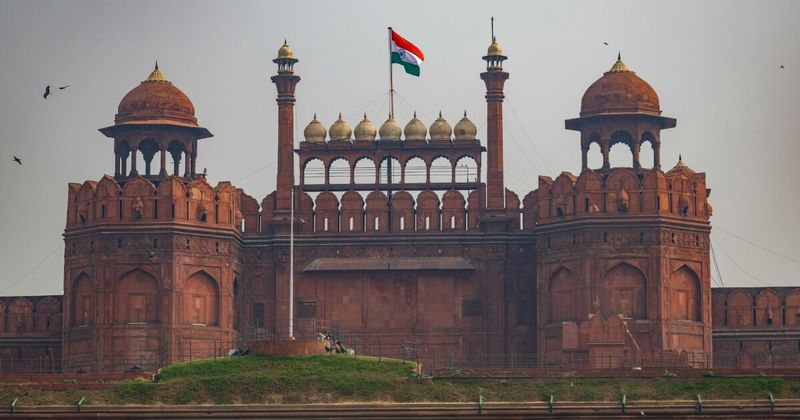
Every year on August 15th — India's Independence Day — the Prime Minister of India addresses the nation from these same Red Fort ramparts, a tradition that has continued unbroken since 1947; the fort has served as the symbolic seat of Indian nationhood since the country's first Independence Day speech by Jawaharlal Nehru.
Day 1: Old Delhi — The City That Has Always Been This Dense
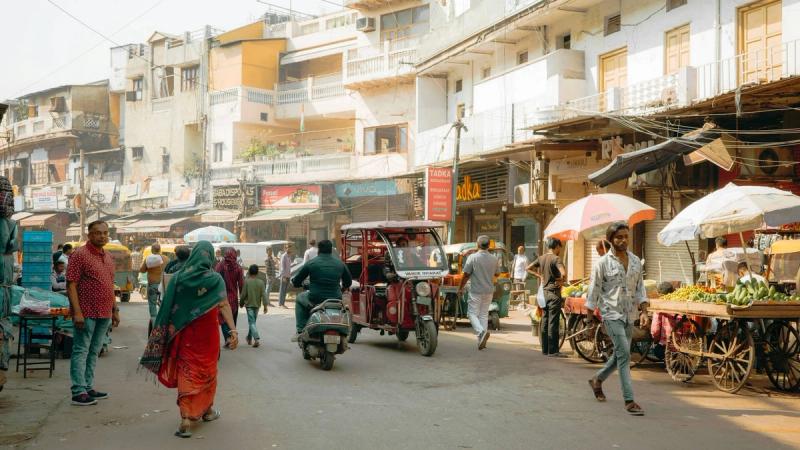
Old Delhi is not a part of Delhi that eases you in. It is dense, loud, fragrant, chaotic, and one of the most alive urban environments in the world. It is also where this city's most significant Mughal architecture sits. The correct approach is: arrive early, eat constantly, and surrender to the pace.
Take the metro to Chandni Chowk station (Yellow Line) and arrive by 7am. The market opens gradually from this hour — the wholesale spice traders in Khari Baoli (Asia's largest spice market, accessible off Chandni Chowk's western end) begin before sunrise, and the morning is when the street is least crowded and the light best. Walk east along the main Chandni Chowk road toward the Red Fort. The historic lane runs for about 1.5 kilometres and includes the Paranthe Wali Gali (a 200-year-old alley of paratha restaurants) branching off to your left — have breakfast here. Stuffed parathas with aloo, methi, or paneer filling, served with pickle and curd: ₹50–₹100 ($0.53–$1.06 USD) per plate. The shops have been here since the 1870s.
Red Fort (Lal Qila) opens at 9:30am Tuesday through Sunday — closed Mondays. This is not a minor detail; dozens of first-timers discover this on arrival. Entry for foreigners: ₹550 ($5.85 USD) for basic entry; ₹870 ($9.26 USD) including the six museums inside. Pre-book through Klook for skip-the-queue entry — weekend queues for walk-up tickets run 45 minutes. The fort covers 255 acres of red sandstone and marble construction ordered by Emperor Shah Jahan in 1638. It is not as photogenic from inside as from outside, which is a truthful thing most guides don't say: the great monuments of the Red Fort (Diwan-i-Am, Diwan-i-Khas, the royal baths) were heavily vandalised by the British after 1857 and the interior doesn't fully match the exterior's visual drama. What it does contain is a genuine sense of imperial scale and two centuries of Mughal and British history coexisting in the same walls. Allow 90 minutes.
Jama Masjid is a 10-minute walk from the Red Fort — India's largest mosque, built by Shah Jahan in 1656, the same emperor who built the Taj Mahal and the Red Fort, making Old Delhi the most concentrated collection of one ruler's architectural ambition anywhere in India. Courtyard entry is free. Minaret climb ₹300 ($3.19 USD) — 130 steps, narrow, and the panoramic view of Old Delhi's rooftop chaos from the top is the best aerial view in the city that doesn't require a drone or a hotel rooftop. Dress code: cover shoulders and knees; robes are provided at the entrance if needed.
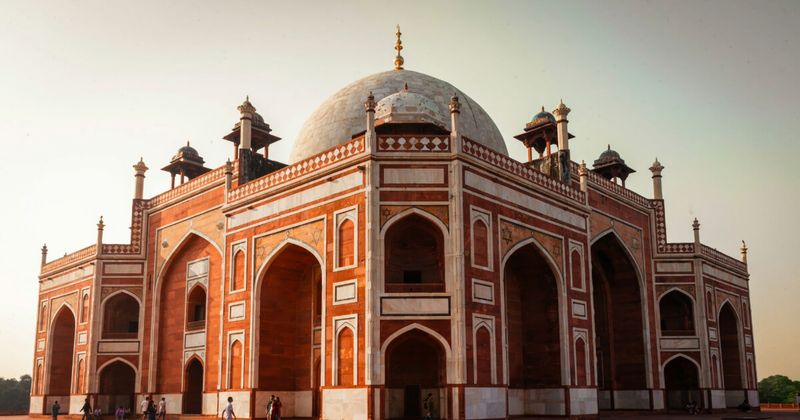
Jama Masjid's courtyard can accommodate 25,000 worshippers for Friday prayers — it is the last of the three great structures Emperor Shah Jahan commissioned in Delhi, after the Red Fort (1638) and the Chandni Chowk market district (1650), making the area around it one of the most architecturally dense legacies of a single ruler anywhere in India.
Karim's Restaurant is in a lane directly opposite the Jama Masjid's south gate. It has been serving Mughal-recipe kebabs since 1913 — the founder, Haji Karimuddin, was a descendant of the cooks of the Mughal royal kitchen. Order the mutton seekh kebab, the dal, and the roti. Budget ₹300–₹600 ($3.19–$6.38 USD) per person for a full meal. This is not a tourist restaurant — it is a Delhi institution that happens to also serve tourists, which is a distinction that matters.
Spend the afternoon walking the lanes south of Jama Masjid toward Paharganj or resting — Old Delhi in the afternoon is at its hottest and most crowded. Return for the Chandni Chowk evening market at 5pm, when the wholesale activity gives way to retail and the streetlights come on in layers.
For Day 1 city transfers, Intui.travel covers within-Old-Delhi vehicle hire if you prefer not to walk the 1.5km Red Fort → Jama Masjid stretch in summer heat. Most people walk it.
Day 2: New Delhi — Mughal Gardens, Joggers and 15th-Century Tombs in a Park
Day 2 requires a mental gear-shift. Old Delhi was chaos and density. New Delhi — the planned British colonial capital laid out by Edwin Lutyens and Herbert Baker between 1911 and 1931 — is wide avenues, manicured roundabouts, and government buildings that make the scale of the British imperial project uncomfortably visible. Between these two Delhis, separated by barely 5 kilometres, is a third layer: medieval Mughal monuments embedded in the city like geological time capsules.
Humayun's Tomb — start here at 7:30am, as soon as the gates open. Take the metro to JLN Stadium or Jangpura (Violet or Pink Line) and walk or take an auto. The tomb complex is a 15-minute walk from both stations.
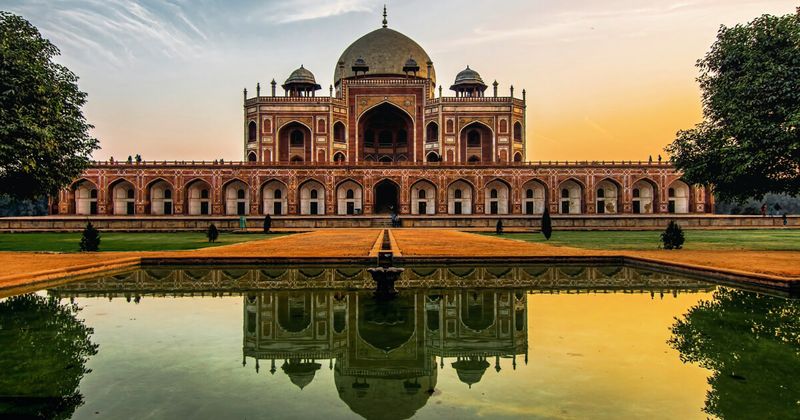
Humayun's Tomb contains the graves of over 150 Mughal family members — including the last Mughal Emperor Bahadur Shah Zafar's relatives — making it the largest single complex of Mughal-era burials in existence; the central tomb chamber holds Emperor Humayun's cenotaph directly below the dome, with the actual burial vault one level below ground.
Humayun's Tomb is the architectural predecessor to the Taj Mahal. It was commissioned in 1562 by the empress Bega Begum for her husband, the Mughal Emperor Humayun — making it the first garden-tomb in the subcontinent, and the direct inspiration that Shah Jahan's architects studied 70 years later when designing the Taj. Entry for foreigners: ₹600 ($6.38 USD). Open daily, sunrise to sunset. Children under 15: free.
Most visitors to the Taj Mahal don't know Humayun's Tomb exists. The ones who find it are consistently surprised: it is larger than expected, the Persian charbagh garden is the size of several football pitches, and the reflection in the garden's central pool at golden hour is — on the right morning — comparable to the Taj in visual impact. There are no tour groups blocking the sight lines at 7:30am. Spend 90 minutes. Pre-book entry through Klook.
Walk or take an auto 10 minutes north to Lodhi Garden — 90 acres of the most civilised public park in Delhi, containing a cluster of 15th and 16th-century Sayyid and Lodi dynasty tombs simply standing in the grass between flowerbeds and jogging paths. No entry fee. Open from 6am. The Mohammad Shah's Tomb (circular, with a double-storey arcade) and the Sheesh Gumbad (glazed tiles still visible on the dome) are the architectural highlights. Nobody queues for them. Dogs walk past. The contrast — medieval royal tomb, modern Delhiite in running shoes — is one of the more quietly surreal experiences the city offers.
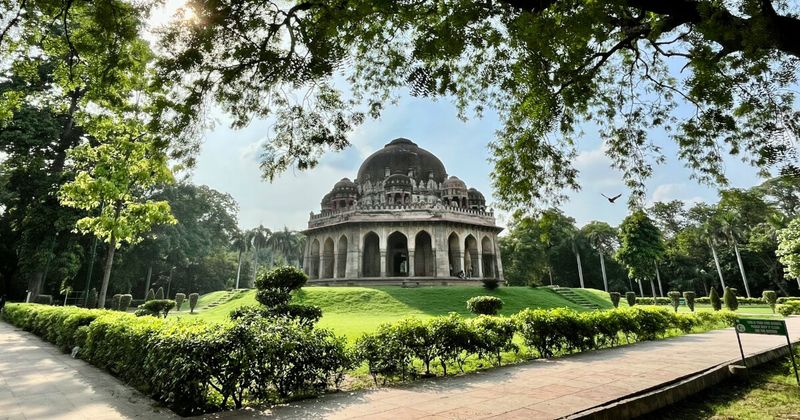
Lodhi Garden was originally a village cemetery around the 15th-century tombs when the British colonial government acquired the land in the 1930s — they relocated the village, landscaped the grounds into a formal public garden, and named it Lady Willingdon Park after the Viceroy's wife; it was renamed Lodhi Garden after Indian independence in 1947.
Agrasen ki Baoli — take the metro from Khan Market to Barakhamba Road (Blue Line) and walk 7 minutes north. The stepwell entrance is in a lane off KG Marg (Kasturba Gandhi Marg), sandwiched between office towers. Free entry, open 9am–6pm. The 108 steps descend through 59 rows of arched niches to a chamber at the bottom. It was built in the 14th century — possibly earlier — by the legendary King Agrasen, and the ASI restored it in the 1970s. It has appeared in Bollywood films and YouTube supernatural channels, which has increased foot traffic but not ruined the experience at off-peak hours. Go on a weekday, not a weekend, and avoid the lunch hour.
India Gate is 15 minutes by metro from Barakhamba Road (walk to CP metro, take Blue Line one stop to Mandi House, auto or walk to India Gate). It is free, open all hours, and best experienced at sunset when the sandstone turns orange and Delhi's office workers come out to sit on the lawns. The All India War Memorial arch was built in 1931 to commemorate 70,000 Indian soldiers killed in World War I — the eternal flame at its centre burns in honour of the dead of the 1971 Indo-Pakistani War. In the evening, the ice cream vendors and families create a version of Delhi that is entirely different from Old Delhi's mercantile intensity.
Dinner: Hauz Khas Village — a medieval water reservoir complex from the 14th century that has been colonised by restaurants, cafés, and boutiques. The Hauz Khas complex itself (entry ₹250 for foreigners) has a lake and fort ruins worth a 30-minute walk. The surrounding village lanes have rooftop restaurants with views over the ruins. Eat at Kunzum Travel Café (pay what you want) or Social (₹400–₹800/$4.26–$8.51 USD per person) for something more substantial.
Check Live Flight Prices
Day 3: South Delhi — The UNESCO Tower, the Invisible Stepwell and the Correct Way to End
South Delhi is where the city's oldest monument sits alongside its richest residential neighbourhoods, its most Instagrammed café district, and the stepwell that most first-timers miss entirely. Day 3 can be done at the gentlest pace on the itinerary — the journey time is shorter, and the monuments are less overwhelming.
Qutub Minar — take the Yellow Line metro to Qutub Minar station, then a 10-minute auto to the complex. Open daily 7am–5pm. Entry for foreigners: ₹550–₹600 ($5.85–$6.38 USD). Children under 15: free.
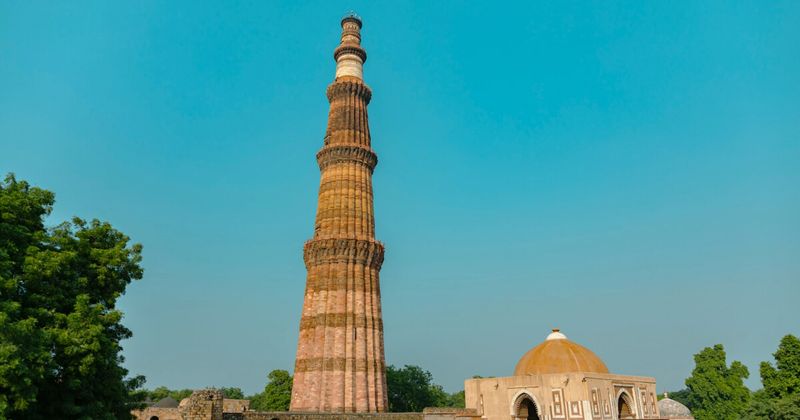
The Qutub Minar complex was built on the site of 27 demolished Hindu and Jain temples — the remains of their columns, many still bearing their original Hindu carvings, were reused in the construction of the Quwwat-ul-Islam Mosque at the base of the minaret, making the complex one of the most architecturally layered sites of cultural transition in Indian history.
At 73 metres, the Qutub Minar is the world's tallest brick minaret and one of the finest surviving examples of early Indo-Islamic architecture — built in 1193 by Qutb-ud-din Aibak, founder of the Delhi Sultanate, and completed by his successor Iltutmish. Five tapering storeys of red sandstone and marble, each covered in carved Arabic calligraphy and geometric patterns, the upper sections progressively more elaborate. Visitors cannot climb it — the stairs were closed in 1981 after a tragic accident — but the exterior and the surrounding complex are the attraction. The Iron Pillar of Delhi inside the complex is a 7-metre-high iron column cast in the 5th century that has not rusted in 1,600 years despite open-air exposure, baffling metallurgists for generations. The pillar's rust resistance is now understood to be caused by its high phosphorus content — the ancient Delhi smiths unknowingly used a process that modern industry has only recently replicated.
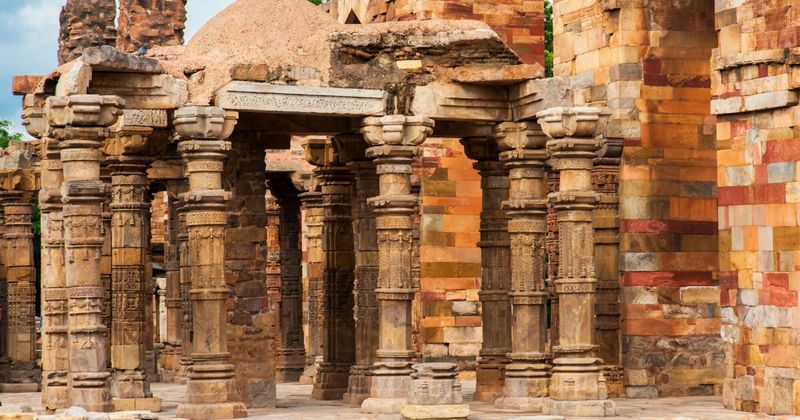
The Iron Pillar of Delhi inside the Qutub Minar complex was cast in the 5th century CE and has not rusted despite over 1,600 years of outdoor exposure — the mystery of its rust-resistance was solved in 2002 when scientists identified an unusual protective layer of iron hydrogen phosphate that forms on its surface, a process the ancient Delhi smiths achieved without modern metallurgical knowledge.
Allow 90 minutes for the complex. Pre-book through Klook.
Agrasen ki Baoli — take the metro from Qutub Minar station to Barakhamba Road (change at Rajiv Chowk to Blue Line). The stepwell is a 7-minute walk from Barakhamba Road. Free entry, open 9am–6pm. Read the opening of this post again and then go see it. This is the unhurried 20-minute stop that resets the day.
Connaught Place — the colonial commercial hub of New Delhi, designed in 1933 as a series of three concentric Georgian circles of white colonnaded buildings. Most of it is now restaurants, banks, and fast-fashion stores, but the architecture of the inner circle — particularly at night when the white columns are lit — is striking in the way that pure order imposed on a chaotic city can be. Wengers (established 1926, pastry shop at the inner circle, cash only) sells the best cakes in Delhi for ₹80–₹200 ($0.85–$2.13 USD). Keventers (milkshake shop, 1925) is next to it. Both have outlasted every food trend in the city.
India Gate at sunset — revisit if your Day 2 evening was curtailed, or use the late afternoon for a final walk along Kartavya Path, the grand ceremonial avenue that runs from Rashtrapati Bhawan (the President's residence) past the government ministries to India Gate. It is 3 kilometres of Lutyens Delhi as he intended it — a capital built to impress, which it does, even knowing the politics of why it was built.
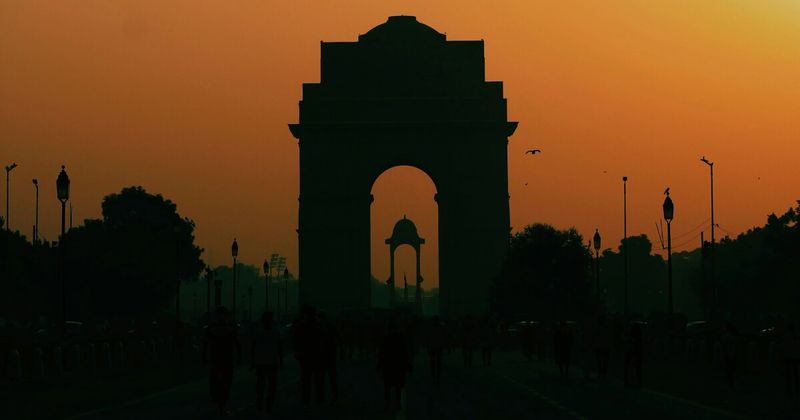
The eternal flame burning beneath the India Gate canopy was added in 1972 as the Amar Jawan Jyoti — a memorial to unknown Indian soldiers who died in the 1971 Bangladesh Liberation War — and has burned continuously until January 2022, when it was merged with the flame at the new National War Memorial 400 metres away.
Book your Day 3 departure airport transfer in advance through GetTransfer or KiwiTaxi — both cover Delhi IGI departure routes. If your next destination is Agra, Jaipur, or Rishikesh, KiwiTaxi handles these intercity routes at fixed pre-booked rates with no airport negotiation.
What to Skip on a 3-Day Delhi Trip
Akshardham Temple. It's vast, the water show is spectacular, and the queues are 2–3 hours on weekends. No cameras, no phones, and no bags larger than a small handbag are allowed inside — which for most travellers means hiring a locker, which adds 30 minutes. It rewards a full half-day and is genuinely remarkable, but on a 3-day trip that's a quarter of your time. Save it for a return visit or a longer trip.
A tour bus. Every hotel in Delhi will sell you a "Delhi sightseeing package" covering seven to twelve monuments in one day. The maths: the Red Fort alone takes 90 minutes properly. Humayun's Tomb takes 90 minutes. Qutub Minar takes 90 minutes. With transit time, that's a full day for three monuments. Trying to add Lodhi Garden, India Gate, Chandni Chowk, and Akshardham to the same day creates a situation where you photograph the entrance of each place and remember none of them.
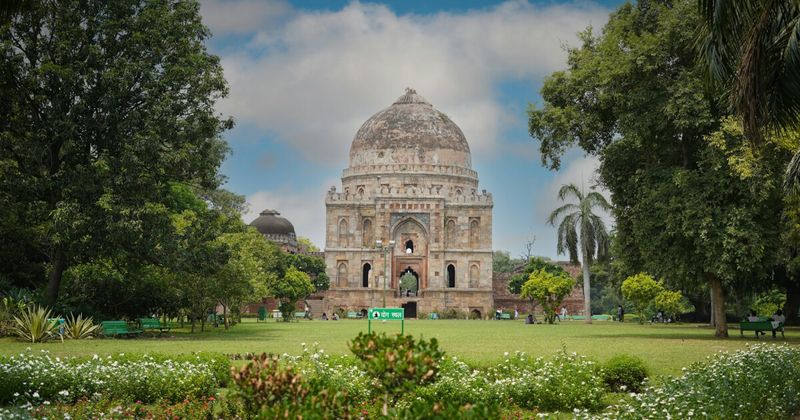
The Sheesh Gumbad (Glass Dome) takes its name from the original blue-grey glazed tile that once covered its exterior — most of it is gone, but patches survive under the dome cornice, giving a sense of how the monument would have appeared when Delhi's rulers were buried here in the 1490s, before the Mughals arrived and began their own century of building.
Trying to fit both Agra and Jaipur into this 3-day Delhi window. A Delhi–Agra day trip is feasible. Delhi–Agra–Jaipur in three days — with Delhi as the starting and ending city — is not. Our India in 5 Days guide covers the Golden Triangle as a standalone 5-day circuit. Our 2 Weeks in India itinerary builds it into a proper North India loop.
The fake "government tourist office" near New Delhi Railway Station. This is one of the most persistent Delhi scams. Well-dressed men approach travellers at Paharganj or outside major stations claiming to be tourism board officials with urgent updates about your booking, visa, or transport. There is no government tourism office in this location. Read the India travel scams 2026 guide before you land — it covers every Delhi-specific script in detail.
Paharganj as a base for a 3-day itinerary. The backpacker district adjacent to New Delhi station has cheap accommodation and is fine for long-term budget travellers. For a 3-day trip starting and ending at the airport, staying in Aerocity (5 minutes from Terminal 3 by metro or taxi) eliminates the commute entirely and doesn't cost significantly more at the midrange level.
Eating and Drinking Across 3 Days
Delhi's food geography roughly follows the city's historical layers. Old Delhi is Mughal — kebabs, biryanis, whole-spice curries, parathas, and the kind of food that takes 4 hours to cook and 4 minutes to eat. New Delhi is colonial and post-colonial — Punjabi-influenced north Indian, South Indian restaurants around Connaught Place, and every international cuisine in the Hauz Khas and Khan Market areas. South Delhi is expensive, international, and excellent for café culture.
Specific places worth the detour:
Karim's, Old Delhi (Jama Masjid lane): Mughal-recipe seekh kebab and dal, ₹180–₹350/dish. Since 1913. Cash only.
Paranthe Wali Gali, Chandni Chowk: Breakfast parathas with pickle and curd. The three oldest shops (Nos. 1, 2, and 3 in the lane) have been in the same families since the 1870s. ₹50–₹100/plate.
Saravana Bhavan, Connaught Place (inner circle): South Indian vegetarian. Best value dosa in Delhi. ₹100–₹200/main.
Wengers, Connaught Place: Established 1926, pastry and baked goods. ₹80–₹200 per item.
Hauz Khas Village: Multiple good rooftop restaurants with views over the medieval reservoir. ₹400–₹800/person for a full meal.
Street food rule: Eat from stalls with high turnover — places where the food is continuously being cooked and the queue never fully clears. Avoid anything that has been sitting out. Carry a small bottle of hand sanitiser. Drink bottled water exclusively.
Practical Delhi Notes
Weather: October–March is the comfortable window (15–25°C daytime). April–June is brutal (38–45°C) — monuments in summer require 7am starts and 1pm retreats. July–September is monsoon — the Red Fort and Lodhi Garden in the rain have their own kind of beauty, but many outdoor café spaces close and monument photography in overcast light is less dramatic. December–January is foggy: cold mornings (5–10°C), warm afternoons (18–22°C), and the fog that delays flights.
Safety: Delhi is safe for tourists with standard urban awareness. The risks are scams, overcharging, and the occasional aggressive tout — not physical danger. Pre-book transfers, use the metro rather than negotiated autos, and read the India travel scams guide before you land.
Cash vs card: UPI digital payments are accepted at most medium and large establishments in 2026 — link a Wise or Revolut card to Google Pay or use India's UPI One World tourist app. Major monuments accept card at ticket counters. Street food, auto-rickshaws, and small shops are cash only. Carry ₹2,000–₹3,000 ($21.28–$31.91 USD) in cash per day as a reserve.
Shoes: Remove them at every mosque and most temples. Carry a small plastic bag for putting them in rather than leaving at the shoe racks outside — this eliminates the ₹10–₹20 "shoe minding" fee some touts charge at major sites.
Delhi Budget Breakdown: 3 Days
| Expense | Budget | Mid-Range | Splurge |
|---|---|---|---|
| Accommodation (3 nights) | ₹2,000–₹3,500 ($21.28–$37.23) | ₹5,000–₹9,000 ($53.19–$95.74) | ₹12,000+ ($127.66+) |
| Food (3 days) | ₹600–₹1,000 ($6.38–$10.64) per day | ₹1,500–₹3,000 ($15.96–$31.91) | ₹4,000+ ($42.55+) |
| Airport transfers (arrival + departure) | ₹600–₹1,200 ($6.38–$12.77) via metro | ₹1,500–₹3,000 ($15.96–$31.91) via GetTransfer/KiwiTaxi | ₹4,000+ ($42.55+) |
| Delhi Metro (3 days, Tourist Card) | ₹200 ($2.13) Tourist Card | ₹200 ($2.13) | ₹200 ($2.13) |
| Red Fort (foreigner) | ₹550 ($5.85) basic | ₹870 ($9.26) with museums | ₹870 ($9.26) |
| Humayun's Tomb (foreigner) | ₹600 ($6.38) | ₹600 ($6.38) | ₹600 ($6.38) |
| Qutub Minar (foreigner) | ₹550 ($5.85) | ₹550 ($5.85) | ₹550 ($5.85) |
| Jama Masjid minaret climb | ₹300 ($3.19) | ₹300 ($3.19) | ₹300 ($3.19) |
| Lodhi Garden / India Gate / Agrasen ki Baoli | Free | Free | Free |
| City autos / local transfers | ₹200–₹400 ($2.13–$4.26) per day | ₹500–₹1,000 ($5.32–$10.64) | ₹2,000+ via Intui.travel |
| Experiences via Klook | ₹500–₹1,000 ($5.32–$10.64) | ₹2,000–₹4,000 ($21.28–$42.55) | — |
| Travel insurance | VisitorsCoverage or EKTA from ~$12 | From ~$12 | From ~$12 |
| 3-day total per person (approx) | ₹12,000–₹18,000 ($128–$191) | ₹28,000–₹50,000 ($298–$532) | ₹80,000+ ($851+) |
All INR prices. USD at ₹94 = $1. Excludes international flights. INR prices are reliable; USD approximate — check current exchange rate before budgeting.
Check Live Flight Prices
The Bottom Line
Delhi doesn't reward the traveller who tries to race through it. It rewards the one who picks three areas, moves slowly between them, eats the street food, and lets the city's geological layering — 3,000 years of continuous civilisation compressed into one overloaded capital — become legible one neighbourhood at a time.
Three days is enough for Old Delhi's Mughal weight, New Delhi's colonial ambition, and South Delhi's quieter archaeological layer. It's not enough for Akshardham, or a proper day trip to Agra, or the full south Delhi café circuit. That's what the second trip is for.
Go to the Jama Masjid minaret. Climb the 130 steps. Look north over Old Delhi's roofscape and south toward the modern city and try to hold both versions in your head simultaneously. This is what Delhi does. Eight cities, one place, still being built.
Your Delhi Trip Planning Checklist
Every item on this list is easier to sort at home than at Indira Gandhi Airport at 2am. Do it before you board.
🛡️ Travel Insurance — First, Always: VisitorsCoverage — Compare plans; minimum $100K USD medical + emergency evacuation; 3-day Delhi policies from ~$12 USD. Delhi's medical costs for food poisoning or an accident before treatment reaches ₹30,000–₹1,50,000. Non-negotiable. Sort before flights, accommodation, or anything else | EKTA — Affordable alternative; policies from $0.99/day at ektatraveling.com; worldwide coverage, fully digital, 24/7 multilingual support. Compare quotes from both and choose the cover that fits your trip.
✈️ Flights & Delay Protection: FlyFlick — Compare all routes into Delhi (DEL); check open-jaw options if continuing to Agra or Jaipur after Delhi — often saves ₹3,000–₹8,000 versus returning | Compensair — Claim up to €600 for delayed or cancelled flights; Delhi December–January fog season makes this essential for EU-connected departure legs.
🚖 Airport & City Transfers: GetTransfer — Pre-booked fixed-fare Delhi IGI airport arrival and departure transfer; driver with name sign, no arrival-hall tout negotiation | KiwiTaxi — Pre-booked fixed-price transfers at Delhi IGI airport plus Delhi→Agra, Delhi→Jaipur, Delhi→Rishikesh intercity routes; book vehicle class and price before landing, pay in your preferred currency | Intui.travel — Full-day sightseeing vehicle for multi-monument days (Day 2 Humayun's Tomb + Lodhi + Hauz Khas circuit if you prefer car over metro).
🎟️ Experiences to Pre-Book: Klook — Red Fort skip-the-queue entry ₹550–₹870 (saves 45-minute weekend queues); Humayun's Tomb ₹600; Qutub Minar ₹550; Delhi Old City food walking tour (Chandni Chowk, Paranthe Wali Gali, Karim's) from ₹1,500. All with cancellation policies visible before booking.
🚂 Trains (if continuing to Agra or Jaipur): 12Go Asia — Gatimaan Express Delhi→Agra (1hr 40min, CC from ₹690 — departs Hazrat Nizamuddin, not New Delhi Station); Vande Bharat Delhi→Jaipur (4h 15min, CC from ₹900). Book 3–4 weeks ahead for peak season.
📱 Connectivity: Saily — City 5G eSIM; activate before boarding, works from the moment you land across Delhi, covering Old Delhi, New Delhi, and South Delhi | Yesim — Unlimited data eSIM for multi-country trips extending beyond India | Drimsim — Off-grid eSIM for any rural India travel continuing after Delhi.
Go to the Jama Masjid minaret. Climb the 130 steps. Look at both cities at once.