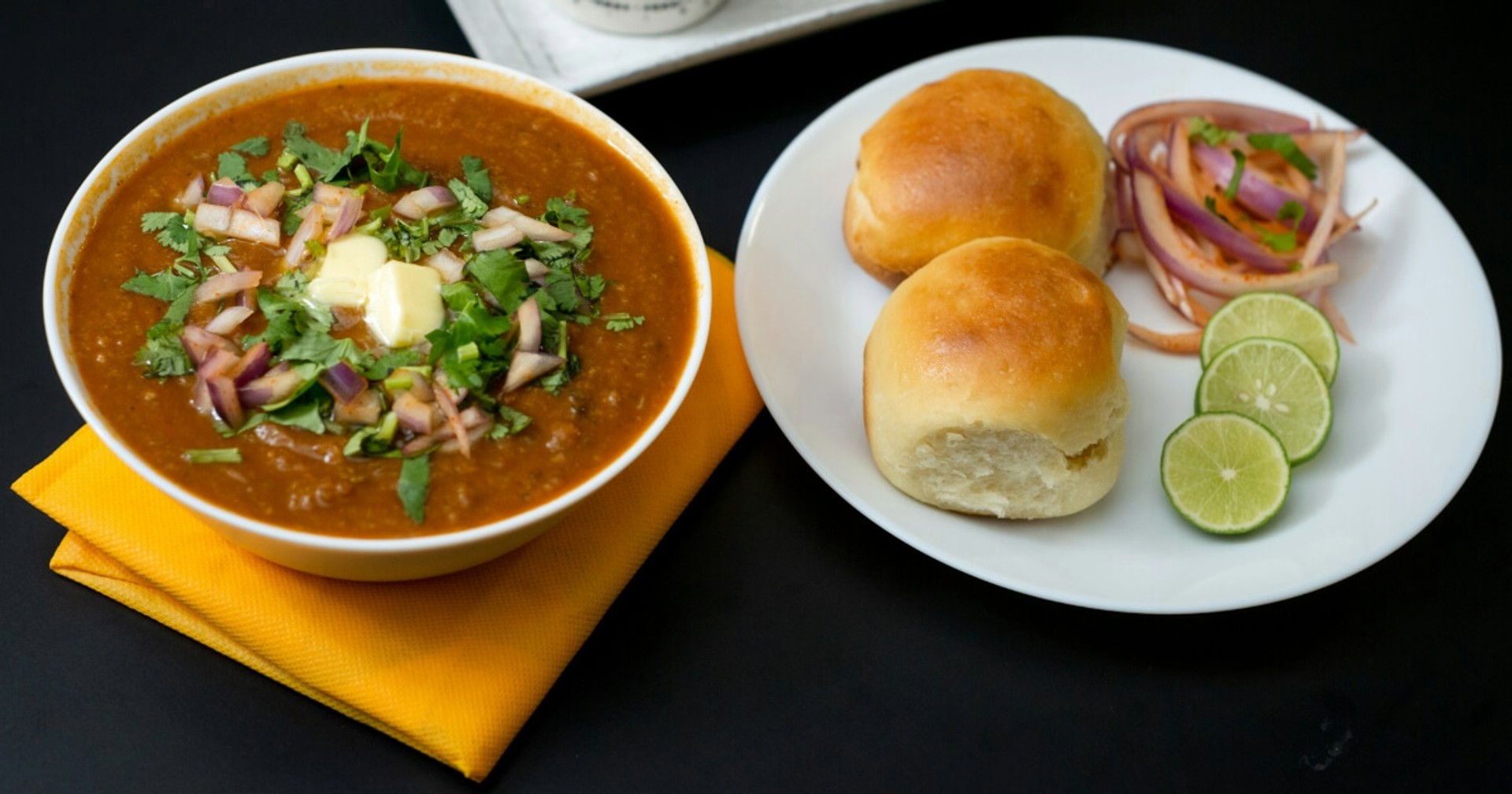

To understand Mumbai, you must first understand how it eats.
This is a city of over 20 million people, moving at a relentless, frantic pace. It is an archipelago of dreams and desperation, where billionaires in soaring glass high-rises overlook tin-roofed slums, and where time is the ultimate luxury. Because Mumbai never stops moving, its food cannot afford to be slow.
The culinary heartbeat of this city is not found in air-conditioned, Michelin-starred dining rooms. It is found on the pavements. It is heard in the rhythmic, metallic clatter of a spatula against a massive iron tawa. It is smelled in the sharp, intoxicating aroma of garlic, mustard seeds, and hot oil wafting through the humid coastal air. And it is tasted in the fiery, buttery, unapologetic explosion of flavors that define Mumbai street food.
But navigating this landscape as an outsider is intimidating. The sheer volume of stalls, the crushing crowds, and the entirely valid concerns about "Delhi Belly" (or in this case, "Bombay Belly") can make a street food walk feel like a high-stakes gamble.
It doesn't have to be. Behind the chaotic facade of Mumbai's food scene lies a deeply structured, historically rich, and generationally perfected culinary tradition. Every dish tells a story of migration, class struggle, and survival.
This is your ultimate, meticulously curated Mumbai food walk map. We are stripping away the tourist traps to take you to the source: the birthplace of the Vada Pav, the undisputed kings of Pav Bhaji, and the fading, beautiful time capsules of the city's last remaining Irani cafes.
Come hungry. Leave your ego at the hotel. Let’s walk.
The Rules of Engagement: How to Eat Street Food Safely
Before we dive into the map, we need to address the elephant in the room: food safety. Many international travelers skip Indian street food entirely out of fear of getting sick, which means they miss out on the very soul of the city.
You can eat safely on the streets of Mumbai if you follow three non-negotiable rules:
- Follow the Crowd: High turnover is your best friend. If a stall has a massive queue of locals, it means the food is fresh, the ingredients are turning over rapidly, and the oil isn't sitting stagnant.
- Watch the Water: Never consume tap water, ice, or chutneys that look watered down at unverified stalls. Stick to deep-fried items (where the heat kills bacteria) or items cooked fresh in front of you.
- Go with a Local Expert First: If you are a beginner, do not attempt to navigate the food stalls alone on your first night. We strongly recommend booking a curated, hygiene-vetted street food walking tour through Klook. Their expert local guides act as your culinary bodyguards, taking you only to stalls that have been tested and verified for foreign stomachs, bridging the gap until you feel confident enough to explore alone.
Now, let's build your map.
Stop 1: Ashok Vada Pav (The Birthplace of a Legend)
Location: Kashinath Dhuru Marg, Dadar West (Near Kirti College) The Vibe: A bustling, no-nonsense corner stall swarmed by college students, politicians, and laborers alike.
If you ask any Mumbaikar what fuels the city, the answer is unanimous: Vada Pav. It is the great equalizer—a snack eaten by everyone from struggling actors to high-powered stockbrokers. But this humble "Indian Burger" is a relatively modern invention, and its history is deeply tied to the working-class struggles of the city.
In the 1960s and 70s, the Dadar neighborhood was the epicenter of Mumbai's booming textile mill industry. Hundreds of thousands of mill workers needed something cheap, filling, and portable to eat during their grueling shifts.
Enter Ashok Vaidya. In 1966, he set up a small stall outside Dadar station. He took a batata vada (a spiced, mashed potato dumpling dipped in chickpea flour and deep-fried) and smashed it between a pav (a soft, square bread roll left behind by the Portuguese). He slathered it with a fiery dry garlic and peanut chutney. It was an instant, explosive success.
Today, his son runs the legendary Ashok Vada Pav stall near Kirti College, and it remains the absolute gold standard in Mumbai.
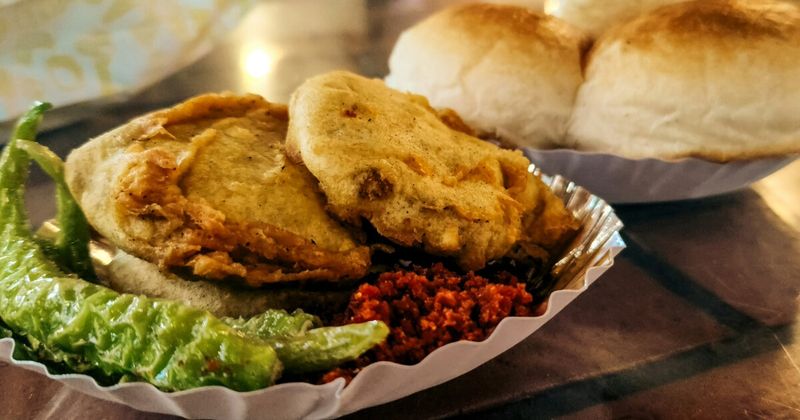
The ultimate equalizer: At just $0.30, the Vada Pav fuels everyone from college students to corporate billionaires.
What to Order: You are here for one thing: the classic Vada Pav. But what makes Ashok's version legendary is the addition of choora—the crispy, deep-fried bits of chickpea batter that fall off the vada during frying. They scoop up these crunchy remnants and stuff them into the bun alongside the vada and a reported mix of 40 different secret spices.
The first bite is a revelation. The soft, pillowy bread gives way to the fiery, textured crunch of the choora, followed by the steaming, mustard-seed-laced potato. It costs roughly 25 to 30 rupees (about $0.30 USD), and it is a masterclass in flavor architecture.
Logistics Tip: Navigating the chaotic Dadar traffic to get here can be a nightmare for foreigners. Skip the haggling with street taxis and use InDrive to lock in a fair, upfront price for an auto-rickshaw or cab ride directly to Kirti College.
Stop 2: The Butter-Soaked Heartbeat of Pav Bhaji
If Vada Pav is the snack of the working class on the move, Pav Bhaji is the sit-down feast of the night shift.
To understand Pav Bhaji, you have to look back to the 1860s. During the American Civil War, global cotton supplies dried up, causing a massive boom in demand from Mumbai's textile mills. Workers were forced to pull all-nighters. When they finished their shifts at 2:00 AM, the standard food stalls were closed. Local vendors began taking leftover vegetables, mashing them together on a massive flat iron griddle (tawa) with a heavy dose of spices, and serving it with butter-toasted bread to the exhausted workers.
Today, Pav Bhaji is an absolute religion in Mumbai. Here are the two undisputed kings of the trade:
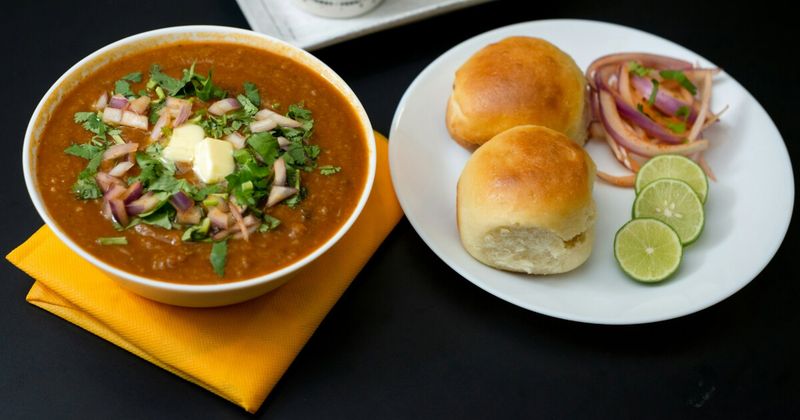
Whether you're standing on the pavement at Cannon or sitting in the legendary halls of Sardar, the journey always starts here—with a plate of perfectly pillowy, butter-soaked pav.
The Quick Fix: Cannon Pav Bhaji (Fort)
Located right across from the stunning, gothic Chhatrapati Shivaji Maharaj Terminus (CSMT), Cannon Pav Bhaji is an open-air spectacle. Office workers and tourists stand shoulder-to-shoulder, balancing paper plates in their hands. The bhaji here is robust, tomato-heavy, and fiercely spiced. Because it is a standing-only joint, the turnover is incredibly fast. Watch the chef work the massive tawa like a DJ working a turntable, vigorously mashing tomatoes, peas, and potatoes under a mountain of butter.
The Indulgent Pilgrimage: Sardar Pav Bhaji (Tardeo)
If you want to sit down and experience the most decadent, unapologetic version of this dish, you must take a cab to Sardar Pav Bhaji in Tardeo.
Let us be clear: this is not health food. Sardar is famous for using an obscene, heart-stopping amount of Amul butter. The bhaji is served in a stainless steel compartment tray, and the mashed vegetables are practically swimming in a pool of melted, golden butter. The pav buns are slapped onto the hot griddle until they soak up the spices and turn crispy on the edges. You tear a piece of the bread, scoop up the rich, fiery mash, add a squeeze of fresh lemon and raw onions, and let your eyes roll to the back of your head.
Logistics Tip: Getting to Mumbai and dealing with international flights to Chhatrapati Shivaji Maharaj International Airport (BOM) can be exhausting. If your flight into India is delayed or canceled, you are legally entitled to compensation. We highly recommend registering your flight details with Compensair before you travel so you can effortlessly claim up to €600 if things go sideways.
Stop 3: Stepping Back in Time at the Irani Cafes
After the fire and grease of the street stalls, you need a sanctuary. You need strong, sweet tea, and the quiet ticking of a grandfather clock. You need Mumbai’s legendary Irani cafes.
In the late 19th and early 20th centuries, Zoroastrians fleeing famine and persecution in the Yazd and Kerman provinces of Iran migrated to Bombay. They opened corner tea shops that became the democratic meeting grounds of the city. Here, caste, religion, and class did not matter. Lawyers sat next to dock workers; students argued politics next to weary travelers.
At their peak in the 1950s, there were over 400 Irani cafes in Mumbai. Today, due to rising real estate prices and younger generations moving to different careers, fewer than 40 remain. They are beautiful, fading time capsules.
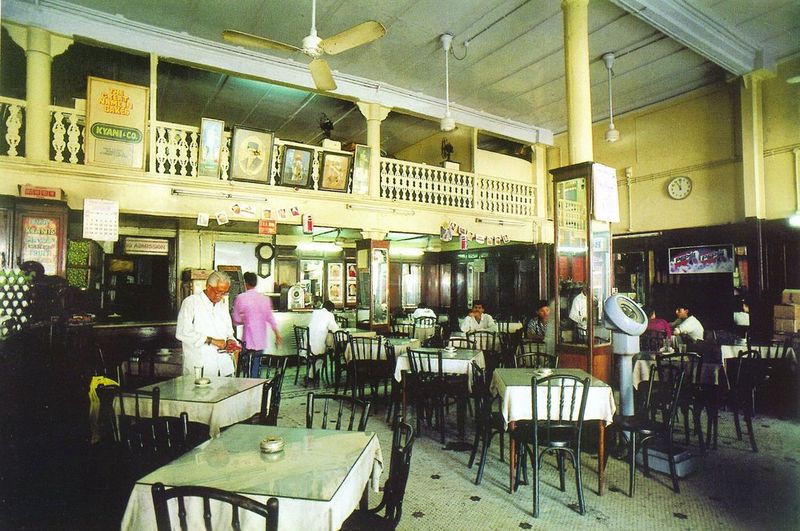
With their bentwood chairs and strict "rules of conduct" boards, Mumbai's remaining Irani cafes are beautiful, fading time capsules of the 20th century.
Kyani & Co. (Marine Lines)
Founded in 1904, Kyani & Co. is arguably the most famous surviving Irani cafe in the city. Located in the Jer Mahal estate, stepping through its wooden doors is like stepping back a century.
The aesthetic is strictly vintage: dark bentwood chairs imported from Poland, glass-topped tables covered in red checkered tablecloths, high ceilings, and walls lined with sepia-toned portraits and stern, old-world signboards reading: "No Comb Hair, No Flirt, No Lingering."
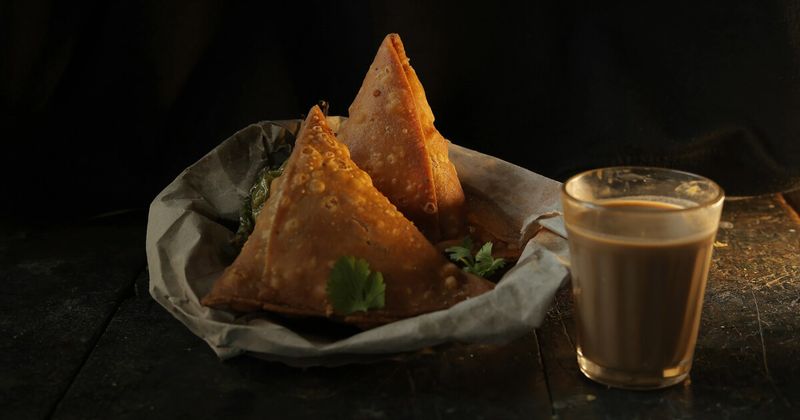
What to Order: Start with the quintessential Irani cafe breakfast: Bun Maska and Irani Chai. A sweet, soft bun is sliced open, slathered generously with butter (maska), and served alongside a hot cup of thick, milky, deeply sweet Irani tea. You are meant to dip the buttery bun directly into the hot tea, letting it soak up the liquid before eating it. If you want something savory, their Kheema Pav (spiced minced mutton served with bread) and Chicken Cheese Puffs are legendary.
Yazdani Restaurant & Bakery (Fort)
If Kyani is the grand old dame, Yazdani is the rugged, working-class soul of the Irani tradition. Tucked away in a narrow lane in the historic Fort district, Yazdani is housed in a former Japanese bank.
The exterior boasts peeling turquoise paint and a faded red signboard. Inside, there is no grand menu—just the overwhelming, intoxicating smell of fresh bread baking in a massive diesel-fired oven that has been running for decades.
What to Order: Yazdani is famous for its Brun Maska. Unlike the soft bun, a 'brun' is a crusty, hard-shelled bread that shatters when you bite into it, giving way to a soft, butter-soaked interior. Pair it with their legendary Mawa Cake (a dense, cardamom-laced milk cake) and a strong cup of chai.
Logistics Tip: South Mumbai (where these cafes are located) has spotty Wi-Fi inside these century-old buildings. To ensure you can navigate the narrow lanes of Fort and look up historical facts on the go, ensure your phone is equipped with a Saily 5G eSIM for instant, high-speed city connectivity the moment you step out of your hotel.
Stop 4: The Evening Crescendo at Mohammed Ali Road
As the sun sets over the Arabian Sea and the sky turns the color of bruised plums, the vegetarian dominance of Vada Pav and Pav Bhaji gives way to the carnivorous night markets.
If you have the stamina, take a taxi north of CSMT station to Mohammed Ali Road. During the holy month of Ramadan, this street is the epicenter of the city's Iftar celebrations, but it remains a bustling food haven year-round. It is loud, unapologetically chaotic, and intoxicating.
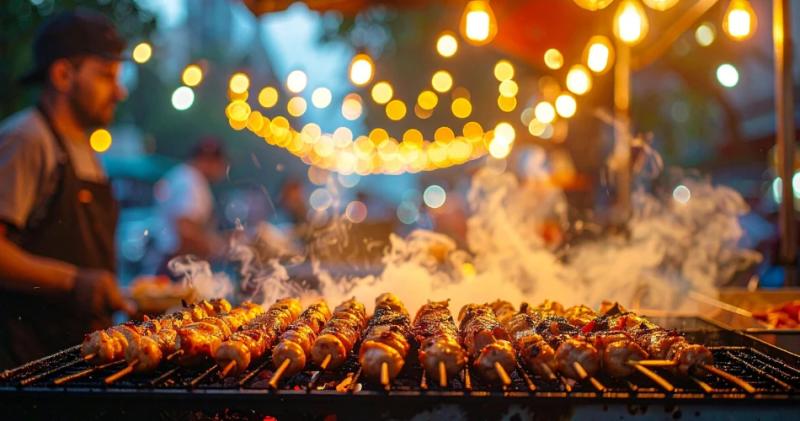
ht falls, Mohammed Ali Road transforms into a smoky, chaotic, and utterly delicious haven for meat lovers.
What to Order: The air here is thick with the smoke of charcoal grills. Follow the crowds to the stalls serving Baida Roti—a flaky, pan-fried paratha stuffed with spiced minced meat and whipped eggs, cooked until golden and crispy.
Next, hunt down the skewers of Seekh Kebabs, which are so tender they practically melt in your mouth, served with a sharp squeeze of lime and a handful of mint.
Finally, you must end your night at Taj Ice Cream in the nearby Bhendi Bazaar. This hidden gem has been operating for over 120 years, hand-churning ice cream using the traditional sancha (a wooden bucket filled with ice and salt). Their Sitafal (custard apple) and Alphonso mango ice creams are rich, dense, and the absolute perfect cooling antidote to a day of fiery spices.
Building Your Strategy: Surviving the Mumbai Food Map
To execute this food walk, you need to be prepared. Mumbai is not a city that gently holds your hand; it pulls you into its current.
- Pacing is Everything: This map covers a lot of ground and a lot of heavy, carbohydrate-rich food. Do not eat a massive hotel breakfast if you plan to conquer Dadar and Fort in one day.
- Carry Cash: While digital payments (UPI) rule India, many of the oldest establishments—especially the Irani cafes like Yazdani and Kyani & Co.—are stubbornly old-school. They want crisp, small-denomination Rupee notes.
- Embrace the Chaos: You will get bumped into. People will shout your orders over your head. You will sweat. This is the authentic Mumbai experience. Lean into it.
Eating on the streets of Mumbai is an act of trust and an exercise in pure, unadulterated joy. It is a reminder that the best food in the world doesn't require silver cutlery or a white tablecloth. Sometimes, all it requires is a hot tawa, a soft pav, and the vibrant, beating heart of the city around you.
Your Mumbai Wellness & Logistics Checklist
Navigating the sensory explosion of Mumbai requires airtight logistics so you can focus on the food, not the stress of transit. Here are the tools we at FlyFlick trust to keep your journey smooth, connected, and safe:
- 🚐 Airport Extraction: Welcome Pickups (Skip the chaotic taxi mafia at Chhatrapati Shivaji Maharaj International Airport. Have a vetted, English-speaking driver waiting for you at arrivals).
- ✈️ Flight Routes & Protection: FlyFlick (Book your flights at the best rates) | Compensair (Crucial for claiming compensation if your international flight to India is delayed by monsoon weather).
- 📱 Seamless Connectivity: Saily (Instant 5G for fast mapping in big city zones like South Bombay) | Drimsim (Excellent off-grid backup if you venture into rural Maharashtra) | Yesim (Unlimited data for uploading your food videos without rationing megabytes).
- 🚂 Overland Travel & Taxis: 12Go Asia (The safest way for foreigners to book train tickets out of Mumbai) | InDrive (Essential for securing haggle-free, fair-priced local rides between Dadar and Fort).
- 🌴 Curated Food Experiences: Klook (Highly recommended for booking hygiene-verified, expert-led street food walking tours for your first day in the city).
Taste the chaos. Fly high.