
When British cartographers mapped Jaipur for the first time in the 1860s, they couldn't understand what they were looking at.
The old city had a perfectly rectangular grid — unusual in any Indian city, essentially unheard of in a Rajasthani one where streets typically follow topography, trade routes, and caste geography in organic accumulation. These streets followed none of those things. They were too precise, too intentional, and their relationship to the City Palace and the city's seven gates didn't match any urban planning logic the surveyors recognised.
The answer came from translating the 1727 city plan drawn by Maharaja Jai Singh II's royal astronomer, Vidyadhar Bhattacharya. The grid was a mandala — nine rectangular blocks representing the nine divisions of the universe in Vedic cosmology, each block allocated to a specific trade or caste, the streets running in exact mathematical relationship to the palace at the centre, the gates positioned to face the cardinal and intercardinal directions. Jaipur was designed as a cosmological diagram before the first stone was laid. The British had spent 40 years mapping a living urban cosmology and hadn't recognised what they were looking at.
This is how Rajasthan consistently operates. The forts and palaces that form the 14-day Royal Circuit are not merely beautiful — they are documents. The 125-metre cliff that Mehrangarh Fort sits on in Jodhpur was chosen because no army had ever taken a position at that height. The island palace on Lake Pichola in Udaipur sheltered the man who would later build the Taj Mahal, and the architectural memory of that island is visible in Agra. The Jaisalmer Fort has been continuously inhabited since 1156 CE because its founders understood that a living city is harder to abandon than a military garrison.
Fourteen days is the correct amount of time to understand this. Seven days is enough to visit the monuments. Fourteen days is enough to understand what they mean.
Sort VisitorsCoverage travel insurance before this trip — the circuit involves desert conditions, mountain driving to Kumbhalgarh, and the physical demands of 14 days across four cities. Policies from approximately $25–45 USD. EKTA offers a second option from $0.99/day at ektatraveling.com. Compare both before booking.
14-Day Royal Circuit at a Glance
| Days | City | Focus |
|---|---|---|
| 1–4 | Jaipur | Amber Fort, City Palace, Abhaneri day trip |
| 5–7 | Jodhpur | Mehrangarh, Blue City, Kumbhalgarh day trip |
| 8–10 | Udaipur | Lake Pichola, Ranakpur, Monsoon Palace |
| 11–13 | Jaisalmer | Sonar Qila, Sam dunes, overnight desert camp |
| 14 | Jodhpur or Jaisalmer | Fly home |
Why This Order — and Why 14 Days
Most Rajasthan guides suggest 7–10 days. Most people who do 7–10 days wish they had 14. The arithmetic is simple: Rajasthan covers 342,000 square kilometres — larger than Germany — and the four cities of this circuit are spread across its eastern and western reaches. The Jaipur–Jodhpur train takes 4–5 hours. The Jodhpur–Jaisalmer train takes 5–6 hours. Udaipur to Jaisalmer by road is 7–8 hours. Every transition between cities costs half a day.
At 7 days, you're moving every 1.5 days. You see the front of things. At 14 days, each city gets 3 full days minimum — enough to see the primary monuments without rushing, do one day trip, eat the regional food properly, and leave with a memory of the place rather than a photograph of its gate.
The order — Jaipur → Jodhpur → Udaipur → Jaisalmer — follows a deliberate logic. It moves from the most internationally familiar (Jaipur's monuments are the most visited in Rajasthan) to the most remote and extraordinary (Jaisalmer's living fortress in the middle of the Thar). Each city is a completely different version of Rajasthan — different climate, different architecture, different food, different colour — which means the circuit builds rather than repeats.
The colour sequence is not coincidental: Pink (Jaipur's terracotta-coated old city) → Blue (Jodhpur's indigo-washed Brahmin quarter) → White (Udaipur's marble palaces and lake) → Gold (Jaisalmer's sandstone and desert light). You end in the most visually arresting city exactly when you're most experienced at looking.
Get to Rajasthan by flying into Jaipur International Airport (JAI) — direct connections from Delhi (1hr), Mumbai (2hrs), and seasonal international arrivals from Dubai. Search and book on FlyFlick. Set a Compensair alert — JAI flight delays cascade through train connections. Book your JAI arrival transfer through GetTransfer or KiwiTaxi — both confirmed for Jaipur airport with fixed-fare vehicles.
Activate Saily 5G eSIM before landing — excellent coverage across Jaipur, Jodhpur, and Udaipur. Drimsim handles the Kumbhalgarh mountain road and Jaisalmer desert area where single-carrier SIMs drop.
Days 1–4: Jaipur — The Pink City That Was Always a Mandala
Four days in Jaipur is more than most itineraries allocate and exactly the right amount. The extra two days (versus the standard two-night treatment) give you one day for the Abhaneri stepwell day trip, one morning for Nahargarh Fort at sunset, and two afternoons for the bazaars without feeling like you're racing between monuments.
Day 1 afternoon: Check in, walk to Johri Bazaar at 5pm. The jewellery market of Jaipur in the late afternoon — silverwork, lac bangles, blue pottery, block-print textiles — is the best introduction to the city's craft economy. Dinner at LMB (Laxmi Misthan Bhandar) on Johri Bazaar — unlimited Rajasthani thali including dal baati churma and pyaaz kachori, ₹200–400 ($2.13–4.26 USD).
Day 2: Amber Fort morning, Jantar Mantar afternoon. Amber Fort (₹1,000 foreigners, $10.64 USD) opens at 8am. Be there. The Sheesh Mahal (Hall of Mirrors) contains 2.5 million individual mirror fragments set into the ceiling — designed to reflect a single candle flame into the illusion of a star field. By 10am the Sheesh Mahal queue has 400 people in it. At 8am, you walk through with 20. This is not a minor difference. Jantar Mantar (₹200, $2.13 USD) in the afternoon — the 18th-century astronomical observatory with a 27-metre sundial accurate within 2 seconds per day. The instrument has been functioning for 290 years without maintenance. Take time with it. Pre-book both through Klook.
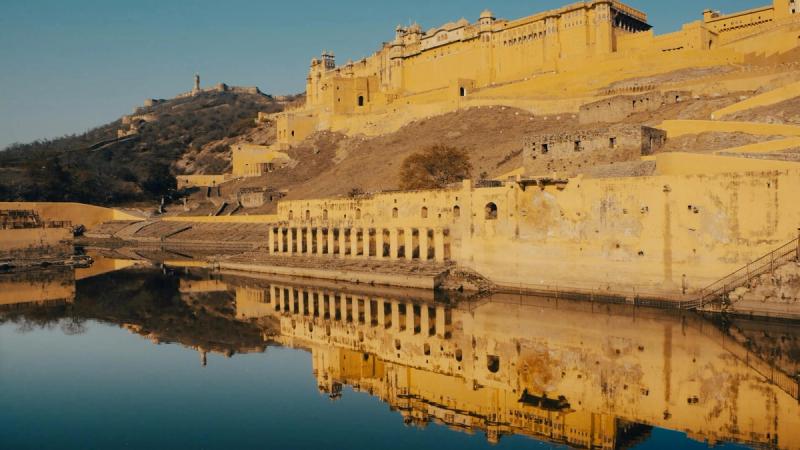
The Amber Fort was built by Raja Man Singh I in 1592 as the Kachwaha Rajput seat before the capital moved to Jaipur in 1727; the fortified palace complex reflects both Mughal and Rajput architectural influences in a single building.
Day 3: Abhaneri day trip. 95 kilometres east of Jaipur on the road toward Agra. The Chand Baori stepwell at Abhaneri — 3,500 steps arranged in perfect geometric symmetry descending 30 metres to the water level, built between the 9th and 11th centuries — is India's most architecturally extraordinary stepwell and appears in almost no 14-day Rajasthan itinerary because the extra hour from Jaipur appears inconvenient. It isn't. The stepwell at 8am, before the day-trippers from Jaipur arrive, is one of the most extraordinary geometric spaces in India. Book a vehicle through Intui.travel for the fixed-fare day-trip circuit.
Day 4: City Palace, Hawa Mahal, Nahargarh. City Palace (₹700 foreigners, $7.45 USD) — the 400-year Kachwaha dynasty residence and museum, including the Diwan-i-Khas (private audience hall) with its 1,200 kg solid silver pitchers — the largest silver vessels in the world, used to carry Ganges water for the Maharaja's European travels. Hawa Mahal (₹200, $2.13 USD) — photograph from the café rooftop across the street at 4:30pm when the light is right. Nahargarh Fort at sunset — ₹50 entry, the view over the whole illuminated city as darkness comes in.
Day 5–7: Jodhpur — The Fort That Never Fell
Jaipur to Jodhpur: The Vande Bharat Express departs Jaipur at approximately 19:05, arrives Jodhpur 23:20 — 4 hours 15 minutes, CC from ₹800–1,200 ($8.51–12.77 USD). The Intercity Express departs mornings, 5 hours, Sleeper from ₹160 ($1.70 USD). Book on 12Go Asia — 3–4 weeks ahead.
Day 5: Arrive Jodhpur, Mehrangarh afternoon. Mehrangarh Fort (₹800 foreigners, $8.51 USD, includes museum and audio guide) is open 9am–5pm. If you arrive morning, go directly. If afternoon, the 3–4pm light on the ramparts looking over the Blue City is the best the fort offers.
Accommodation Jaipur: Budget ₹800–2,000 ($8.51–21.28 USD); heritage haveli midrange ₹4,000–8,000 ($42.55–85.11 USD).
The audio guide at Mehrangarh is narrated by the late Peter Ustinov, recorded before his death in 2004. This detail appears nowhere in any Rajasthan guide. Ustinov was a friend of the Maharaja's family and agreed to narrate the tour as a personal favour. His voice — unhurried, authoritative, occasionally amused — is one of the finest fort audio guides in the world. Take it. Don't skip it for a human guide.
The fort was built by Rao Jodha in 1459 on a 125-metre cliff of solid granite. The cliff was so sheer that when Rao Jodha began construction, he had a local hermit — Cheeria Nathji — forcibly displaced from his cave in the rock. The hermit cursed the fort to perpetual water scarcity. Jodhpur has suffered water shortage for most of its history; the fort's cisterns were among the largest in medieval India because the founders took the curse seriously enough to plan around it. In the fort's palanquin gallery — the collection of royal women's covered carriages used for purdah travel — there are sedan chairs so ornate they seem absurd until you understand they were the only way royal women could move through public space without being seen. Social history compressed into lacquered wood.
Day 6: Blue City lanes and Toorji Ka Jhalra. The old city lanes below Mehrangarh constitute the best urban walking in Rajasthan. The Toorji Ka Jhalra stepwell — built in 1740 by the chief queen of Maharaja Abhay Singh specifically for public use rather than royal use — was discovered buried under urban debris in 2008 and restored by the Mehrangarh Museum Trust over five years. It is now fully accessible, free to enter, and consistently uncrowded despite being 300 metres from the Clock Tower market. Most Rajasthan guides do not mention it. Blue, quiet, and geometrically as perfect as Chand Baori at Abhaneri.
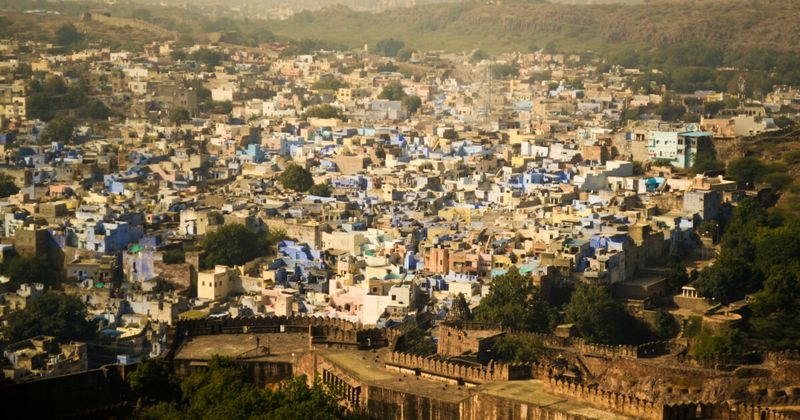
The blue colour historically marked Brahmin-caste households in Jodhpur; a maharaja's decree in the 1960s spread it city-wide for tourism, inadvertently erasing the original social coding.
Jaswant Thada — the 1899 white marble cenotaph built for Maharaja Jaswant Singh II — is 10 minutes from the fort. Entry ₹30–50 ($0.32–0.53 USD). Frequently empty. The marble changes colour in the afternoon light from white to warm cream to pale orange.
Book Day 6 city transfers through Intui.travel.
Day 7: Kumbhalgarh day trip. 85 kilometres north of Udaipur but 120 kilometres from Jodhpur — accessible as a day trip on the Jodhpur–Udaipur transit day (Day 8's drive). Kumbhalgarh Fort (₹600 foreigners, $6.38 USD) contains a 36-kilometre wall — the third-longest continuous wall in the world — wide enough at its base for eight horses to ride abreast. In 300 years of existence it was breached exactly once, and only by poisoning the water supply. Book the vehicle through Intui.travel for the Jodhpur–Kumbhalgarh–Udaipur transit route — this is the correct solution, covering the day trip and the city-to-city transit simultaneously.
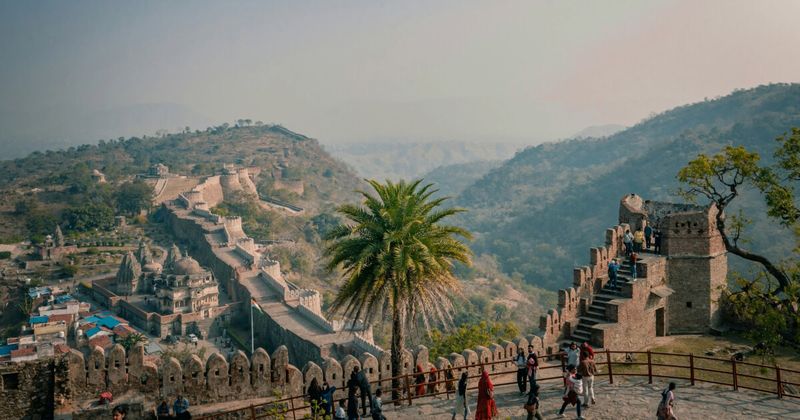
The Kumbhalgarh wall was built wide enough for eight horses abreast — tactical rapid deployment along the perimeter without bottlenecks during siege.
Accommodation Jodhpur: Budget ₹800–1,500 ($8.51–15.96 USD); heritage havelis with Blue City views from ₹3,000–6,000 ($31.91–63.83 USD).
Check Live Flight Prices
Days 8–10: Udaipur — The Lake That Inspired the Taj
Jodhpur to Udaipur: If using the Kumbhalgarh day-trip approach on Day 7, your vehicle continues to Udaipur (115km from Kumbhalgarh, 2 hours) arriving evening. Alternatively, the Ranakpur Overnight Express (14707) departs Jodhpur at approximately 23:20, arrives Udaipur by 06:45 — Sleeper from ₹275 ($2.93 USD), 3AC ₹790 ($8.40 USD). Book on 12Go Asia.
Udaipur accommodation: Budget guesthouses on Lal Ghat/Gangaur Ghat with Lake Pichola views from ₹1,500–2,500 ($15.96–26.60 USD); midrange heritage from ₹4,000–8,000 ($42.55–85.11 USD). Book the lake-facing room explicitly — it doubles the experience for the same property.
Day 8: City Palace and Jag Mandir sunset boat. City Palace (₹300 foreigners, $3.19 USD) opens at 9:30am. Allow 2.5–3 hours — the Mor Chowk peacock courtyard (glass mosaic tiles in blue, green, and gold, four years of artisan work to complete) is the centrepiece. Audio guide ₹150 ($1.60 USD).
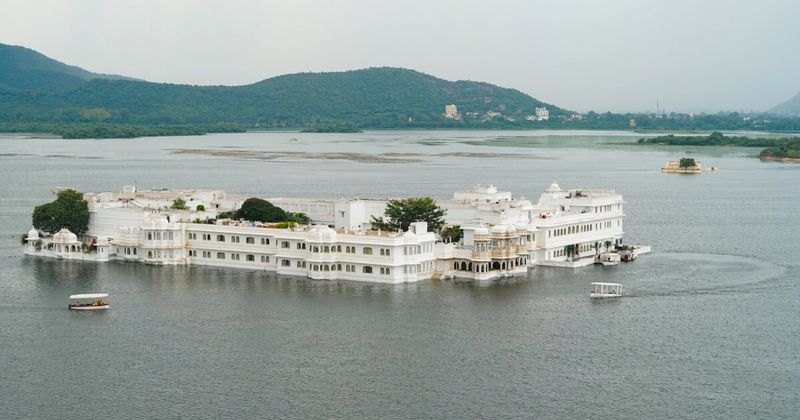
Jag Mandir Island boat: depart 4pm. ₹600/person ($6.38 USD) before 3pm, ₹800 after. Prince Khurram — later Emperor Shah Jahan — sheltered on this island in 1623 when he was in rebellion against his father Jahangir. He lived here for years. The island palace's architectural vocabulary — marble on water, garden pavilion design, the specific quality of white stone reflecting in a dark lake — appears again at Agra in 1632 when he commissioned the Taj Mahal for his wife. The connection is direct. Stand on the Jag Mandir terrace, look at the City Palace across the water, and understand that the man who built one of the wonders of the world worked out what it would look like while living in exile on this lake.
Day 9: Ranakpur day trip. 90 kilometres from Udaipur (2 hours). The Chaumukha Jain Temple at Ranakpur (built 1437–1458, 50 years of construction) contains 1,444 carved marble pillars. No two are identical. Every surface is carved to a density that has no equivalent in Indian stone architecture. Non-Jain visitors admitted 12pm–5pm only — arrive by 11:45am to queue for noon opening. Entry free. Camera ₹100 ($1.06 USD). Absolutely no leather items — shoes, belts, wallets — must be deposited at the locker facility. Pre-book the Ranakpur vehicle through Intui.travel.
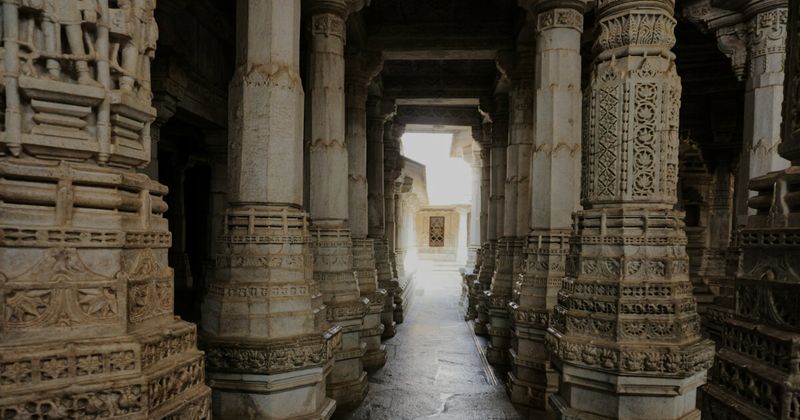
The temple's construction lasted 50 years (1437–1458); each pillar was given a different carving pattern, making Ranakpur the world's largest collection of non-repeating marble carvings in one building.
Day 10: Udaipur old city and Monsoon Palace. Morning: Jagdish Temple (free, 7th-century foundation, morning aarti at 8:30am). Bada Bazaar silver jewellery lanes. Saheliyon ki Bari garden (₹50, $0.53 USD). Sajjangarh Monsoon Palace at 5pm — ₹200 foreigners ($2.13 USD), the 19th-century hilltop palace at 944 metres with the most complete panoramic view of Udaipur available anywhere. From here, Lake Pichola, Fateh Sagar Lake, the City Palace, and the Aravalli Hills are all visible simultaneously — the complete geography of Udaipur in one frame. Pre-book through Klook.
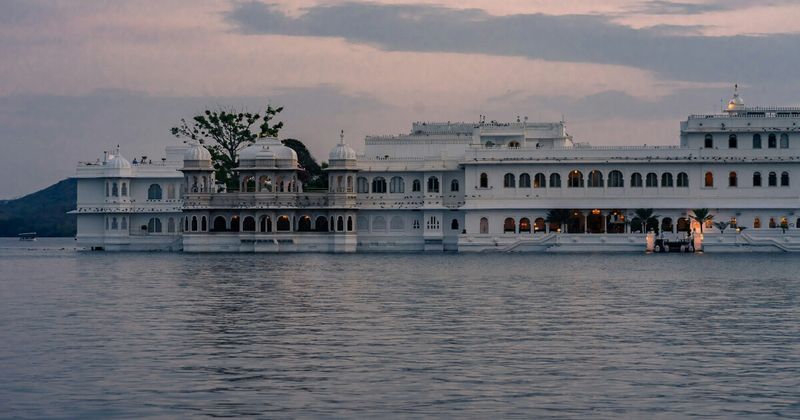
Lake Pichola was constructed in 1362 as a water reservoir; the Maharanas of Mewar subsequently built two island palaces on its natural islands, making it one of India's only designed lakes.
Days 11–13: Jaisalmer — The City That Never Stopped
Udaipur to Jaisalmer: No direct train. Options: road via Jodhpur (8–9 hours total, stop overnight Jodhpur); or Udaipur → Jodhpur by train, then Jodhpur → Jaisalmer by the overnight Jodhpur–Jaisalmer Express (14659), departing Jodhpur approximately 23:20, arriving Jaisalmer 05:40 — Sleeper from ₹200 ($2.13 USD), 3AC ₹565 ($6.01 USD). Book on 12Go Asia.
The train from Jodhpur to Jaisalmer approaches the Thar through increasingly dramatic desert terrain. If you take the overnight, set an alarm for approximately 4:30am — the train enters the desert proper in the pre-dawn hour and the landscape visible from the window, the flat emptiness interrupted by the occasional dune formation, is the beginning of the most complete sensory transition in the circuit.
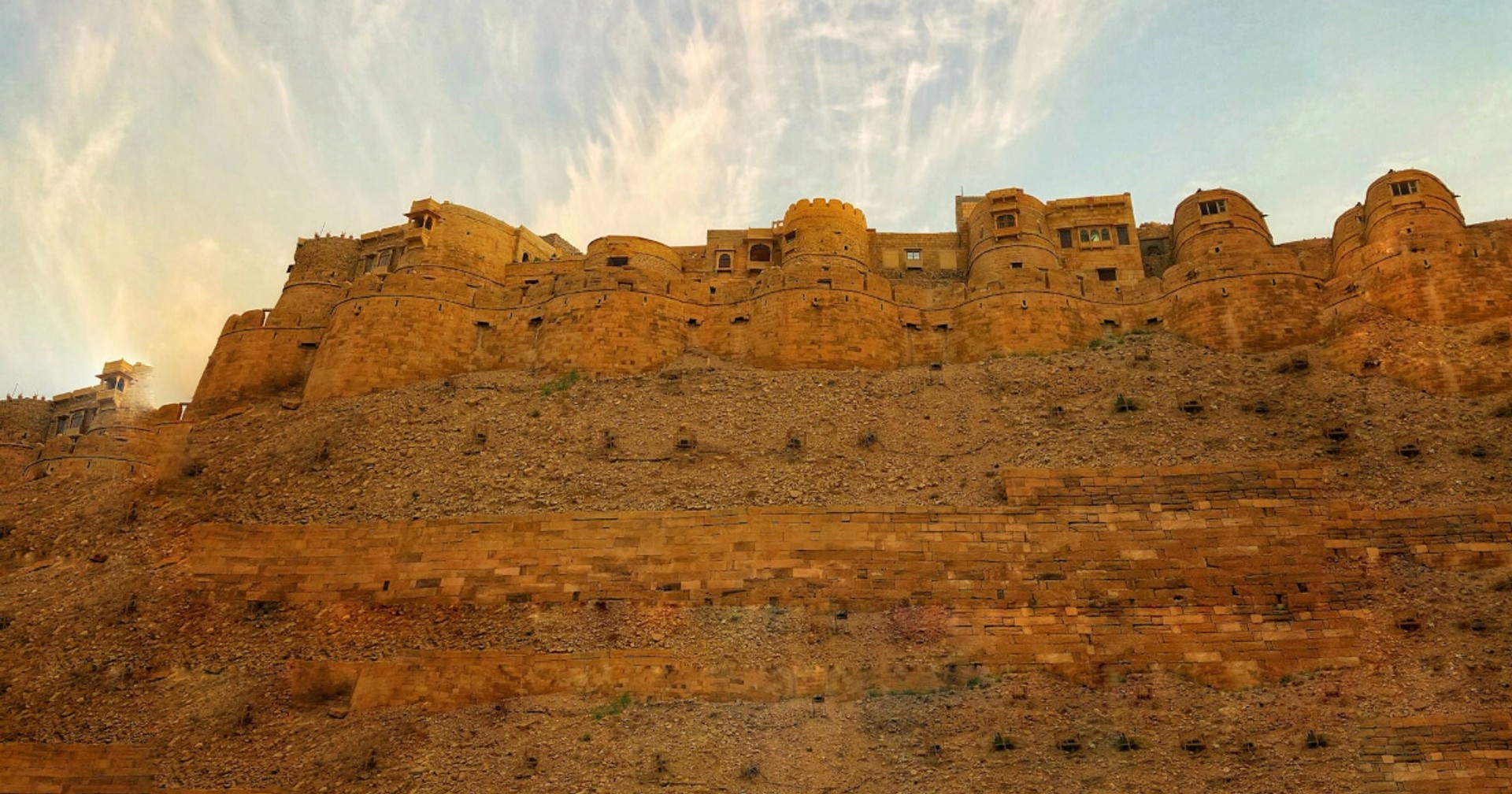
Day 11: Arrive Jaisalmer, fort morning, havelis afternoon. Jaisalmer Fort — Sonar Qila, the Golden Fort — entry ₹250 foreigners ($2.66 USD). Founded in 1156 CE by Rawal Jaisal. The fort is unique in India: 4,000 people still live permanently inside its 12th-century walls, making it the world's only living fortress at this scale. The lanes inside the fort contain guesthouses, restaurants, tailors, spice shops, and families who have lived there for generations. This is not a museum. It is a city. The narrow lanes, the carved stone balconies, the small temples still in daily use — walk slowly. Allow 3 hours minimum.
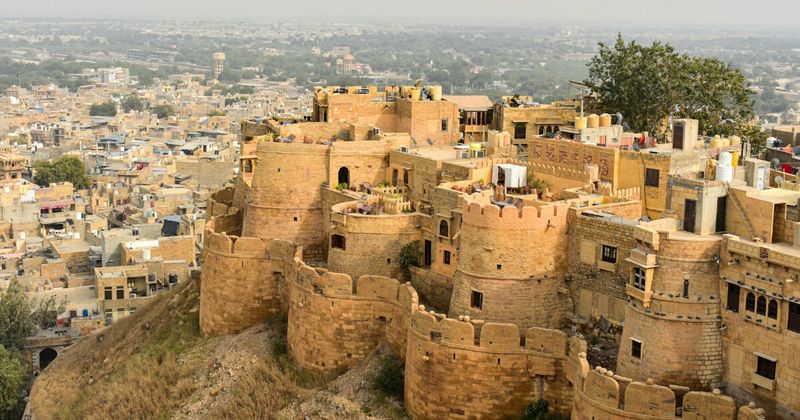
Jaisalmer sandstone forms from sediment deposited 150 million years ago when the Thar was a shallow ocean — the iron oxide in the rock gives it the golden-orange colour that changes shade throughout the day.
Patwon ki Haveli (₹50–100, $0.53–1.06 USD) — the 19th-century merchant's mansion of five connected havelis, the most elaborate private residence in Jaisalmer. The stonework — yellow Jaisalmer sandstone carved to a delicacy that seems incompatible with the same material used for the fort walls — represents the peak of Rajasthani haveli architecture.
Day 12: Sam Sand Dunes overnight camp. 42 kilometres from Jaisalmer — book through Klook. Budget camps: from ₹2,500/person ($26.60 USD); midrange with folk music, dinner, and breakfast: ₹4,750/person ($50.53 USD). Peak season (October–March). Camel ride, sunset over the dunes, folk music performance, dinner, campfire, breakfast. The Milky Way at 10pm from the Sam dunes — no light pollution, the sky genuinely visible as the ancient river of light it is — is the specific experience that ends the Rajasthan circuit correctly. You began in a city designed as a cosmological diagram. You end under the actual cosmos.
The dunes at dawn are accessible by walking 10 minutes from the camp before breakfast. The light on the sand at 6am — the low-angle sun creating shadows in the ripple formations, the dune crests in gold — is the best photography available on the circuit.
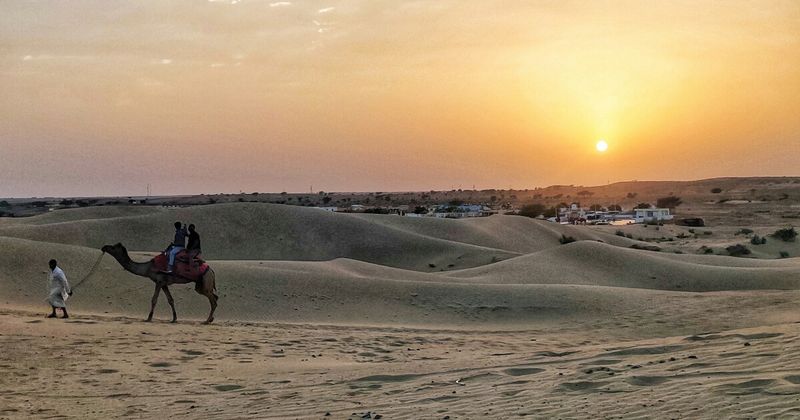
The Sam dunes sit in the western Thar Desert zone that receives almost none of the monsoon moisture — the classic empty dune landscape begins approximately 35km from Jaisalmer city.
Day 13: Return to Jaisalmer, Kuldhara ghost village. Kuldhara — 18 kilometres from Jaisalmer, a village abandoned overnight in 1825. According to the surviving accounts, the 1,500 residents of Kuldhara — members of the Paliwal Brahmin community — left simultaneously one night to escape the demands of the local governor and were never found. The village has been empty ever since. Entry free. The mud-brick houses, the temple, the courtyard wells — all standing, all unoccupied for 200 years. No guide for this circuit mentions it. It is 25 minutes from Jaisalmer and takes 1 hour to walk.
Day 14: Getting Home
From Jaisalmer: Fly Jaisalmer (JSA) → Delhi (DEL) directly on IndiGo (not daily — check schedules). Search on FlyFlick. Alternatively: Take the overnight train Jaisalmer → Jodhpur, then fly Jodhpur (JDH) → Delhi — significantly more frequent connections, same day-cost effect. Book the return flight via FlyFlick with a Compensair alert on EU-connected return legs.
Book your Jaisalmer or Jodhpur airport transfer through KiwiTaxi — confirmed for both JSA and JDH airport routes at fixed pre-booked fares.
What to Skip and When to Cut
If you fall 1 day behind schedule:
In Jaipur: Cut the Abhaneri day trip and use the day for deeper Amber Fort time — the fort itself rewards a second visit more than the drive to Abhaneri.
In Jodhpur: Cut Jaswant Thada — keep Mehrangarh and Toorji Ka Jhalra, which together are more architecturally complete. Add Jaswant Thada on your exit morning.
In Udaipur: Cut Saheliyon ki Bari and keep Ranakpur — the temple is the most extraordinary single site in this section and deserves the full day.
In Jaisalmer: Do not cut the overnight desert camp. If something must go, skip Kuldhara. The dunes are the point of Jaisalmer; any monument is secondary.
What no 14-day Rajasthan guide tells you to skip:
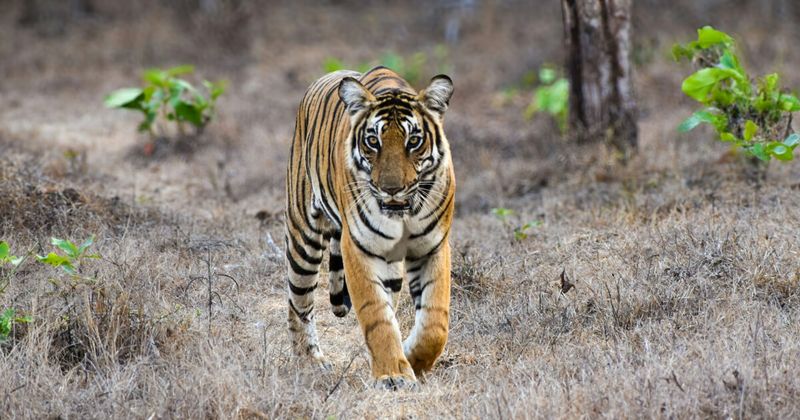
The Ranthambore tiger safari addition. Every "14-day" itinerary inserts it between Jaipur and the rest of the circuit. Ranthambore requires 2 nights minimum for two safaris (you cannot guarantee a tiger sighting in one). Adding it pushes every subsequent city to 2 nights instead of 3. The circuit loses depth. Ranthambore deserves its own 3-day trip from Delhi; it doesn't belong in this circuit. Our Ranthambore ethical safari guide covers it as a standalone.
Similarly: Pushkar. The sacred lake town between Jaipur and Jodhpur is lovely and deserves 2–3 days. Inserted as a half-day stop in this circuit, it feels like a photograph rather than a place. Save it for a separate Rajasthan trip.
Pace and Burnout: Managing 14 Days in Rajasthan
Rajasthan's specific burnout pattern is fort fatigue. By Day 8, every visitor on this circuit has walked four or five major fort complexes, each one exceptional. The monuments stop being individually distinguishable. The solution is not to skip forts — it's to diversify the daily rhythm.
The correct day structure in Rajasthan:
Monuments before 11am (forts, temples, palaces — all better in morning light and before tour groups). Covered spaces 11am–3pm (museums, bazaars, indoors in the midday heat). Viewpoints and lakes 3pm–sunset (the light justifies waiting for it). One unscheduled evening per city — sit at a restaurant terrace, eat regional food slowly, let the city come to you.
The regional food by city:
Jaipur: Dal baati churma, pyaaz kachori, laal maas (spiced mutton curry — the most distinctively Rajasthani meat dish). Jodhpur: Mirchi bada (green chilli fritter), mawa kachori (sweet), the specific mustard-heavy cooking of Marwar. Udaipur: Dal baati with ghee, gatte ki sabji (chickpea flour dumplings in curry), the lake fish preparations at lakeside restaurants. Jaisalmer: Ker sangri (local desert bean and berry curry — the ingredient grows only in this specific ecosystem), bajra roti with curd, camel milk chai at the fort lanes.
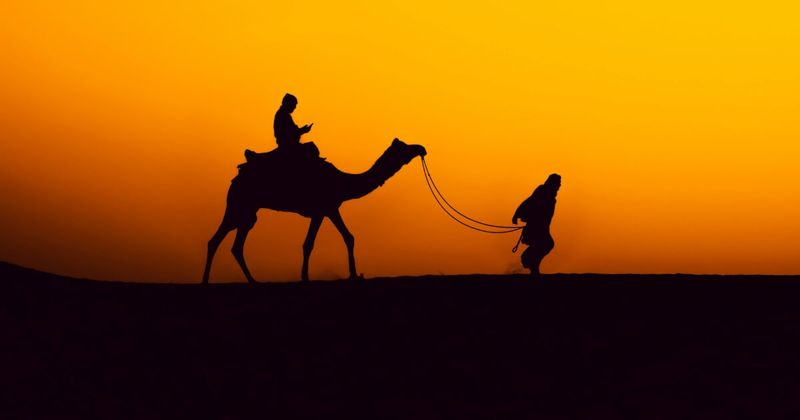
Rajasthan covers 342,000 sq km — larger than Germany. The four-city Royal Circuit covers only its most-visited quarter; Bikaner, Bundi and Chittorgarh remain for a second trip.
Best season: October–February. November–January is peak — book accommodation 4–6 weeks ahead, Amber Fort skip-the-counter tickets 1 week ahead, Jaisalmer desert camp 3–4 weeks ahead. March has warm days and dramatically thinning crowds. April onward is increasingly extreme — Jaisalmer in April reaches 40–45°C.
For connecting this circuit with Delhi and Agra, our India in 10 Days guide covers the Golden Triangle extension. Our Udaipur in 4 Days guide covers Udaipur comprehensively if you have more time for the lake city.
14-Day Budget Breakdown
| Expense | Budget | Mid-Range |
|---|---|---|
| International flights into JAI | Search FlyFlick | varies |
| JAI airport transfer | ₹400–600 ($4.26–6.38) | ₹1,500–₂,500 GetTransfer/KiwiTaxi |
| Accommodation (14 nights avg) | ₹800–2,000 ($8.51–21.28)/night | ₹4,000–8,000 ($42.55–85.11)/night |
| Jaipur → Jodhpur Vande Bharat | ₹800–1,200 ($8.51–12.77) CC | ₹1,200 EC ($12.77) |
| Jodhpur → Udaipur vehicle | via Intui.travel ₹3,500–5,000 ($37.23–53.19) | same |
| Udaipur → Jaisalmer (Jodhpur leg) | ₹200 Sleeper ($2.13) | ₹565 3AC ($6.01) |
| Amber Fort Jaipur | ₹1,000 ($10.64) | ₹1,500 Composite ($15.96) |
| Jantar Mantar | ₹200 ($2.13) | ₹200 |
| City Palace Jaipur | ₹700 ($7.45) | ₹700 |
| Mehrangarh Fort Jodhpur | ₹800 ($8.51) | ₹800 |
| Kumbhalgarh Fort | ₹600 ($6.38) | ₹600 |
| Toorji Ka Jhalra | Free | Free |
| City Palace Udaipur | ₹300 ($3.19) | ₹300 |
| Lake Pichola boat Jag Mandir | ₹600 ($6.38) | ₹800 ($8.51) after 3pm |
| Ranakpur Jain Temple | Free + ₹100 camera ($1.06) | Free + ₹100 |
| Sajjangarh Monsoon Palace | ₹200 + ₹80 vehicle ($2.13 + $0.85) | same |
| Jaisalmer Fort | ₹250 ($2.66) | ₹250 |
| Sam dunes overnight camp | ₹2,500 ($26.60) | ₹4,750 ($50.53) |
| Klook experiences across circuit | ₹2,000–4,000 ($21.28–42.55) | ₹6,000–10,000 ($63.83–106.38) |
| Daily vehicle Intui.travel | — | ₹1,500–2,500 ($15.96–26.60)/day |
| Food (14 days) | ₹400–700 ($4.26–7.45)/day | ₹1,000–2,500 ($10.64–26.60)/day |
| Travel insurance | VisitorsCoverage/EKTA from ~$25 | from ~$25 |
| 14-day total per person (excl. int'l flights) | ₹40,000–85,000 ($426–$691) | ₹1,10,000–1,70,000 ($1,170–$1,809) |
All prices INR. USD at ₹94 = $1. INR prices reliable; USD approximate.
"Flying into Jaipur or planning an open-jaw out of Jaisalmer or Delhi? Search all routes here."
Check Live Flight Prices
The Bottom Line
Rajasthan is not a checklist destination. The four cities of the Royal Circuit — Pink, Blue, White, Gold — are not interchangeable stops on a monuments tour. They are four completely different expressions of one of the world's most sustained cultures of royal architecture, craft, food, and performance. Jaipur designed its streets as a cosmos. Jodhpur built its fort on a cliff because no army had ever taken one. Udaipur chose a lake because a lake meant the palaces could never be fully surrounded. Jaisalmer built a living city inside its fortress so that the fortress would never be abandoned.
Fourteen days is how long it takes to understand the difference between visiting these things and knowing them.
Your Rajasthan Royal Circuit Checklist
🛡️ Insurance: VisitorsCoverage — Get minimum $100K USD medical cover before booking anything else; 14-day Rajasthan circuit from ~$25–45 USD. | EKTA — Compare at ektatraveling.com from $0.99/day as a second option.
✈️ Flights: FlyFlick — Fly into Jaipur (JAI) and out of Jaisalmer (JSA) or Jodhpur (JDH) for an open-jaw that avoids backtracking. | Compensair — Set a delay alert on all EU-connected legs before departure.
🚂 Trains: 12Go Asia — Book Jaipur→Jodhpur Vande Bharat (₹800–1,200 CC, 4hrs 15min) and Jodhpur→Jaisalmer overnight (₹200 Sleeper, 5–6hrs) simultaneously, 3–4 weeks ahead.
🚖 Transfers: GetTransfer — Pre-book fixed-fare JAI airport arrival. | KiwiTaxi — Confirmed for JAI, JDH and JSA airport routes. | Intui.travel — Book the Jodhpur→Kumbhalgarh→Udaipur full-day vehicle and Udaipur day-trip vehicles.
🎟️ Experiences: Klook — Pre-book Amber Fort ₹1,000 (skip counter), Mehrangarh ₹800, Jag Mandir boat ₹600, Sajjangarh ₹200, Sam dunes overnight camp ₹2,500–4,750.
📱 Connectivity: Saily — 5G eSIM covers all four cities. | Drimsim — Off-grid backup for Kumbhalgarh mountain road and Sam dunes desert area.
Pink. Blue. White. Gold. In that order.