
There is a specific moment on the Hampta Pass trek that changes you.
It happens on Day 3. You have been walking uphill for hours. Your lungs are burning, your thighs are screaming, and the air is so thin that every breath feels like a conscious effort. You are trudging through knee-deep snow, surrounded by towering, jagged peaks that make you feel incredibly small.
And then, you reach the summit—the actual pass at 14,100 feet (4,270 meters).
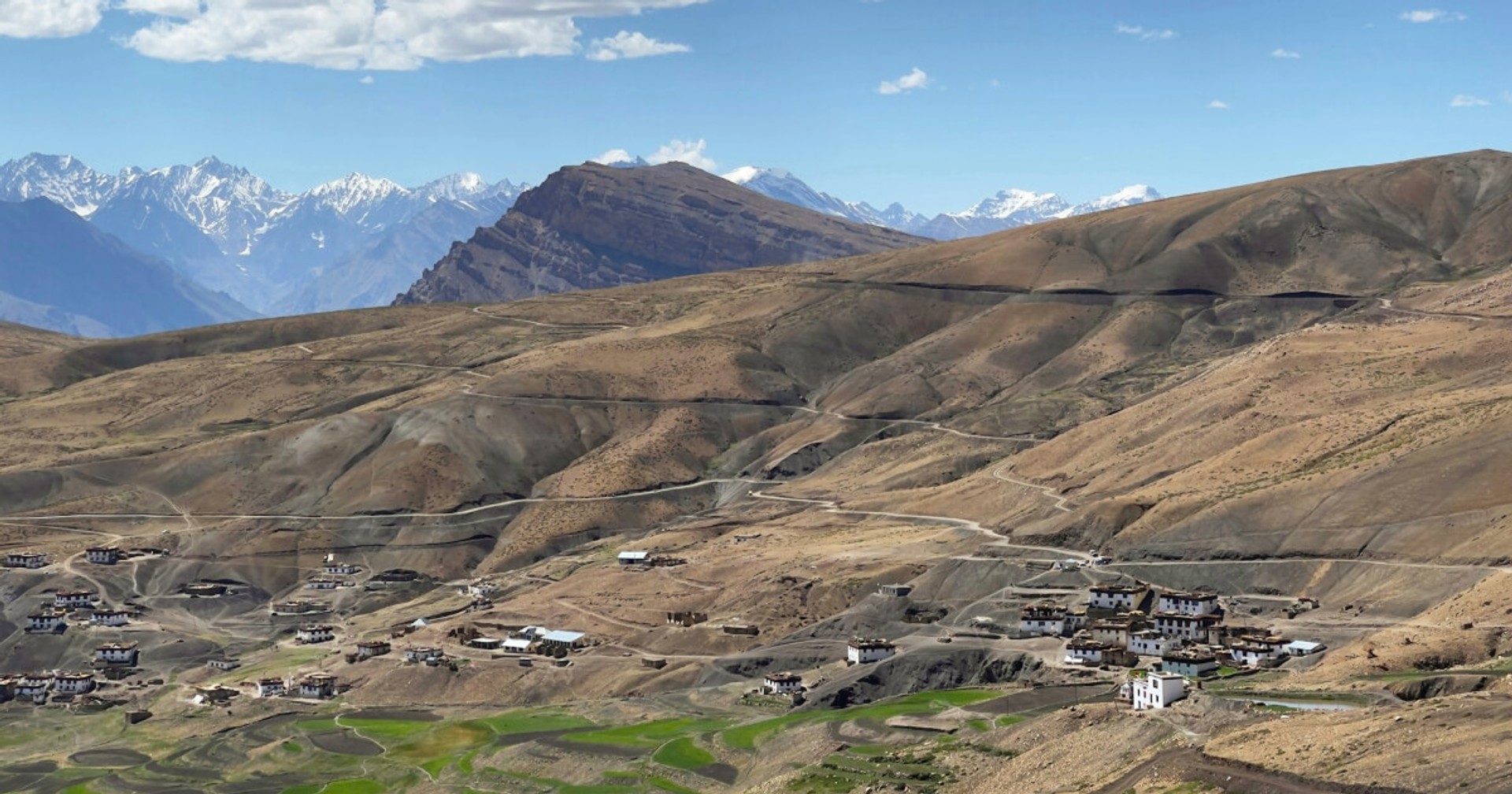
You stand on a literal geographical border. You look behind you, and you see the Kullu Valley—a vibrant, lush, rain-soaked paradise painted in every shade of green imaginable. Then, you look in front of you, and the world abruptly ends. The green vanishes. Stretching out before you is the Lahaul and Spiti Valley—a harsh, barren, high-altitude cold desert of brown rock, shifting sands, and blinding white glaciers.
It is like walking out of Scotland and stepping directly onto the surface of Mars.
This dramatic "crossover" is why the Hampta Pass is widely considered the greatest first-timer trek in the Indian Himalayas. But let us get one thing straight right now: just because a trek is labeled "beginner-friendly" or "easy-to-moderate" by tour agencies looking to sell packages, does not mean it is a walk in the park.
The Himalayas do not care if it is your first time. 14,100 feet is 14,100 feet. The weather can turn violent in twenty minutes. The glacial river crossings will numb your legs to the bone. You will sleep in sub-zero temperatures.
If you are a global traveler looking to step off the standard "Taj Mahal" tourist trail and plunge into the raw, unforgiving beauty of the Indian wilderness, this is your initiation.
This is not a glossy brochure. This is a comprehensive, brutally honest, step-by-step logistics guide to surviving and conquering the Hampta Pass in 2026. I am going to break down exactly how to train, what to pack, how to navigate the complex transport web to basecamp, and what you will experience day by day.
Take a deep breath. Let’s head to the mountains.
PART 1: THE PSYCHOLOGY AND REALITY OF "EASY-TO-MODERATE"
Before we book flights or buy boots, we need to calibrate your expectations. When trekking agencies label Hampta Pass as "Moderate," they are comparing it to extreme mountaineering expeditions like Everest Base Camp or the Chadar Trek. They are not comparing it to a Sunday hike in your local state park.
The Three Realities of the Trail
1. The Altitude Reality (AMS) Acute Mountain Sickness (AMS) is the great equalizer. It does not matter if you are an Olympic marathon runner or a couch potato; altitude can hit anyone. At 14,000 feet, there is roughly 40% less oxygen in the air than at sea level.
- The Symptoms: A dull headache, nausea, loss of appetite, and insomnia.
- The Solution: Hydration and pacing. You must drink 4 liters of water a day, even when it is freezing and you do not feel thirsty. More importantly, you must walk slowly. The Himalayan trekking mantra is "Ekam, Ekam" (One step, one step). If you try to sprint up the mountain to prove your fitness, the mountain will punish you.
2. The Hygiene Reality Let go of your attachment to cleanliness. You will not shower for five days. There are no bathrooms; you will be using a dry-pit toilet tent dug into the earth. You will wear the same base layers multiple days in a row. You will be covered in mud, sweat, and dust. Embrace the grime. It is part of the initiation.
3. The Mental Reality Your body is capable of walking 35 kilometers over a mountain pass. It is your brain that will try to convince you to quit. On Day 3, when you are cold, tired, and staring at a near-vertical snow ascent, your mind will negotiate with you. “Why are we doing this? We could be in a café in Manali right now.” Preparing for a trek is 40% physical and 60% mental resilience.
PART 2: THE 8-WEEK FITNESS PROTOCOL
You cannot show up to the Himalayas straight from a desk job. You need to train. If you put in the work at home, you will actually enjoy the trek rather than just surviving it in agony. Start this routine at least 8 weeks before your departure date.
Phase 1: Cardiovascular Endurance (The Engine)
Your lungs need to become incredibly efficient at processing oxygen.
- The Goal: You should be able to jog 5 kilometers (3.1 miles) in under 40 minutes without feeling completely wiped out.
- The Routine: Run three times a week. Start with 2 km and build your way up. If you hate running, cycling or swimming are acceptable substitutes, but you must keep your heart rate elevated in Zone 2 (where you are breathing heavily but can still hold a conversation) for at least 45 minutes.
Phase 2: Leg Strength (The Chassis)
You will be carrying a 6-8 kg (15 lb) daypack up steep inclines and down jarring descents. Your quadriceps and knees will take a beating.
- The Routine: Thrice a week, perform 3 sets of 15 bodyweight squats and 3 sets of 20 alternating lunges.
- The Secret Weapon: Stair climbing. Find a tall building or a stadium and walk up and down the stairs for 30 minutes with a backpack full of books. Nothing prepares you for mountain ascents better than stairs.
Phase 3: Core Stability
A strong core prevents back pain when carrying a rucksack and provides balance when walking on slippery, loose rocks.
- The Routine: Daily 60-second planks and Russian twists.
PART 3: LOGISTICS - REACHING THE BASECAMP (MANALI)
The Hampta Pass trek begins and ends in the mountain town of Manali in the state of Himachal Pradesh. Getting to Manali is an adventure in itself, requiring a multi-leg transport strategy.
Step 1: Arriving in India (Delhi or Chandigarh)
Most international travelers fly into Indira Gandhi International Airport in New Delhi (DEL).
- The Welcome Pickups Hack: After a 15-hour flight, walking out of the Delhi airport into a wall of heat and aggressive taxi touts is overwhelming. I never rely on local airport cabs for that first arrival. I use Welcome Pickups. You pre-book it online, and an English-speaking driver is waiting for you at the arrivals gate with a sign. It is a premium, stress-free transition from the airport to your Delhi hotel.
Step 2: Delhi to Manali (The Transport Options)
You have two main choices to cover the 500 kilometers from Delhi to Manali.
Option A: The Classic Backpacker Route (The Volvo Bus) This is how 90% of trekkers get to Manali. You take an overnight, AC Volvo bus. It takes about 12-14 hours. You leave Delhi at 6:00 PM and wake up in the mountains at 8:00 AM.
- The Reality: The mountain roads are winding. If you get motion sickness, take medication.
- How to Book: Indian booking sites often reject foreign credit cards. Do not risk showing up to the bus station hoping for a ticket. Book guaranteed seats in advance using Klook.
Option B: The Fast Route (Flying to Kullu/Bhuntar) If you are short on time, you can fly from Delhi to Bhuntar Airport (KUU), which is a 90-minute drive from Manali.
- The Warning: Bhuntar is a tabletop runway in a deep valley. Flights here are notoriously unreliable and get canceled frequently due to mountain weather.
- The Hack: First, find the best flight deals using FlyFlick. Second, and this is crucial, register your flight with Compensair. If a Himalayan storm delays your flight by 3 hours or forces a cancellation, Compensair handles the complex legal paperwork to get you up to €600 in airline compensation. It is essentially free insurance against mountain weather.
Step 3: Navigating Manali
Once you reach Manali bus stand or the airport, you need to get to your hotel or hostel in Old Manali (the backpacker hub). Do not accept the first price the rickshaw drivers quote you.
- The Hack: Use InDrive. It is a ride-hailing app where you suggest a fare, and verified local drivers accept it. It works beautifully in Manali and saves you from the exhaustion of haggling.
PART 4: THE HIMALAYAN CONNECTIVITY SURVIVAL GUIDE
Let me be perfectly clear: your home country's mobile roaming plan will be absolutely useless in the Himalayas. Even standard Indian SIM cards struggle here. You need a dedicated, strategic eSIM setup to stay connected before, during, and after the trek.
Here is the exact Tri-eSIM strategy I use for mountain expeditions:
1. The Basecamp Lifeline: Saily
When you are in Delhi, Chandigarh, and Manali, you need fast, reliable 5G to check emails, coordinate with your trekking agency, and use WhatsApp. Saily is phenomenal for this. It instantly connects to the strongest local networks (Airtel or Jio) in urban and semi-urban hubs.
- Verdict: Essential for the pre-trek setup.
- Action: Get 5% Off Your Saily eSIM
2. The Off-Grid Emergency Net: Drimsim
Once you leave Manali and head into the mountains, Airtel and Jio signals vanish. Only the state-owned BSNL network has occasional towers in the deep valleys. Drimsim is a universal, pay-as-you-go eSIM. It doesn't tie itself to one carrier; it aggressively searches for any available micro-signal. On Day 4, when we reached Chatru (a remote settlement), my main phone was dead, but Drimsim managed to catch a faint 2G signal—just enough to send a "I am alive" text to my family.
- Verdict: Do not go into the wilderness without it. It is your emergency backup.
- Action: Equip Drimsim for Off-Grid Connectivity
3. The Creator's Vault: Yesim
When you return to Manali after the trek, your phone will be full of gigabytes of 4K GoPro footage and high-res photos. You need to back this up immediately to the cloud before traveling onward. Yesim offers unlimited data packages that allow you to upload massive files overnight without worrying about data caps.
- Verdict: Perfect for digital nomads and content creators post-trek.
- Action: Get Unlimited Data with Yesim
PART 5: THE DAY-BY-DAY ITINERARY (WHAT TO EXPECT)
Most trekking agencies run a 5-Day/4-Night itinerary. Here is the unvarnished, detailed breakdown of exactly what you will experience.
Day 1: Manali to Jobra to Chika (The Green Start)
- Drive: 1 Hour (Manali to Jobra).
- Trek: 3 km (2 Hours).
- Altitude: 10,100 ft.
Your morning begins in Manali. You meet your Trek Leader, do a final gear check, and pile into a rugged 4x4 Bolero. The drive to Jobra features 42 dizzying hairpin bends. Jobra is the trailhead.
The moment you step out of the car, the air feels different—crisp, biting, and pure. You strap on your 60-liter rucksack and step into the forest. Day 1 is an easy initiation. You walk through dense, ancient forests of oak, maple, and silver birch. The mighty Rani Nallah (Rani River) roars to your left.
After two short hours, the forest opens up into a stunning alpine meadow. This is Chika, your first campsite. You will learn the mechanics of camp life: how to pitch a tent, how to use your sleeping bag liner, and the golden rule of trekking—drinking hot soup the moment you arrive.
Day 2: Chika to Balu Ka Gera (The Valley of Flowers)
- Trek: 8 km (6-7 Hours).
- Altitude: 11,900 ft.
You are woken up at 6:00 AM with a mug of hot black tea brought to your tent. After a heavy breakfast of porridge and parathas, the real work begins.
Day 2 is a long, gradual ascent. The tree line disappears entirely, replaced by sweeping grasslands. Mid-morning, you encounter Jwara, a meadow that explodes with wild Himalayan flowers in July and August—blue poppies, yellow buttercups, and purple irises.
But Day 2 also brings your first major test: The River Crossing. You must cross a glacial stream barefoot. The water originates from melting snow just a few miles up. It is paralyzingly cold. You link arms with your fellow trekkers, step into the knee-deep rushing water, and push through. For ten minutes after crossing, your feet will burn with a pins-and-needles sensation. It makes you feel wildly, intensely alive.
You arrive at Balu Ka Gera (The Mound of Sand) by late afternoon. This campsite is surreal—a flat expanse of fine sand deposited by the river, completely surrounded by jagged, snow-capped peaks. The air here is noticeably thinner. Mild headaches are common tonight. Hydrate.
Day 3: Balu Ka Gera to Shea Goru (The Crossover)
- Trek: 9 km (8-9 Hours).
- Altitude: 14,100 ft (The Pass) dropping to 12,900 ft.
This is summit day. It is the longest, hardest, and most rewarding day of your life.
You start early, around 7:00 AM. The landscape turns harsh. The grass and sand are replaced by massive boulders, scree (loose rocks), and eventually, deep snowfields. The ascent to the pass is a grueling, zigzagging climb. Every step requires effort. Your heart will hammer against your ribs.
And then, you crest the ridge. You are at Hampta Pass.
The wind howls. You look back at the lush green Kullu Valley you just conquered. You look forward into the brown, arid expanse of Lahaul. You have crossed the spine of the Himalayas. You hug your guide, take your photos, and quickly begin the descent.
The descent is arguably harder than the climb. It is incredibly steep. In early summer (June), you will actually slide down portions of the mountain on your back in the snow.
You finally reach Shea Goru (The Cold Mountain). It is the most beautiful, yet coldest campsite of the trek, nestled right beside a roaring glacial river. You will sleep soundly tonight, fueled by pure exhaustion and accomplishment.
Day 4: Shea Goru to Chatru & Chandratal Lake (The Moon Lake)
- Trek: 7 km (5 Hours).
- Drive: 3 Hours (Round trip to the lake).
- Altitude: 11,000 ft (Chatru), 14,100 ft (Chandratal).
The morning starts with another brutal, barefoot river crossing right out of camp. The trail then descends heavily through the barren, rocky landscape of Lahaul. The path is narrow, cut into the side of the mountain, requiring careful footing.
By early afternoon, you reach Chatru, a tiny settlement on the dusty Spiti highway. The trekking portion is officially over. But the adventure isn't.
If the roads are open, you pile back into 4x4s and drive deep into the Spiti Valley to reach Chandratal (The Moon Lake). Situated at 14,100 feet, this crescent-shaped lake features water so unbelievably blue and still that it perfectly reflects the surrounding glaciers. It is a deeply spiritual place. You spend an hour sitting in silence by the water before driving back to Chatru for your final night of camping.
Day 5: Chatru to Manali (The Return to Civilization)
- Drive: 3-4 Hours.
You wake up, break down camp for the last time, and begin the drive back to Manali. But instead of crossing the pass on foot, your vehicle drives through the Atal Tunnel—an engineering marvel carved straight through the Pir Panjal mountains.
In less than 15 minutes, you drive from the brown desert of Spiti back into the green forests of Kullu. You arrive in Manali by early afternoon.
The first hot shower you take in your hotel will be the greatest shower of your life. The pizza you eat that night in Old Manali will taste like Michelin-star cuisine. You did it.
PART 6: THE ULTIMATE FIRST-TIMER'S PACKING LIST
Overpacking is the rookie’s biggest mistake. You must carry everything on your back (unless you hire a mule to "offload" your bag, which costs extra). Every ounce matters.
Here is exactly what you need. Nothing more.
The Non-Negotiable Gear
- The Backpack: A 50 to 60-liter trekking backpack with a sturdy hip belt to transfer the weight off your shoulders. Must have a waterproof rain cover.
- The Footwear: Do not bring running shoes. You must have high-ankle trekking boots with a deep tread. They must be waterproof, and they must be broken in before you arrive. Wear them around your city for two weeks before the trek.
- Camp Shoes: A lightweight pair of Crocs or sandals. After walking 8 hours in heavy boots, you need to let your feet breathe at the campsite.
The Layering System (Clothing)
The temperature will swing from 20°C (68°F) in the sun to -5°C (23°F) at night. You dress like an onion.
- Base Layer: 3-4 moisture-wicking synthetic t-shirts (no cotton, it traps sweat and makes you freeze). 1 set of thermal underwear for sleeping.
- Mid Layer: 1 thick fleece jacket.
- Outer Layer: 1 heavy padded/down jacket for the evenings, and 1 high-quality windproof/waterproof rain jacket.
- Bottoms: 2 pairs of quick-dry trekking pants.
Accessories & Hardware
- Trekking Poles: Essential. They reduce the impact on your knees by 30% during descents.
- Headlamp: For navigating the campsite at night and digging into your bag in the dark.
- Sunglasses: UV protection is non-negotiable. Snow blindness is real at 14,000 feet.
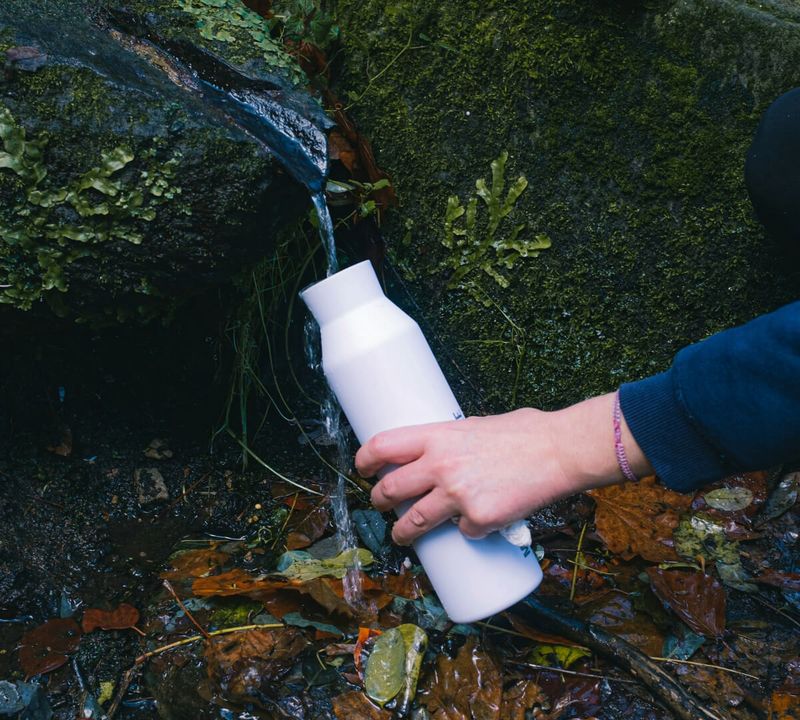
- The Water Purifier: The Himalayas have a massive plastic trash problem. Do not buy single-use plastic bottles. Carry two 1-liter reusable metal bottles. I highly recommend the Grayl Geopress water purifier. You can scoop water from the glacial streams, press it, and drink safely without worrying about bacteria.
PART 7: PERMITS, COSTS, AND HOW TO BOOK
You cannot do this trek independently as a foreigner without a massive logistical headache involving government permits and specialized gear. You must go with an organized trekking company.
The Cost Breakdown (2026)
The standard price for a 5-Day Hampta Pass trek ranges from ₹8,000 to ₹12,000 ($95 - $145 USD).
This includes:
- Tents, sleeping bags, and sleeping mats.
- All meals on the trek (mostly high-carb vegetarian food for digestion).
- Forest permits and camping fees.
- A certified Trek Leader, local guides, and a medical kit (with an oxygen cylinder).
The Danger of "Cheap" Operators
You will see operators on the streets of Manali offering the trek for ₹5,000 ($60). Do not book them. To offer prices that low, they cut corners. They use old sleeping bags that will leave you freezing at night. They feed you low-quality food. Worst of all, they hire uncertified guides who do not know how to handle high-altitude emergencies or administer oxygen. Your safety is worth an extra $40.
The Solution: Book your trek through a verified, globally recognized aggregator. They vet the local operators for safety standards, equipment quality, and eco-friendly practices.
PART 8: THE RULES OF ECO-TREKKING (LEAVE NO TRACE)
We are guests in this fragile alpine ecosystem. If we destroy it, future generations will not be able to experience it.
- Pack It In, Pack It Out: Whatever you bring up the mountain, you bring down. This includes chocolate wrappers, wet wipes, and plastic bags. Keep a dedicated "trash ziplock" in your backpack.
- The Toilet Tent Rules: Your operator will dig a dry pit toilet and cover it with a small tent. You cover your waste with dirt after using it to speed up decomposition. Do not throw wet wipes or sanitary pads into the pit. They will not decompose.
- Respect the Wildlife: If you see a Himalayan Blue Sheep or a marmot, observe from a distance. Do not feed them.
- Stay on the Trail: Do not trample the alpine flowers or create new paths. The soil at high altitudes takes decades to recover from damage.
Final Thoughts: The Call of the Pass
Trekking the Hampta Pass is not a vacation. It is a physical and mental challenge.
There will be moments when your feet ache, your head throbs, and you question your sanity. But there will also be moments where you sit outside your tent at 12,000 feet, drinking hot tea, watching the Milky Way stretch across a sky unpolluted by city lights, and realizing you are exactly where you are supposed to be.
You will return to civilization with a little less body weight, a lot more dirt under your fingernails, and a profound sense of quiet confidence. You survived the mountains. The rest of the world suddenly feels very manageable.
Pack your bags. Start running those stairs. The pass is waiting.
Your Adventure Booking Checklist
- 🚐 Arrival Transfer: Welcome Pickups (Stress-free Delhi airport pickup).
- ✈️ Flights to the Mountains: FlyFlick (Book) | Compensair (Flight delay protection).
- 🚌 Buses & Trains: Klook (Book the Delhi-Manali Volvo).
- 🚖 Local Manali Cabs: InDrive (Negotiate fair local fares).
- 📱 Mountain Connectivity: Saily (City 5G) | Drimsim (Remote Off-Grid) | Yesim (Unlimited Data).
- 🏔️ Book the Trek: Klook (Verified, safe trekking operators).
Climb steep. Breathe deep.